By Daniel Bampoe
Ghana has taken a significant step toward regulating and developing a new agricultural and pharmaceutical industry following the official launch of a national licensing regime for industrial and medicinal cannabis cultivation.
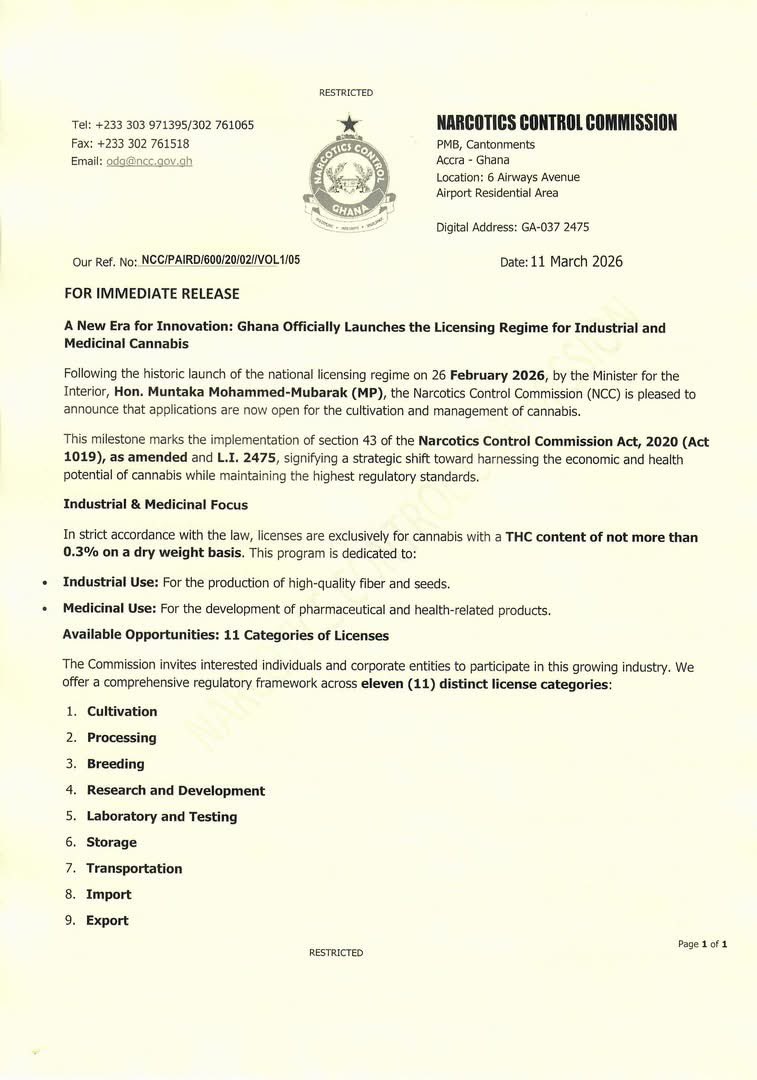
The announcement was made by the Narcotics Control Commission (NACOC) in a press release dated March 11, 2026, confirming that applications are now open for individuals and companies seeking licenses to cultivate and manage cannabis under the newly established regulatory framework.
The development follows the formal launch of the licensing regime on February 26, 2026, by Muntaka Mohammed-Mubarak, the Minister for the Interior.
Authorities say the initiative represents a major policy shift aimed at harnessing the economic, industrial, and medical benefits of cannabis while maintaining strict regulatory oversight.
Legal Framework For Cannabis Regulation
The licensing system is being implemented under Section 43 of the Narcotics Control Commission Act, 2020 (Act 1019), as amended, together with the Legislative Instrument 2475.
These laws provide the legal basis for controlled cultivation and processing of cannabis for industrial and medicinal purposes in Ghana, marking a departure from the country’s previous blanket prohibition on the plant.
Officials say the programme is carefully structured to ensure that the production and use of cannabis are limited strictly to approved purposes and conducted within a tightly monitored regulatory environment.
Industrial And Medicinal Use Only
According to the NACOC, licenses will only be issued for cannabis varieties that contain no more than 0.3 percent tetrahydrocannabinol (THC) on a dry weight basis.
This restriction ensures that the cannabis produced under the programme remains non-psychoactive, meaning it cannot be used for recreational consumption.
The licensing regime is therefore focused on two primary sectors:
Industrial use, particularly for the production of high-quality fibre and seeds that can be used in textiles, construction materials, and other manufacturing industries.
Medicinal use, where cannabis-derived compounds may be utilised in the development of pharmaceutical and health-related products.
Eleven Categories Of Licenses
To support the growth of the new industry, the Narcotics Control Commission has created 11 different licensing categories covering the entire cannabis value chain.
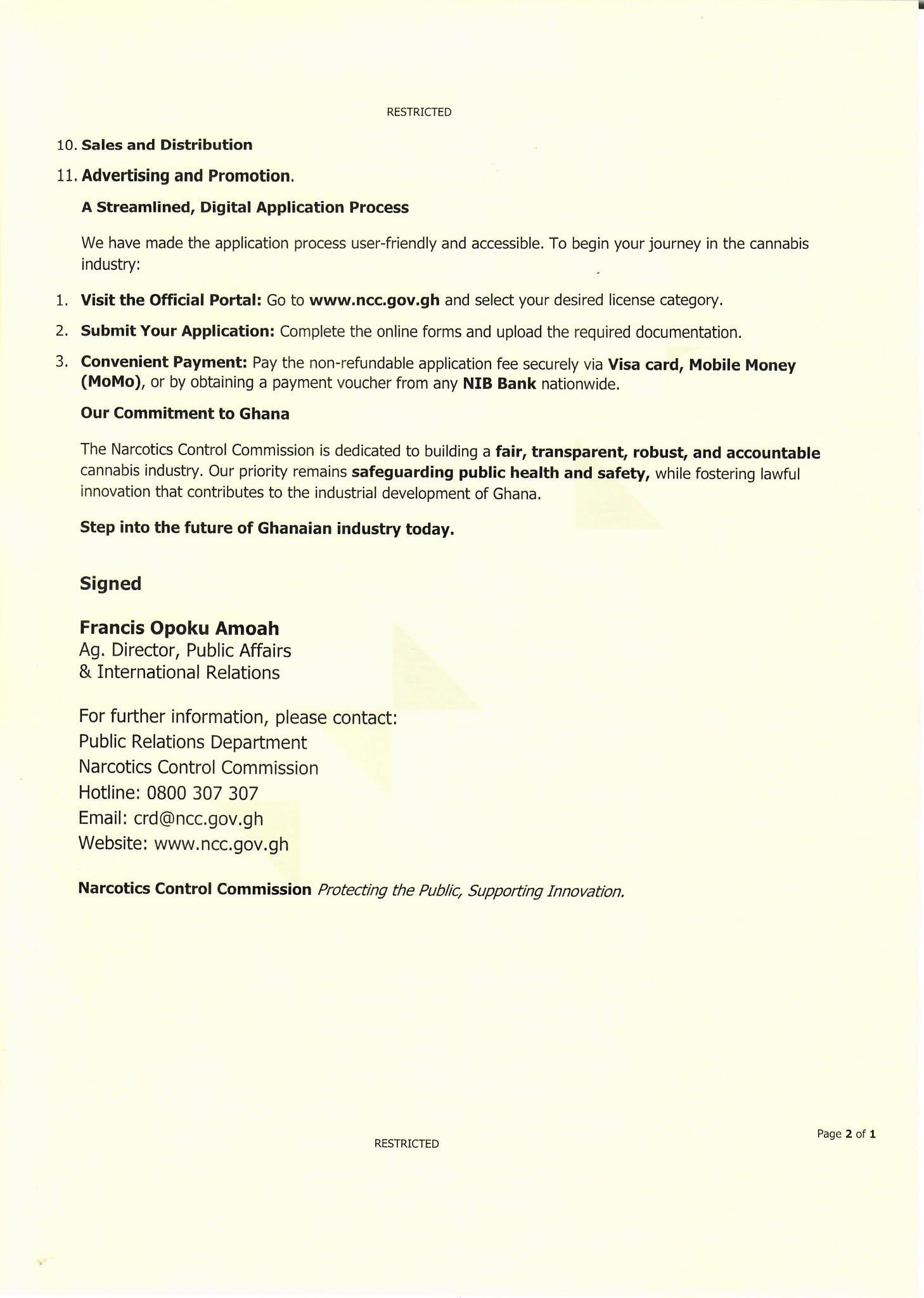
These include licenses for cultivation, processing, breeding, research and development, laboratory testing, storage, transportation, import, and export, among other regulated activities.
Authorities say the comprehensive licensing structure is intended to encourage investment, innovation, and scientific research while ensuring that every stage of the production and distribution process remains under regulatory supervision.
Economic And Research Potential
Government officials believe the move could open new opportunities for agricultural development, pharmaceutical research, and export revenue if managed properly.
Globally, many countries have begun exploring the economic benefits of industrial hemp and medicinal cannabis, particularly in areas such as biotechnology, pharmaceuticals, cosmetics, and sustainable manufacturing.
By establishing a regulated framework, Ghana aims to position itself as a participant in the emerging global cannabis industry while maintaining strong safeguards against abuse or illegal use.
Applications Now Open
The Narcotics Control Commission has therefore invited interested individuals, investors, and corporate entities to submit applications for licenses under the new regime.
Officials emphasise that all applicants will undergo rigorous vetting processes to ensure compliance with national laws, security standards, and regulatory requirements.
The launch of the licensing programme signals what regulators describe as “a new era for innovation”, balancing strict drug control with the potential economic and health benefits associated with regulated industrial and medicinal cannabis production in Ghana.