

By Daniel Bampoe
The National Democratic Congress (NDC) has formally cleared Mohammed Baba Jamal Ahmed to remain its parliamentary candidate for the impending Ayawaso East by-election, drawing a decisive line under weeks of controversy, internal party tension, and national scrutiny triggered by allegations of vote-buying during the party’s February 7, 2026 primary.
The decision, which effectively reaffirms Baba Jamal’s candidacy, follows the submission of a report by a three-member investigative committee constituted by the party to probe claims that aspirants engaged in inducement, monetisation, and improper influence over delegates.
The committee, set up after intense public backlash and internal pressure, was chaired by veteran party figure Kofi Totobi Quakyi and tasked with examining complaints, reviewing evidence, and engaging stakeholders across the constituency and party structures.
From Tragedy To Turmoil
The Ayawaso East contest was triggered by the death of the sitting MP, Mahama Naser Toure, creating a vacancy in one of the NDC’s most politically sensitive constituencies.
The parliamentary primary that followed quickly evolved into a high-stakes internal battle, drawing in powerful political actors, competing factions, and national attention.
The February 7 NDC primary, meant to unify the party ahead of the by-election, instead plunged it into crisis.
Reports quickly emerged alleging that TV sets, cash, motorbikes, sanitary pads believed to be meant for school girls under the ‘free sanitary’ policy, ‘buta’ and other items had been distributed to delegates in the lead-up to and during the voting process.
Social media was flooded with claims of inducement, while party insiders leaked accounts of “lavish campaigning” that raised questions about the integrity of the process.
Baba Jamal, Ghana’s High Commissioner to Nigeria and a long-time party figure, emerged victorious in the primary.
But rather than consolidating support, his win became the centre of a political storm.
Internal Probe And Party Pressure
Amid growing outrage, the NDC leadership moved to contain the crisis by establishing the three-member probe committee.
The move was widely seen as an attempt to douse the raging fire, restore credibility and calm rising tensions within the party, especially after the NDC Majority Caucus in Parliament publicly condemned the alleged vote-buying and even called for the annulment of the primary and disqualification of candidates found culpable.
The committee’s work took place against a backdrop of deep factional suspicion, with claims that the controversy was being driven not only by ethical concerns but also by internal power struggles.
Baba Jamal is widely viewed as politically aligned with Asiedu Nketiah, the NDC’s National Chairman, a factor that intensified perceptions that the crisis was part of a broader contest for influence within the party’s hierarchy while the widow of the deceased MP, Hajia Amina Adam was allegedly sponsored by Jubilee House, the seat of power.
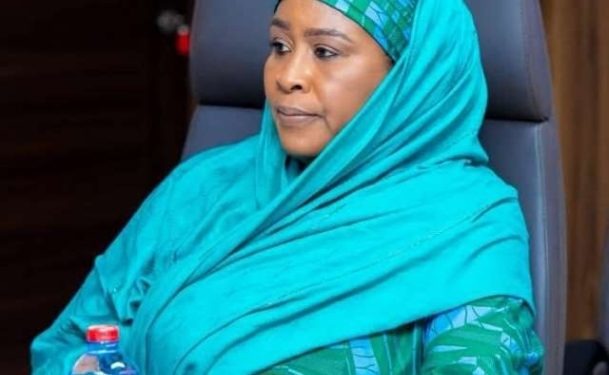
Hajia Amina Adam
President Mahama appointed Hajia Adam, an oil and gas expert to the board of Sankofa Gold Mines, Lands Commission and Ghana National Hajj Board.
Committee Verdict: No Disqualification
In its report, the committee acknowledged widespread concerns about the monetisation of internal party elections, describing it as a systemic challenge facing Ghanaian politics.
However, it concluded that there was no sufficient basis to disqualify Baba Jamal as the party’s candidate for the by-election.
According to party sources, the committee reviewed complaints from delegates and party members, assessed available evidence, and engaged stakeholders before reaching its conclusions.
While it recognised the broader problem of inducements in internal contests, it reportedly found no direct evidence linking Baba Jamal personally to the alleged distribution of items in a manner that met the threshold for disqualification.
Based on the committee’s findings, the NDC National Executive Committee (NEC) endorsed the report and maintained Baba Jamal as the party’s official candidate.
He is now expected to file his nomination with the Electoral Commission on Wednesday, February 11, 2026, clearing the way for his participation in the by-election campaign scheduled for next month.
Defiance Amid External Pressure
The NEC’s decision comes at a time when the controversy has already moved beyond party structures into the realm of state institutions.
Baba Jamal was earlier interrogated by the Office of the Special Prosecutor (OSP) over alleged vote-buying and related matters, including an alleged incident involving an OSP officer.
He was later released on self-recognisance bail after hours of questioning.
Despite the OSP’s involvement and the heightened national attention, the NDC’s internal probe has effectively drawn a distinction between party disciplinary processes and criminal investigations, choosing to proceed with Baba Jamal as its candidate while external investigations continue independently.
Party insiders describe the NEC’s posture as a rejection of what some factions have called “system machinations” — the use of institutional pressure, internal dissent, and public outrage to sideline a politically influential candidate.
Baba Jamal’s Position
Throughout the crisis, Baba Jamal has consistently denied any involvement in vote-buying, maintaining that his campaign was conducted within party rules.
He has framed his victory as a reflection of growing grassroots support in the constituency, citing his previous losses in earlier primary as evidence of a long-standing political relationship with party supporters rather than sudden inducement-driven popularity.
His camp has also argued that he cannot be held responsible for the actions of individuals acting independently, insisting that no evidence has been produced directly linking him to the alleged inducements.
A Party Under Strain
The Ayawaso East saga has laid bare the structural contradictions within the NDC — a party that publicly champions probity, accountability, and democratic values, while grappling internally with monetisation, factionalism, and power politics.
Street protests in Nima, statements from traditional authorities calling for peace, condemnations from party caucuses, and investigations by state institutions have all converged on a single constituency contest, transforming it into a national political drama.


