BY Daniel Bampoe
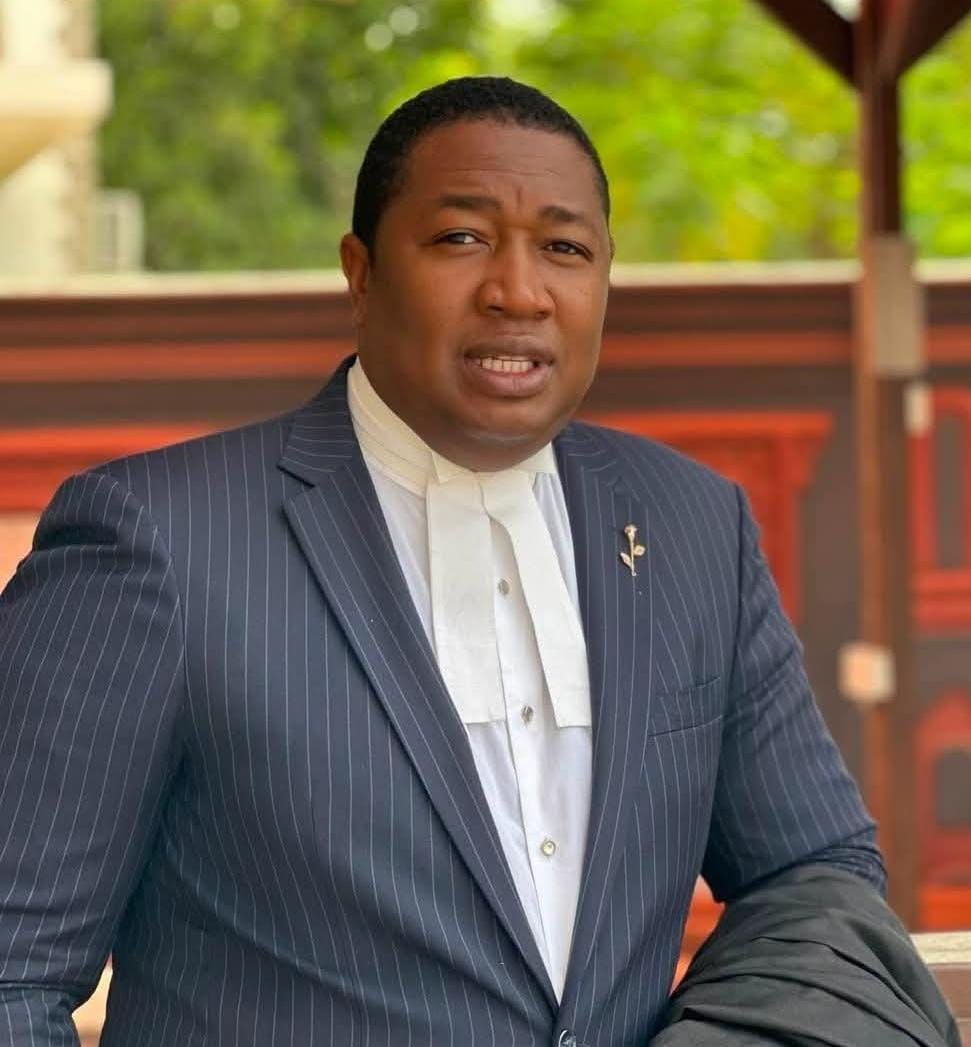
A member of the National Democratic Congress also a private legal practitioner E.L. Agbemava has added a fresh dimension to the national debate over the Court of Appeal’s decision to acquit and discharge former Microfinance and Small Loans Centre (MASLOC) Chief Executive Officer, Sedina Christine Tamakloe-Attionu.
In an extensive legal analysis titled “The Golden Rule of Criminal Law Re-Examined,” the lawyer argues that the appellate court may have misapplied fundamental principles governing the burden of proof in criminal trials, particularly where an accused person absconds before presenting a defence.
The article comes at a time when the legal fraternity remains sharply divided over the July 30, 2026 judgment, which unanimously overturned Tamakloe’s conviction and 10-year prison sentence imposed by the High Court.
While supporters of the ruling have hailed it as a triumph for due process and the constitutional presumption of innocence, critics contend that the Court of Appeal overlooked crucial legal principles relating to criminal trials and the evaluation of evidence.
The controversy stems from one of the most closely watched corruption cases. Sedinam.Tamakloe, who served as MASLOC Chief Executive between 2013 and 2016, was prosecuted on numerous charges, including stealing, causing financial loss to the state, money laundering, conspiracy and breaches of the Public Procurement Act.
Following years of proceedings before the Financial Division of the High Court, she was convicted in absentia in April 2024 after failing to return to Ghana to continue standing trial and was sentenced to 10 years’ imprisonment.
However, a three-member panel of the Court of Appeal later quashed the conviction and acquitted her, prompting the Attorney-General to announce an appeal to the Supreme Court.
Against this backdrop, Agbemava’s article revisits what lawyers commonly describe as the “golden rule” of criminal law—that every accused person is presumed innocent until proven guilty beyond reasonable doubt by the prosecution.
He acknowledges that this principle remains one of the cornerstones of criminal justice but argues that its application must be understood within the full context of how criminal trials are conducted.
According to him, many members of the public mistakenly assume that a court determines whether the prosecution has proved its case immediately after the prosecution closes its evidence.
He contends that this is legally inaccurate because a criminal trial is not complete until both the prosecution and the defence have presented their respective cases, after which the trial judge evaluates the entirety of the evidence before reaching a verdict.
The lawyer explains that after the prosecution concludes its case, the accused person has several legal options.
The defence may open its case by calling witnesses or tendering evidence, or it may elect to make a submission of “no case to answer.” In Tamakloe’s case, he notes that such a submission was made but was dismissed by the trial court, paving the way for the defence to present its evidence.
Agbemava argues that the prosecution’s burden of proof does not end once it closes its case because prosecutors are entitled to cross-examine defence witnesses and may rely on admissions or evidence emerging during the defence stage to strengthen their case.
Consequently, he says it is legally incorrect to conclude that the prosecution’s evidence should be assessed in isolation before the defence has had an opportunity to respond.
According to the legal practitioner, this distinction became particularly significant because the accused did not proceed with her defence after the trial court ruled that she had a case to answer.
He argues that by absenting herself from the proceedings, Tamakloe denied the court the opportunity to hear her version of events and left the prosecution’s evidence substantially unanswered.
Drawing on the teachings of renowned former Director of Public Prosecutions, Gyeke Darko, Agbemava maintains that criminal liability is determined by considering the totality of the admissible evidence presented throughout the entire trial rather than only the prosecution’s case.
He insists that this long-established principle has been emphasised for decades in Ghanaian legal education.
The lawyer also takes issue with suggestions that the High Court improperly shifted the burden of proof onto the accused. In his view, simply pleading not guilty does not relieve an accused person of the strategic consequences of declining to testify or call witnesses after a prima facie case has been established.
He argues that an accused who absconds during trial cannot subsequently accuse the court of unfairness for deciding the case on the evidence that remained before it.
According to him, while the legal burden of proof always rests on the prosecution except in limited statutory exceptions, a court is entitled to determine whether that burden has been discharged based on the evidence actually available at the conclusion of proceedings.
Agbemava further contends that where a prosecution establishes a strong prima facie case and the accused elects not to challenge the evidence, the court is entitled to treat the incriminating evidence as remaining unrebutted.
He stresses that this does not amount to shifting the burden of proof but rather reflects the practical consequence of an accused person’s decision not to contest the evidence.
The article also examines the celebrated English case of Woolmington v Director of Public Prosecutions, the leading authority on the presumption of innocence.
While recognising the importance of that landmark decision, Agbemava argues that its principles should not be interpreted in a manner that rewards an accused person who deliberately absconds from trial and leaves incriminating evidence unanswered.
In his concluding remarks, the lawyer reiterates that the prosecution’s legal burden never shifts.
However, he emphasises that courts are entitled to assess whether that burden has been satisfied after considering the whole body of admissible evidence, including any admissions, documentary exhibits and evidence that could have emerged during the defence stage.
As an illustration, Agbemava points to what he describes as an authenticated letter acknowledging receipt of GH¢500,000, arguing that the document was properly admitted into evidence during the trial and formed part of the material considered by the High Court.
He questions the Court of Appeal’s treatment of that evidence, suggesting that its rejection raises important legal questions that may ultimately have to be resolved by the Supreme Court.
With the Attorney-General already indicating that the Republic will challenge the acquittal, Agbemava’s intervention is expected to intensify legal discourse surrounding the Sedina Tamakloe case.
The impending Supreme Court appeal is now widely expected to provide authoritative guidance on the interpretation of the burden of proof, the consequences of trial in absentia and the evaluation of evidence in the criminal justice system.