
BY Daniel Bampoe
The National Democratic Congress (NDC) has intensified its campaign to remove the leadership of the Electoral Commission (EC), with efforts underway to identify petitioners who can formally trigger the constitutional process.
This development comes barely a week after the controversial removal of Chief Justice Gertrude Torkornoo through a petition process, which critics have described as politically motivated.
A group, Positive Transparency and Accountability Movement Africa (PTAAM Africa) is already claiming that it had submitted a petition to the President to act on since January.
The petition, which it claimed was submitted on January 8, 2025, accuses the EC commissioners of causing financial loss to the state, creating a constitutional crisis, and engaging in misconduct and abuse of resources.
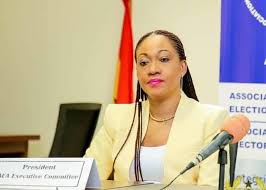
PTAAM President, Rashid Isah, said since they filed their petition no feedback had been received. “As a matter of fact, we’ve not had any clear communication as to what action the President is hoping to take on our petition. We have sent reminders, and we are prepared to follow up if nothing is done. As of now, there has been no direct communication,” he said on Top Story on Joy Fm.
He cited the EC’s decision to compile a new voters’ register ahead of the 2020 elections, which cost more than $80 million, as mismanagement that burdened taxpayers during a period of economic strain.
Asiedu Nketiah Charges
NDC National Chairman, Johnson Asiedu Nketiah, popularly known as General Mosquito, has been at the forefront of the call, insisting that EC Chairperson Jean Mensa and her deputies — Dr. Eric Bossman Asare and Samuel Tettey — have consistently failed to manage the electoral system effectively.
“There has to be a change… The three top leadership must all go. They have managed the Commission so badly,” Asiedu Nketia said on JoyNews’ PM Express on June 25.
He accused the Commission of presiding over repeated electoral failures, citing the then unresolved parliamentary election in Ablekuma North and the disenfranchisement of voters in the Santrokofi, Akpafu, Likpe and Lolobi (SALL) areas during the 2020 general elections as examples of “institutional collapse.”
A Strategy Mirroring The CJ’s Removal
Party insiders suggest that the NDC is now adopting a similar approach to the one that led to Chief Justice Torkornoo’s removal this week.
Under Article 146 of Ghana’s 1992 Constitution, the process for removing both the Chief Justice and EC Commissioners requires citizen-backed petitions, which are then referred to the Council of State for the Chief Justice and to the Chief Justice for the EC Commissioners before a final decision is made by the President after establishing prima facie.
With Chief Justice Torkornoo out of the way, any petition to remove the EC leadership send to the Chief Justice by the president will receive an overwhelming endorsement with alacrity.
Mustapha Gbande, Deputy Director of Operations at the Presidency and NDC deputy General Secretary, hinted as far back as April that both the judiciary and the EC would undergo a “reset” to cleanse what the NDC sees as politically compromised institutions.
“The Chief Justice will have to go, the EC chairperson and other politically exposed directors will have to go — and indeed they will go. It is just a matter of time,” Gbande declared at the time.
With this mind-set, the NDC has set in motion the ploy to yank off the three EC Commissioners.
Civil Society Joins The Debate
Beyond party lines, voices in civil society have also weighed in. Franklin Cudjoe, President of IMANI Africa, has said that calls for the removal of the EC leadership are justified.
He accused the Commission of overspending and mishandling electoral processes, particularly referencing the SALL controversy.
While clarifying that he would not personally file a petition, Cudjoe revealed that IMANI has already lodged a complaint with the Commission on Human Rights and Administrative Justice (CHRAJ) regarding the EC’s conduct.
“These issues go beyond partisan politics and touch on the integrity of Ghana’s democratic institutions,” Cudjoe noted on Channel One TV’s The Big Issue on June 28.
EC’s Silence Raises Eyebrow
What has drawn attention, however, is the unusual silence from Jean Mensa and her deputies.
Known for their quick responses to criticism, they have so far declined to address Asiedu Nketiah’s accusations, fueling speculation that pressure from the government and civil society is mounting.
Echoes Of Charlotte Osei’s Ouster
The situation recalls the removal of former EC Chairperson Charlotte Osei in 2019 and her two deputies under the Akufo-Addo administration, which also began with petitions alleging procurement breaches.
The NDC argues that the same legal provisions used then can be applied now against Jean Mensa and her deputies.
“We haven’t amended our laws. The same law gave President Akufo-Addo the right to remove Charlotte Osei; they are all independent institutions, but he removed her,” Gbande said.
What they forgot is that Charlotte Osei and her deputies’ removal was self-inflicted due to the breakdown of internal creed with the Commissioners trading accusations and counteraccusations.
Political Tensions Deepen
The push to unseat the EC leadership comes at a politically sensitive moment, with Ghana preparing for upcoming by-elections and the 2028 general elections. For the NDC, the move is presented as a bid to restore electoral integrity.
For the opposition New Patriotic Party (NPP), however, it is seen as a continuation of what they call a political purge following the Chief Justice’s removal.


