BY ISSAH OLEGOR
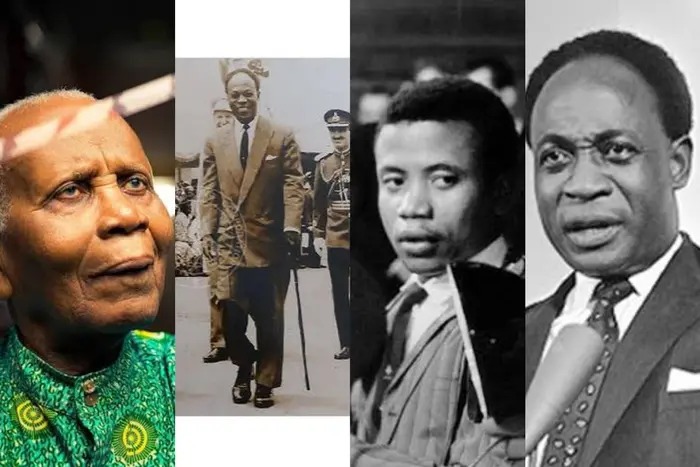
Ghana’s first President, Dr Kwame Nkrumah, reportedly had a discreet way of communicating with his personal cameraman, veteran cinematographer Rev. Dr Chris Tsui Hesse, using a walking stick to signal when to film and when to stop recording.
The remarkable revelation has brought renewed attention to the close working relationship between the two men and the behind-the-scenes methods used to document some of the most significant moments in Ghana’s political history.
Hesse shared the account in The Eyes of Ghana, a feature-length documentary directed by filmmaker Ben Proudfoot, which explores his career as Nkrumah’s personal cameraman and his efforts to preserve an extensive archive of historical footage.
The documentary was screened at the Kwame Nkrumah Memorial Park in Accra on Saturday, October 31, 2026, bringing renewed focus to Hesse’s contribution to preserving Ghana’s independence story and the wider African liberation movement.
According to Hesse, the walking stick was not being used because Nkrumah had a problem with his leg. Rather, it formed part of a private system of signals the two had developed to communicate without necessarily exchanging words.
“Between me and Kwame Nkrumah, we grew certain confidential signs. He had a walking stick, not because he had a bad leg, we used the stick to talk. When he wanted me to film something I know, when he doesn’t, I know,” Hesse recounted.
The arrangement allowed Nkrumah to discreetly indicate when he wanted a particular event or activity captured on camera and when Hesse should refrain from filming.
Hesse also recalled the responsibility the former president placed on him, quoting Nkrumah as telling him: “My son, I’m depending on you as the filmmaker to tell the story.”
For Hesse, the assignment went beyond operating a camera. He was entrusted with documenting a defining period in Ghana’s history, including the independence struggle, presidential engagements and encounters involving Nkrumah and other influential figures in the international political arena.
He also spoke about the challenges he encountered while working in an environment where he was sometimes the only Black cameraman present.
“Oftentimes I was the only Black cameraman in the room and I had to stand my ground and get the best angle,” he said.
His recollections offer an insight into the professional relationship and mutual trust that developed between him and the former president, particularly at a time when visual documentation played an important role in recording Ghana’s emergence as an independent nation.
Chris Hesse and His Historical Archive
Rev. Dr Chris Tsui Hesse, born on August 29, 1932, is a veteran Ghanaian cinematographer and filmmaker whose career became closely associated with the presidency of Kwame Nkrumah.
Serving as the president’s personal cameraman during the 1950s and 1960s, Hesse documented important events surrounding Ghana’s independence, Nkrumah’s leadership and the broader Pan-African liberation movement.
His work placed him in the middle of major political and historical developments, providing a visual record of events that helped shape Ghana and the African continent.
However, following the February 1966 military coup that removed Nkrumah from power, much of the footage Hesse had recorded was reportedly destroyed.
Despite the setbacks, he managed to preserve more than 1,000 reels of film in a personal archive in London. The collection contains historical recordings that offer a rare visual account of Ghana’s political history and the struggle for African liberation.