
By Daniel Bampoe
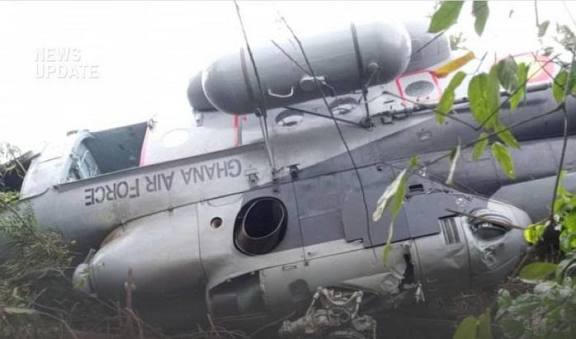
The investigation into the tragic helicopter crash of August 6, 2025, which claimed the lives of eight prominent Ghanaians, including Defence Minister Edward Omane Boamah and Environment Minister Ibrahim Murtala Muhammed, has now been officially concluded.
The final report from the Aircraft Accident and Incident Investigation Bureau (AIB Ghana), released on Tuesday, November 11, 2025, attributes the catastrophe to adverse weather conditions rather than mechanical failure or human sabotage, ruling out any foul play.
According to the report, the Harbin Z-9EH helicopter, tail number GHF 631, encountered poor visibility, low clouds, and fog while flying over the hilly and forested terrain of the Ashanti Region.
These weather conditions forced the pilots to fly lower than expected, which led to the helicopter losing altitude and ultimately descending into a downhill trajectory, resulting in the deaths of all the eight occupants.
Addressing a press conference at the Jubilee House, Captain (Rtd) Paul Fordjour, chairman of the investigative committee, explained that the aircraft was fully airworthy and had passed all maintenance checks prior to departure.
The investigation also clarified that the crash was not caused by external attacks.
Contrary to claims circulating after the accident, the helicopter was not shot down by galamsey operators or any other individuals present at the event the officials were attending.
Similarly, assertions by some members of the National Democratic Congress (NDC) suggesting that chemicals were deliberately poured into critical parts of the aircraft by political opponents were proven to be false.
The technical analysis firmly established that the tragedy resulted solely from sudden downdrafts and difficult weather conditions over elevated terrain.
Following the crash, the NDC MP for Ada, Comfort Doyoe Cudjoe-Ghansah, had made sensational claims about the helicopter exploding mid-air, alleging that all passengers were burnt before hitting the ground.
The investigative report, however, found no evidence to support these assertions, highlighting the importance of relying on verified facts rather than speculation in such sensitive matters.
The victims of the crash are Defence Minister Edward Omane Boamah, Environment Minister Ibrahim Murtala Muhammed, Deputy National Security Coordinator Limuna Mohammed Muniru, NDC Vice-Chair Samuel Sarpong, former Obuasi East parliamentary candidate Samuel Aboagye, Squadron Leader Peter Bafemi Anala, Flying Officer Twum Ampadu, and Sergeant Ernest Addo Mensah.
All were traveling from Accra to Obuasi to oversee operations targeting illegal mining when radar contact was lost, and the helicopter crashed in the Adansi Akrofuom District.
While the helicopter had passed all required airworthiness checks and was within its operational period, it lacked modern safety equipment such as Helicopter Terrain Awareness and Warning Systems (HTAWS/EGPWS), enhanced ground proximity warnings, and autopilot controls.
The absence of these systems increased pilot workload and limited their ability to respond to rapidly changing environmental conditions.
The investigative committee recommended urgent modernization of the Ghana Air Force fleet, emphasizing the need for advanced navigation and terrain warning systems, audiovisual-capable flight data and voice recorders, and certified simulators for recurrent pilot training.
Additionally, en route navigation aids, especially in remote areas, and comprehensive flight monitoring systems were recommended to prevent future tragedies.
Captain Fordjour stressed that while the crash was sudden and weather-related, investing in modern technology, training, and operational protocols would greatly reduce risks in future missions.
The report closes the chapter on speculation, confirming that the crash was an unfortunate result of natural forces rather than sabotage or foul play.


