By Daniel Bampoe
The John Dramani Mahama-led government has announced a raft of economic measures aimed at easing the financial burden on households, expanding employment opportunities for young people, supporting local businesses and reducing Ghana’s dependence on imported goods as part of its ambitious New Economy programme.
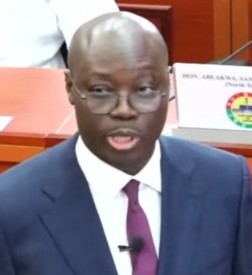
Presenting the 2027 Budget Statement and Economic Policy to Parliament on Thursday, November 12, 2026, Finance Minister Cassiel Ato Forson outlined a series of interventions which the government says will translate the country’s economic recovery into improved living conditions, increased production and sustainable employment.
Among the major announcements are a commitment not to introduce any new taxes in 2027, the removal of import duties and Value Added Tax (VAT) on solar panels and batteries, an additional GH¢1 billion for youth employment and apprenticeship programmes, and increased financial support for agriculture, education, healthcare and infrastructure.
The measures form part of the government’s four-year economic transformation agenda, dubbed The New Economy: New Ghana, Jobs and Prosperity, which is expected to run from 2027 to 2030 at an estimated cost of US$10 billion.
Dr Forson said the programme was designed to move Ghana away from an economy heavily dependent on raw material exports and imports towards one driven by domestic production, industrialisation, value addition and job creation.
He explained that although the country had made significant progress in restoring macroeconomic stability, the next phase of the government’s economic agenda would focus on ensuring that the gains were reflected in the pockets of ordinary Ghanaians.
According to him, the government had abolished several taxes since assuming office in 2025, including the ElectronicTransfer Levy (E-Levy), COVID-19 Health Recovery Levy, withholding tax on betting and lottery winnings, Emissions Levy and VAT on motor vehicle insurance.
He maintained that the 2027 Budget would introduce no new taxes, adding that the government’s priority would instead be to improve revenue collection, close loopholes, strengthen compliance and modernise the tax administration system.
The Finance Minister said the Income Tax Act, Revenue Administration Act, Stamp Duty administration and Communications Service Tax framework would be reviewed to make the tax system more efficient and responsive to the needs of businesses and individuals.
Government offers tax relief for solar users
In a major intervention expected to benefit households, businesses and institutions seeking alternative sources of electricity, the government announced the removal of import duties and VAT on solar panels and batteries.The measure is intended to reduce the cost of acquiring solar energy equipment and encourage more Ghanaians to adopt renewable energy solutions.
Dr Forson said the exemptions would form part of the incentives under the government’s 24-Hour Economy Programme, explaining that affordable solar technology could help traders keep their businesses operational, farmers power irrigation systems and schools, clinics and factories maintain reliable electricity supply.
He also encouraged electric vehicle owners, transport operators and charging businesses to take advantage of the incentives by investing in solar-powered charging facilities.
The announcement comes against the background of persistent challenges in Ghana’s energy sector, including high electricity tariffs, distribution losses, outstanding payments to power producers and the financial burden of maintaining reliable power supply.
The government is therefore committing US$2.2 billion to energy infrastructure under the New Economy programme, including the construction of a 1,450-megawatt state-owned thermal power plant at Kafodzidzi-Abrobeano in the Central Region and a 600-megawatt solar power plant supported by 2,000 megawatt-hours of battery storage.
The thermal plant is expected to be developed in two phases, with the first 600 megawatts scheduled for completion by December 2028 and the remaining 850 megawatts by December 2030.
The government also intends to invest US$500 million in modernising the country’s transmission network and deploy two million prepaid meters to reduce distribution losses.
It has further set a target of ending dependence on expensive emergency power plants by 2030 and reducing the cost of electricity generation from approximately 16 US cents per kilowatt-hour to eight US cents or less.
GH¢1 billion additional funding for youth employment
Young people are also expected to benefit from a major increase in funding for employment and apprenticeship programmes.Dr Forson announced that the government would amend the Earmarked Funds Capping and Realignment Act, 2017 (Act 947), to remove the existing cap on funding allocated to youth employment initiatives.
The reform is expected to release an additional GH¢1 billion for youth employment and apprenticeship programmes, with revenue from the Communications Service Tax earmarked for these initiatives no longer subject to the existing funding cap.
The government also plans to amend and modernise the Youth Employment Act to harmonise the various employment programmes and improve their implementation.
Beyond this intervention, the 2027 Budget has allocated GH¢3.5 billion to the Ministry of Youth Development and Empowerment.
The allocation includes GH¢2 billion for youth employment and skills development programmes, GH¢1 billion for the payment of allowances to National Service Personnel, GH¢170 million for the National Entrepreneurship and Innovation Programme and GH¢200 million for the National Youth Authority.
An additional US$300 million will be invested in the technology economy between 2027 and 2028 to establish a National Artificial Intelligence Centre and upgrade rural 2G networks to reliable 4G connectivity.
The proposed centre will provide computing infrastructure, research laboratories, professional training and startup support to Ghanaian businesses, researchers, universities and public institutions.
The government says the initiative will equip young people with practical skills in software development, artificialintelligence, data analytics, telecommunications and digital business services, creating opportunities for them to participate in the global digital economy.
Farmers and local businesses to benefit from import restrictions
The agricultural sector is another major beneficiary of the government’s economic measures, with US$3 billion earmarked for the commercial agriculture pillar of the New Economy programme.
The government intends to develop eight major agricultural value chains covering rice, sugar, poultry, maize and soya feed, aquaculture, oil palm, vegetables and cocoa processing.
A significant policy shift will be the introduction of new public procurement requirements compelling government institutions to purchase locally produced rice and other staple foods for schools, hospitals and public institutions.
Beginning in 2027, rice import licences will also be linked to purchases from verified Ghanaian farmers and millers, with local purchasing requirements expected to increase as domestic production expands.
The government has set 2030 as the deadline for ending commercial rice imports, a move it says will be supported by increased local production, modern milling facilities, storage infrastructure and reliable distribution systems.
The sugar industry will similarly receive attention, with the government targeting self-sufficiency in domestic sugar requirements by 2030 through the development of irrigated production zones, nucleus estates, organised outgrower schemes and commercially viable processing mills.
In the poultry sector, the government plans to strengthen the entire production chain, including breeder farms, hatcheries, feed production, veterinary laboratories, processing plants and cold storage facilities.To support the initiative, the government announced that it would uncap levies allocated to the Ghana Export-Import Bank (Ghana EXIM Bank).
Beginning in 2027, at least 40 per cent of revenue from the Ghana EXIM Bank Levy will be dedicated to financing commercial poultry and feed production.
The intervention is expected to provide financial support to poultry farmers and feed producers to expand their operations, reduce the country’s dependence on imported chicken and create employment across the agricultural value chain.
The government also plans to establish rice development hubs in the Afram Plains, Volta Basin, Western Ghana and Northern Ghana, bringing an additional 100,000 hectares under rice cultivation and supporting an estimated 125,000 jobs.
In the oil palm industry, 100,000 hectares of suitable land have been identified across the Western, Central, Eastern, Volta and Ashanti regions for commercial production.
A US$500 million financing facility, with long repayment periods and a five-year moratorium, is expected to support the development of the sector, which has the potential to generate more than 250,000 jobs.
The government has also announced a US$1 billion investment in the Pwalugu Multipurpose Dam to support irrigation and vegetable production on more than 25,000 hectares of land. The project is expected to generate 70 megawatts of hydropower and support aquaculture through the development of 1,000 fish cages.
The first phase is expected to be completed by early 2029, with full completion targeted for December 2030.
Ghanaian medicines to receive procurement preference
In the health sector, the government is seeking to reduce Ghana’s dependence on imported medicines through a US$1 billion Pharmaceutical and Biomanufacturing Compact.
Dr Forson disclosed that Ghana currently imports between 70 and 75 per cent of its medicine requirements at an estimated annual cost of US$500 million.
To reverse the situation, pharmaceutical and biomanufacturing hubs will be established in the Eastern and Central regions to support local production and create opportunities for Ghanaian and international manufacturers.
The government also intends to amend public procurement laws to make locally manufactured medicines the preferred option for public institutions whenever they are available in sufficient quantities and meet approved quality standards.
Manufacturers will, however, be required to meet Food and Drugs Authority registration requirements and Good Manufacturing Practice standards, while the government will support them to attain World Health Organisation prequalification.
The target is to manufacture between 60 and 80 per cent of Ghana’s essential medicine requirements locally by 2030, with approximately 20,000 direct and indirect jobs projected under the initiative.
The 2027 Budget has also allocated GH¢40.3 billion to the Ministry of Health, including GH¢10.2 billion for the National Health Insurance Scheme and GH¢2.6 billion for the Ghana Medical Trust Fund, popularly known as MahamaCares.
Another GH¢6.8 billion has been earmarked to begin the construction of two specialist hospitals, six regional hospitals, a new mother and child centre at Korle-Bu Teaching Hospital and two district hospitals.
The government has further allocated GH¢1 billion for the completion of the Eastern and Western Regional Hospitals and another GH¢1 billion towards completing 35 Agenda 111 district hospitals.
Other provisions include GH¢200 million for ambulances, GH¢100 million for childhood and maternal vaccines, GH¢60 million for the completion of La General Hospital and GH¢434 million for nursing trainee allowances.
Education: GH¢537m for No Fees Stress, GH¢292m for free sanitary pads
Education remains another major area of government spending, with GH¢48 billion allocated to the Ministry of Education for the 2027 financial year.
The allocation includes GH¢537 million for the No Fees Stress Policy, which supports first-year tertiary students by reducing the financial barriers associated with gaining admission to higher education institutions.
An additional GH¢292 million has been allocated for the distribution of free sanitary pads to schoolgirls, while GH¢169 million will cover Basic Education Certificate Examination (BECE) fees.
The government has also earmarked GH¢1.37 billion for secondary education transformation and the elimination of the double-track system.
Other allocations include GH¢11.2 billion for the Ghana Education Trust Fund (GETFund), GH¢227 million for teacher trainee allowances, GH¢166 million for the Capitation Grant and GH¢50 million for special schools.
A further GH¢250 million has been allocated to the Scholarship Secretariat to support its scholarship responsibilities.
The measures are expected to sustain existing educational interventions while improving access to learning opportunities and addressing infrastructure challenges across the country.
GH¢2.1bn for School Feeding and GH¢1.1bn for LEAP
The government’s social protection package also includes significant allocations for vulnerable households and children.
The Ministry of Gender, Children and Social Protection has been allocated GH¢3.4 billion, out of which GH¢2.1 billion will support the School Feeding Programme.
The Livelihood Empowerment Against Poverty (LEAP) programme will receive GH¢1.1 billion to provide financial assistance to extremely poor and vulnerable households.
An additional GH¢40 million has been allocated to the Social Protection Fund, while GH¢10 million each has been earmarked for the Domestic Violence Fund and the Child and Human Trafficking Fund.
The allocations are intended to strengthen the social safety net and ensure that vulnerable members of society benefit from the country’s economic recovery.
GH¢400m for buses as government expands transport infrastructure
The transport sector is also expected to receive fresh investment, with GH¢400 million allocated for the purchase of additional high-occupancy buses.
The Ministry of Transport has been allocated GH¢724 million, including GH¢174 million for ongoing railway development and GH¢69 million for preparatory works towards establishing a national airline.
The Ministry of Roads and Highways will receive GH¢11.3 billion, while GH¢28 billion has been allocated separately to the Big Push Programme to accelerate major road infrastructure projects