By Grace Zigah
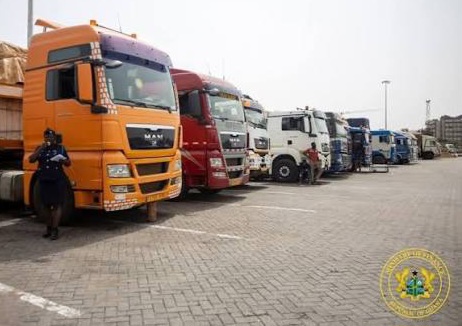
A Major corruption investigation has been launched into the illegal diversion of fifty 20-foot containers of palm oil valued at GH¢25.8 million, in what authorities describe as a sophisticated transit fraud scheme that has once again exposed deep-rooted weaknesses in the border control and revenue protection systems.
The probe, being conducted by the Office of the Special Prosecutor, centers on a consignment that was officially declared as goods in transit to Burkina Faso but was unlawfully diverted into the Ghanaian market without the payment of statutory duties and taxes.
Preliminary assessments indicate that the scheme resulted in an estimated GH¢10.5 million loss in government revenue.
According to official disclosures, the illegal operation involved a network of collaborators, including some Customs officers, National Security operatives, and clearing agents, who allegedly facilitated the diversion of the containers through a coordinated corrupt arrangement.
The investigation was triggered by an intelligence-led operation conducted in November 2025, which uncovered suspicious transit movements and abnormal clearance patterns linked to vegetable oil imports.
The OSP confirmed that its investigations are ongoing and have expanded beyond the initial interception to trace financial flows, identify beneficiaries, and dismantle the broader network behind the operation.
The Office has reiterated its commitment to protecting the public purse and enforcing accountability in high-value corruption cases involving state institutions and national revenue.
The scandal has sparked strong reactions from industry stakeholders, particularly the Oil Palm Development Association of Ghana (OPDAG), which publicly commended the government, the Ghana Revenue Authority, and the Ministry of Finance for recent confiscations of illegally imported vegetable oil consignments.
OPDAG described the enforcement actions as a critical step toward protecting market integrity, safeguarding public revenue, and defending legitimate local businesses.
In a statement, the association warned that the continued influx of illegally imported vegetable oil poses a severe threat to the edible oil value chain, which supports more than 500,000 Ghanaians through farming, processing, logistics, refining, and distribution.
According to OPDAG, illegal imports distort prices, undermine local producers, discourage investment, weaken food security, and constitute economic sabotage against domestic agro-industrial development.
These vulnerabilities, OPDAG argues, continue to enable large-scale duty evasion and revenue leakage.
In response, OPDAG called for urgent policy reforms, including sustained zero-tolerance enforcement against illegal vegetable oil imports, exclusive routing of vegetable oil consignments through seaports, stronger transit controls supported by real-time digital tracking, alignment of customs reference pricing with international market values, and the introduction of a national traceability and tax stamp system to identify fully compliant products.
The association also urged responsible management of confiscated vegetable oil, cautioning against auctioning seized products at discounted prices that could distort local markets.
Instead, it proposed channeling confiscated stocks into regulated buffer systems to stabilize supply without undermining legitimate producers.
The unfolding investigation adds to a growing list of high-profile transit fraud and diversion cases in Ghana, where goods declared for neighboring countries are rerouted into the local market through corrupt networks involving insiders and external collaborators.
Over the past decade, repeated scandals involving missing containers, transit abuse, and under-declaration schemes have raised concerns about systemic weaknesses in customs administration and border governance.