By Daniel Bampoe
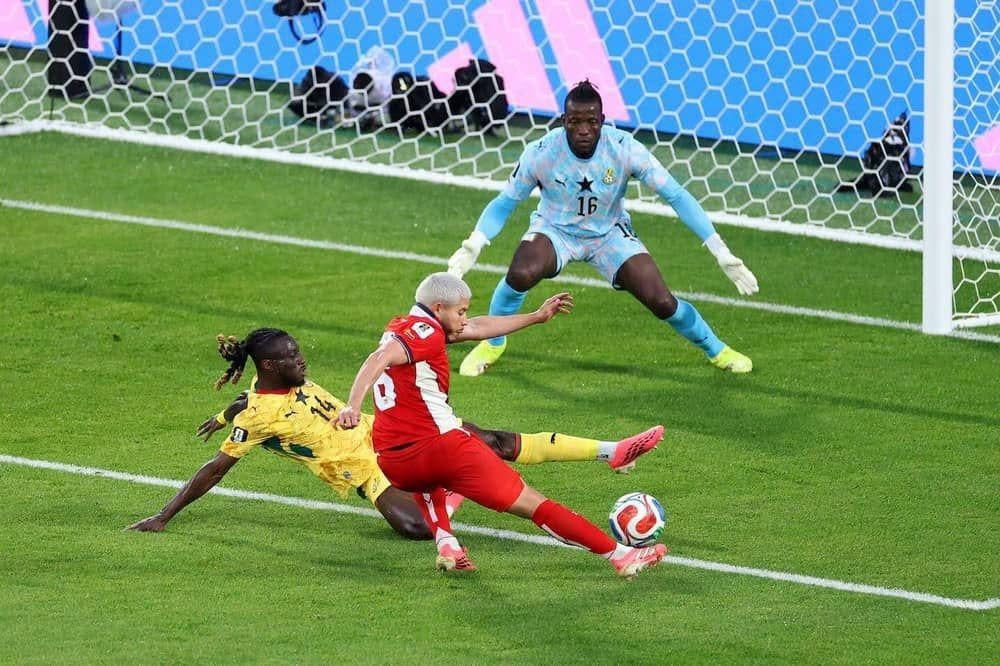
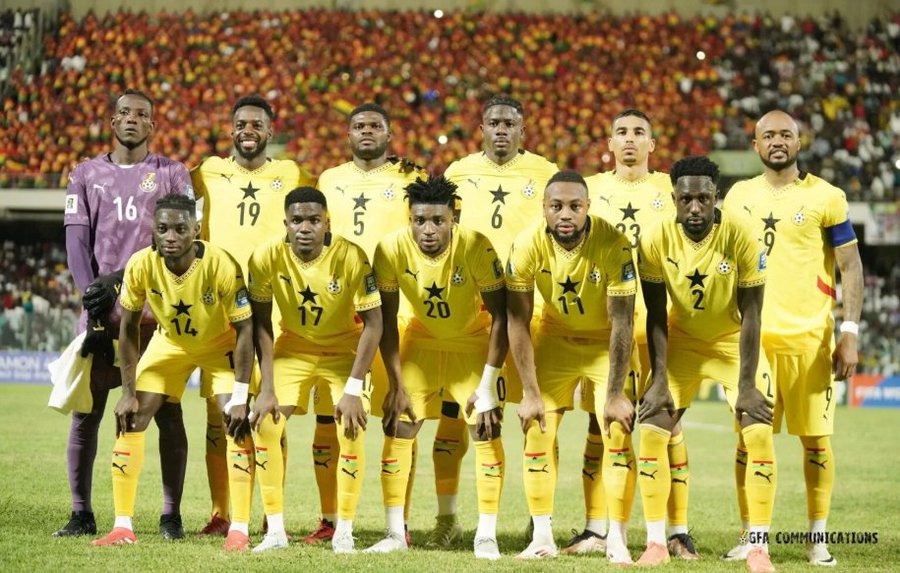
As Ghana prepares to begin its fifth FIFA World Cup campaign against Panama in Toronto, many Black Stars supporters have identified the Central American nation as the most favourable fixture in a challenging Group L that also includes England and Croatia.
However, football analysts are warning that such an assessment could prove dangerous, as Panama arrive at the 2026 FIFA World Cup as one of the most tactically organized and disciplined teams in the tournament.
The opening fixture on June 17 is already being viewed as a decisive encounter that could determine whether Ghana progresses to the knockout stage or faces another early exit from football’s biggest competition.
The preparations for the tournament have been far from smooth. Following the dismissal of former head coach Otto Addo, the Ghana Football Association appointed experienced Portuguese tactician Carlos Queiroz just two months before the World Cup, leaving him limited time to implement his philosophy and tactical structure.
Queiroz’s only game in charge so far ended in a 1-1 draw against Wales in Cardiff, a performance that offered glimpses of promise but also exposed several areas requiring urgent improvement ahead of the tournament.
While Panama may lack the global profile and star names associated with England and Croatia, their recent performances suggest they could be among the most difficult opponents Ghana faces in the group stage.
Panama’s Possession-Based Identity
Unlike the traditional perception of many CONCACAF teams, Panama are a possession-dominant side that prefers to control matches through patient build-up play and intelligent movement.
During their World Cup qualifying campaign, Panama recorded an average possession rate of 61.9 percent, the highest among all teams in the CONCACAF region. Their dominance on the ball became even more evident during the 2025 Gold Cup, where they averaged an impressive 66.3 percent possession.
Under head coach Thomas Christiansen, Panama have developed a flexible 3-4-3 system capable of transforming into a compact 5-4-1 when defending. Their style relies heavily on short passing combinations before quickly transitioning into direct attacks through wide areas.
A key component of this system is the attacking contribution of wing-backs Amir Murillo and Jorge Gutiérrez, whose pace and movement often create dangerous situations behind opposition defensive lines.
Their ability to stretch opponents and exploit spaces could pose serious problems for Ghana if the Black Stars fail to maintain defensive discipline.
Midfield Battle Could Define The Match
One of the biggest selection decisions facing Carlos Queiroz revolves around the midfield, particularly the role of experienced midfielder Thomas Partey.
The former Arsenal star remains one of the most accomplished players, but recent performances have raised concerns about his current fitness levels and mobility.
Against Wales, Partey struggled to influence proceedings and was substituted at halftime after an underwhelming first-half display. Similar concerns had also emerged during previous matches against Austria and Germany.
Observers believe a lack of regular club football may have affected the midfielder’s sharpness and physical condition at a crucial stage of the season.
In contrast, young FC Nordsjaelland midfielder Caleb Yirenkyi has impressed whenever called upon. The energetic midfielder offers mobility, pressing intensity and the ability to recover possession quickly—qualities that could prove essential against Panama’s high-possession approach.
While Partey’s experience remains invaluable, some analysts argue that Yirenkyi’s athletic profile may be better suited to the demands of Ghana’s opening World Cup encounter.
Panama’s Relentless Pressing Threat
Possession is only one aspect of Panama’s strength.
The Central Americans are also among the most aggressive pressing teams in international football. During qualification, they registered a Passes Per Defensive Action (PPDA) rating of 9.4, the lowest among CONCACAF nations.
The statistic highlights Panama’s ability to disrupt opponents and force mistakes high up the pitch.
Their pressing game produced 82 high turnovers during qualification, demonstrating how effectively they regain possession in dangerous attacking areas.
This could be particularly concerning for Ghana, whose recent performances have exposed vulnerabilities when attempting to build from the back against organized pressing systems.
Matches against Japan, Austria and Germany revealed recurring struggles under sustained pressure, an issue Panama may look to exploit.
Key Selection Calls for Queiroz
The tactical demands of the game could influence several important team selections.
Lawrence Ati-Zigi is increasingly being viewed as the favourite to start in goal ahead of Benjamin Asare. Although Asare played a vital role during Ghana’s qualification campaign, concerns remain over his distribution under pressure.
His costly mistake against Mexico, which led directly to a goal, highlighted potential weaknesses that Panama’s pressing system could target.
Ati-Zigi’s stronger ball-playing ability and composure in possession may offer Ghana greater security when attempting to build attacks from deep.
At centre-back, Kojo Oppong Peprah is also emerging as a strong candidate to partner Jerome Opoku. His calmness on the ball and ability to progress possession through midfield may provide Ghana with a valuable outlet against Panama’s aggressive press.
Underrating Panama Could Be Dangerous
Panama enter the World Cup ranked 34th in the FIFA rankings and have suffered only two defeats this year, against Brazil and regional powerhouse Mexico.
Their impressive consistency, tactical discipline and physical intensity have transformed them into one of the most respected teams in the CONCACAF region.
Ghana, meanwhile, will be seeking to improve a modest record in World Cup opening matches. The Black Stars have won only one of their previous four opening games at the tournament—a famous 1-0 victory over Serbia at the 2010 FIFA World Cup in South Africa.