
The Ghana Police Service has provided its most detailed account yet of the investigation into the controversial “Ghana Jollof” TikTok account, alleging that a Techiman-based nurse, Salomey Awiti Bafoh, assisted in the dissemination of content produced by Barbara Asantewaa Kodua, the woman police have identified as the suspected owner of the account.
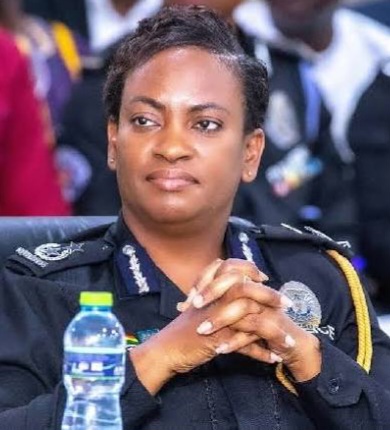
Speaking at a press briefing at the Criminal Investigation Department (CID) Headquarters in Accra on Friday, September 18, 2026, the Director-General of the CID, COP Lydia Yaako Donkor, said investigations had been ongoing into alleged publication of false news, inciteful comments and offensive conduct associated with the account.
According to the CID, the Police had for some time monitored a TikTok account operating under the name Ghana Jollof, which it said was being used to publish what investigators considered offensive and inciteful comments as well as false information capable of causing fear and alarm.
COP Donkor said police intelligence identified Barbara Asantewaa Kodua as the alleged owner of the account and indicated that she was believed to be domiciled in the United Kingdom.
The CID alleged that Kodua had produced and published videos containing offensive and inciteful statements with the potential to provoke violence. Among the materials under investigation, police cited a video in which she allegedly claimed that there had been a near coup d’état at the Jubilee House.
The investigation subsequently led police to Salomey Awiti Bafoh, a nurse resident in Techiman, whom the CID alleges assisted Kodua in distributing the videos.
Police said their investigations had established that Bafoh recruited other individuals to redistribute and circulate the materials across various social media platforms.
The CID further claimed that forensic examination of Bafoh’s mobile devices and other records, together with audio interviews, had established that she and Kodua were friends. Police said they were also in possession of audio recordings in which the relationship between the two was allegedly admitted.
More significantly, the CID disclosed an alleged financial dimension to the investigation. According to COP Donkor, forensic examination of audio and video files on mobile phones, as well as mobile-money transaction records, showed that “highly influential persons” had transferred significant amounts of money to Bafoh.
Police alleged that Bafoh subsequently shared portions of the money with persons involved in redistributing the Ghana Jollof videos.
The CID further alleged that Kodua, while in the United Kingdom, had remitted funds to Bafoh in Ghana to support the activities. Investigators also claimed that some individuals had consistently provided financial sponsorship for Kodua’s online activities.
COP Donkor said investigators had identified people they believe were financing the activities and that information retrieved from mobile devices, including voice material and other forensic evidence, had been documented for possible presentation before the court.
She stressed that investigations were still ongoing to identify and locate additional people allegedly involved in the redistribution of the videos and the financing of the activities.
Bafoh was arrested through a collaboration between the National Signals Bureau and the Ghana Police Service and subsequently put before court on a charge of abetment of crime to wit, publication of false news. She was remanded to assist with investigations and is expected to reappear on September 30, 2026.
The Police’s latest disclosure comes amid intense public and political controversy over Bafoh’s arrest. Her family and supporters have questioned her alleged connection to the Ghana Jollof account, while opposition figures have raised concerns about due process and freedom of expression.
The Police, however, maintained that its investigation is focused not on legitimate political criticism but on conduct it says may violate Ghana’s criminal and electronic communications laws.
COP Donkor reminded the public that publications and conduct contrary to the Electronic Transactions Act, 2008 (Act 772) and the Criminal and Other Offences Act, 1960 (Act 29) could constitute criminal offences.
She urged Ghanaians to exercise caution in their online engagements, particularly where publications could create security concerns, and assured the public that the Police would continue working with other stakeholders to maintain law and order both offline and online.


