BY Issah Olegor
Ghanaians are set to pay significantly more for sachet water—popularly known as “pure water”—starting next week, following a major price adjustment announced by producers, a development expected to deepen the cost-of-living burden on households.
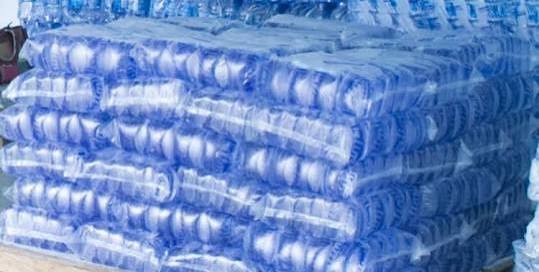
The National Association of Sachet and Packaged Water Producers (NASPAWAP) has confirmed that effective April 6, 2026, a bag of sachet water will now retail at a maximum price of GH¢15, translating to about GH¢1 per sachet, up from the widely sold price of 50 pesewas in many parts of the country.
The 100 percent sharp increase represents one of the most notable jumps in the price of an essential commodity in recent years, raising concerns among consumers who rely heavily on sachet water as their primary source of drinking water.
Producers attribute the increment to rising production costs, particularly the increasing price of polymers—the key raw material used in sachet packaging—as well as global supply disruptions linked to ongoing tensions in the Middle East.
However, beyond these explanations, the move has sparked a broader debate about pricing practices and the absence of strong market regulation in Ghana.
Sachet water has become indispensable in the urban and peri-urban communities, especially as access to clean and safe pipe-borne water remains inconsistent.
Environmental challenges such as illegal mining activities have further polluted natural water sources, making packaged water the most reliable alternative for millions of citizens.
Despite this, analysts argue that the decision by an industry association to announce a uniform pricing structure raises questions about competition and consumer protection.
In a liberalised market, individual producers are expected to determine prices based on their own operational efficiencies and sourcing strategies, rather than adhering to a collective pricing guideline.
The concern is that such coordinated pricing could limit competition, protect less efficient producers, and ultimately push prices higher for consumers. Experts warn that in the absence of proper regulatory oversight, essential sectors like sachet water production may become vulnerable to cartel-like behaviour.
This development comes at a time when Ghana lacks a comprehensive competition law to regulate price-fixing and anti-competitive practices across industries. While sectors like petroleum have specific provisions against such conduct, other areas—including sachet water production—operate within a legal vacuum, leaving consumers exposed.
Policy analysts are now calling on government to intervene, urging the Ministry of Trade and the Attorney General to engage stakeholders and ensure that pricing decisions remain competitive and fair.
There are also renewed calls for the passage of a national competition and consumer protection law to safeguard public interest.
However, as the new prices take effect under the current administration, many Ghanaians are expected to feel the immediate impact, particularly low-income households that depend on sachet water for daily consumption.
With the cost of a single sachet now projected to double in some areas, the development highlights the growing pressure on basic living expenses and raises critical questions about affordability, regulation, and the future of essential commodities in Ghana.