BY Daniel Bampoe
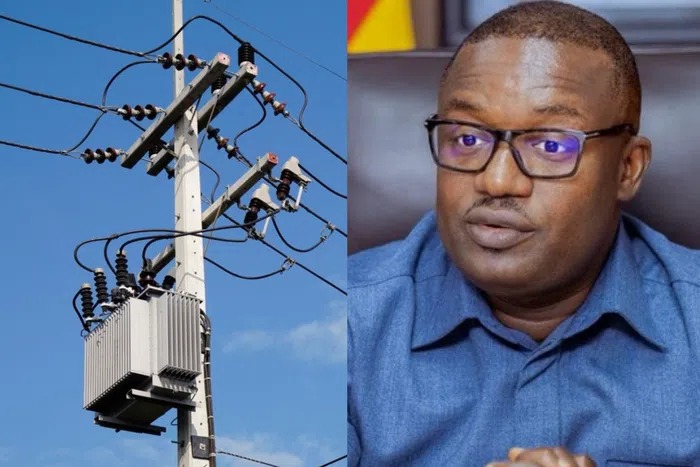
The government has announced plans to release a nationwide timetable for transformer replacement and upgrades in the coming weeks, a move aimed at addressing persistent power fluctuations and preventing a full return of dumsor, as the long-standing electricity crisis that has periodically disrupted economic and social life.
Speaking at a town hall meeting in Koforidua, the Minister for Energy and Green Transition, John Abdulai Jinapor, disclosed that the intervention forms part of a broader strategy to strengthen electricity distribution infrastructure across the country.
According to him, 140 new transformers have already been installed, with an additional 300 expected to be deployed in the coming weeks to improve reliability and reduce outages in affected communities.
The minister stressed that the government remains committed to ensuring that Ghana does not relapse into the severe dumsor era that dominated public discourse between 2012 and 2016, when prolonged power cuts crippled businesses and triggered widespread public dissatisfaction.
He maintained that the current measures are proactive, designed to stabilise supply rather than respond to a full-blown crisis.
Jinapor also commended engineers and technical staff of the Volta River Authority (VRA) and the Ghana Grid Company (GRIDCo) for their swift intervention following a recent fire incident at the Akosombo substation, which threatened to disrupt the national grid.
He described their response as “unparalleled,” noting that their efforts helped restore stability within a short period.
Despite growing public concern over intermittent outages in parts of the country, the minister insisted that Ghana’s energy situation remains stable, revealing that the country continues to generate enough electricity not only for domestic consumption but also for export to neighbouring countries such as Burkina Faso, Côte d’Ivoire, and Togo.
He further clarified that the ongoing transformer installations are part of a new procurement initiative under the current administration led by John Dramani Mahama, in collaboration with Finance Minister Cassiel Ato Forson.
According to him, more than 2,500 transformers are expected to be installed nationwide, dismissing suggestions that the equipment was inherited from the previous government.
However, the exercise has become a subject of political controversy.
Former Managing Director of the Electricity Company of Ghana, Samuel Dubik Mahama, has publicly claimed that the transformers currently being deployed were procured under the previous New Patriotic Party (NPP) administration.
He argues that the current government is taking credit for ongoing projects initiated before the 2024 elections, while also raising concerns about what he describes as a lack of continuity in maintenance programmes.
These competing claims have fueled a broader national debate about the management of the energy sector, particularly at a time when some communities continue to experience erratic supply.
Critics argue that transformer replacements alone may not fully resolve the underlying structural challenges, including financing gaps, maintenance deficits, and increasing demand for electricity.
In response to rising consumption levels, President John Dramani Mahama has also announced plans to construct a new 1,200-megawatt gas-fired power plant as part of a long-term strategy to expand generation capacity.
He noted that Ghana’s peak electricity demand has risen from about 3,500 megawatts to approximately 4,300 megawatts, driven by economic growth and increased investment.
The planned power plant, for which sod is expected to be cut later this year, is intended to provide additional capacity and system redundancy, ensuring that the country can meet rising demand while maintaining stability. It is also expected to strengthen the position as a net exporter of electricity within the West African sub-region.
Historically, Ghana’s power sector has faced cyclical challenges, with periods of stability often followed by supply constraints due to a mix of technical faults, fuel supply issues, and infrastructure limitations.
The introduction of a transformer upgrade timetable signals a shift toward more structured planning in the distribution segment, which has often been identified as a weak link in the energy value chain.
However, as the country awaits the release of the timetable, many consumers remain cautiously optimistic, hoping that the promised interventions will translate into consistent and reliable electricity supply, and ultimately lay to rest the recurring threat of dumsor that continues to shape the energy discourse.