By Nadia Ntiamoah
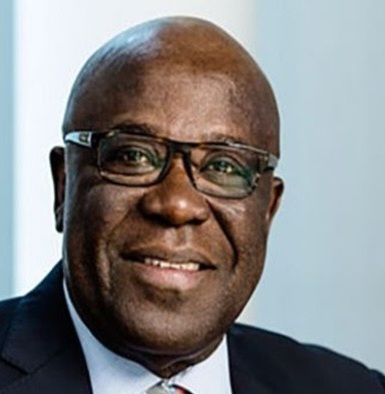
Prominent Ghanaian business executive, Samuel Esson Jonah, has issued a stern open letter to the Heads of State of the African Union, calling for urgent continental action in response to what he describes as a resurgence of global imperial ambitions.
The letter, dated February 18, 2026, responds to recent remarks made by United States Secretary of State Marco Rubio at the Munich Security Conference. Rubio’s speech, in which he lamented the “terminal decline” of Western empires and urged Europe to reclaim a dominant global role, was widely interpreted by critics as a nostalgic appeal to the era of colonial dominance.
Sam Jonah warned that such statements underscore the persistent risks of neocolonialism, noting that Africa remains vulnerable to economic exploitation despite decades of political independence.
“Make no mistake: these are not idle musings. In the eyes of some global powers, Africa’s independence is a historical inconvenience, and our resources remain ripe for extraction,” Jonah wrote.
He emphasized that Africa’s experience with external interference is longstanding, citing the continuation of exploitative trade, debt dependencies, and geopolitical maneuvering long after formal decolonization.
The letter situates this warning within the current geopolitical and humanitarian context. Jonah highlighted armed conflicts across the Sahel, Sudan, the Horn of Africa, and the Great Lakes region, pointing to insurgencies, state fragmentation, and foreign involvement as drivers of instability.
Economic distress, climate shocks, democratic erosion, and youth-led protests against entrenched leadership were listed as additional challenges facing the continent in 2026.
Against this backdrop, Sam Jonah urged African leaders to accelerate regional integration as a foundation for sovereignty and self-reliance. He pointed to the African Continental Free Trade Area (AfCFTA), operational since 2021, noting that 49 of 54 signatory states have ratified the agreement.
While intra-African trade has increased modestly, it remains around 15–16% of total exports—far below levels seen in Europe and Asia. Jonah warned that without full implementation, including the Protocol on Free Movement of Persons, AfCFTA risks remaining largely symbolic rather than transformative.
Jonah’s letter outlined key priorities for African governments:
Accelerate AfCFTA Implementation – Streamline rules of origin, services, and investment; invest in cross-border infrastructure and digital trade platforms.
Ratify and Enforce Free Movement – Enable labor and service mobility to fully harness human capital.
Build Internal Resilience – Reduce reliance on donor aid, manage debt, develop agriculture and industry for value addition, and strengthen regional security through the African Union’s Peace and Security Architecture.
Empower Youth and Institutions – Respond to civic activism and governance challenges with reform and transparency.
Forge a Unified Foreign Policy – Speak with one voice in global forums and reject external pressures that compromise African interests.
Sam Jonah invoked the legacy of African leaders such as Kwame Nkrumah, Kenneth Kaunda, and Thomas Sankara, emphasizing that the continent’s historical struggle for unity and self-determination remains unfinished.
“The threats are real, but so is our potential. Wake up, unite, and act—before we find ourselves on the menu once more,” he concluded.