BY Issah Olegor
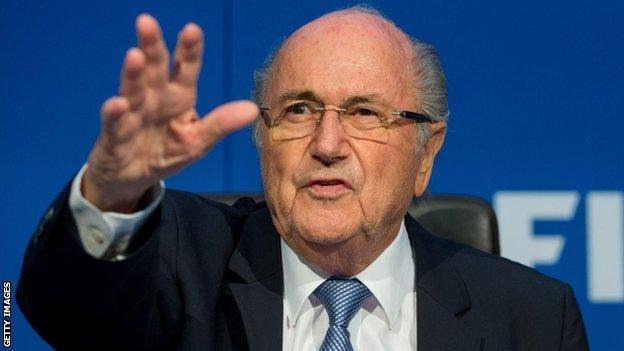
The controversy surrounding Ghana midfielder Thomas Partey’s exclusion from the Black Stars’ opening match of the 2026 FIFA World Cup has taken a new turn, with former FIFA President Sepp Blatter calling on host nations to guarantee unrestricted entry for all accredited participants in the tournament.
Blatter’s intervention comes at a time when tensions continue to rise between Ghana and Canada following the Canadian government’s decision to deny Partey a visa for Ghana’s Group L opener against Panama in Toronto.
The decision has sparked diplomatic exchanges between the two countries and reignited debate over the balance between national immigration policies and FIFA’s commitment to the universality of football.
The former FIFA boss, who led world football’s governing body for nearly two decades, used social media platform X to remind host nations of what he described as their fundamental obligations when staging the FIFA World Cup.
“A FIFA World Cup host country must guarantee two fundamental principles: the safety of the country, and the unrestricted entry of all qualified teams, officials and referees,” Blatter wrote.
Although he did not specifically mention Thomas Partey, the timing of his statement has inevitably drawn attention because it coincides with the efforts to overturn Canada’s decision.
Blatter referenced the case of Somali referee Omar Artan, who was recently denied entry into the United States despite being appointed by FIFA to officiate matches at the 2026 World Cup.
“The case of referee Omar Artan from Somalia is against one of these obligations. FIFA must never compromise the universality of football,” he stated.
His comments have added further weight to a growing international discussion about whether World Cup host countries should make special provisions for accredited participants whose immigration status might otherwise become problematic under domestic laws.
The Partey controversy emerged after Canadian authorities refused to grant the former Arsenal and current Villarreal midfielder entry into the country for the opening fixture.
While Canadian officials have not publicly disclosed the exact basis for their decision, the NDC government says it understands the refusal is linked to ongoing criminal proceedings involving the player in the United Kingdom.
Thomas Partey is currently facing rape and sexual assault charges in Britain. Through his legal representatives, the 32-year-old has consistently denied all allegations and pleaded not guilty. The matter remains before the courts, and no conviction has been recorded against him.
The decision has generated significant concern in Ghana, where many football supporters believe the midfielder should not be denied participation in the tournament before the legal process has run its course.
In response, the Ministry of Foreign Affairs lodged a formal diplomatic protest with Canadian authorities, describing the decision as unfair and disproportionate. The government subsequently initiated discussions with Canada while exploring possible diplomatic, administrative and legal avenues to secure a review of the decision.
The Ministry argue that relying on allegations that have not been tested and determined by a court raises serious questions about fairness and due process.
Canada, however, has defended its position. Immigration Minister Lena Diab recently stated that hosting a major sporting event does not alter Canada’s immigration laws and that every application is assessed individually according to the facts available and the relevant legal framework.
“Canada is proud to be a host country for the 2026 FIFA World Cup and is working to facilitate a successful event while maintaining the safety and security of Canadians,” Diab stated.
She further stressed that immigration decisions remain subject to Canadian law regardless of the profile of the applicant.
The issue has also placed FIFA under increased scrutiny. While the governing body has consistently maintained that visa and immigration matters fall exclusively under the jurisdiction of host governments, critics argue that FIFA must do more to ensure that players, officials and referees accredited for its flagship competition are not prevented from participating.