By Grace Zigah
Serious questions about conflict of interest and procurement transparency have emerged following revelations that a company linked to the family of Deputy Chief of Staff, Stan Dogbe, allegedly secured a GH¢11 million government contract to renovate the offices of the Ghana Gold Board (GoldBod).
The development has triggered scrutiny of how the contract was awarded and whether the process complied with Ghana’s public procurement laws, especially given Stan Dogbe’s powerful position within the Presidency.
Stan Dogbe was appointed Deputy Chief of Staff in charge of Operations in 2025 by President John Dramani Mahama, a long-time political associate.
The role places him at the heart of government administration, where he is believed to oversee coordination of government appointees and internal operations within the Presidency. Around the same period, his brother, Woelinam Dogbe, was also appointed by President Mahama as Deputy Director-General for Investment and Development at the Social Security and National Insurance Trust (SSNIT).
The dual appointments of the Dogbe brothers into influential public positions have now come under intense scrutiny following allegations involving government contracting.
Investigations into the GoldBod office renovation contract reveal that Stan Dogbe and his brother Woelinam Dogbe are associated with the ownership of Woezor Group Limited, a private business entity with interests in consultancy and maintenance services.
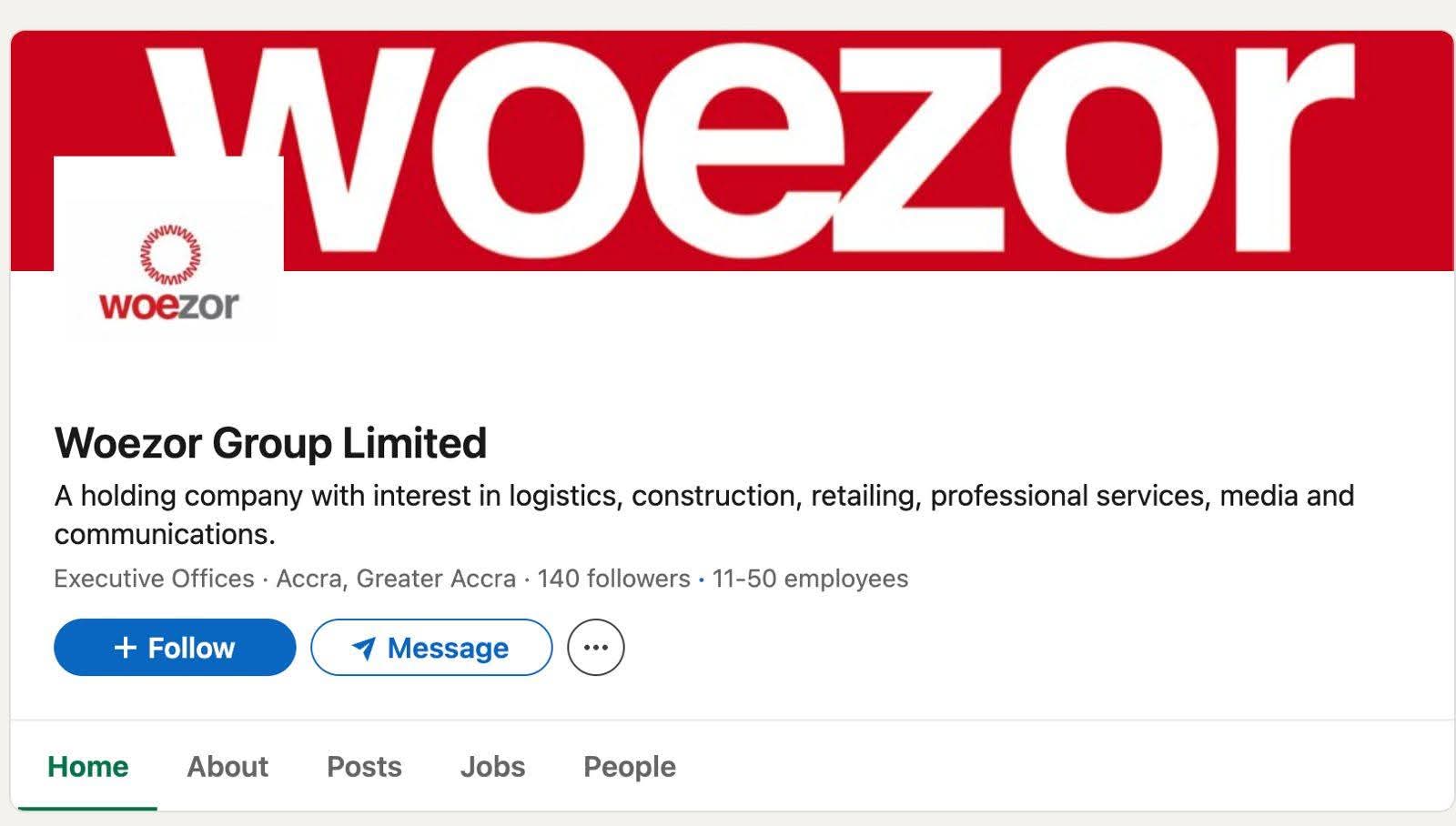
Corporate records indicate that the group operates a subsidiary known as Correca Ghana Limited, which is headed by Joshua Nicco-Annan. Until sometime in mid-2025, both Woezor Group and Correca Ghana Limited reportedly operated from the same office location at Adjiriganor in Accra, suggesting a strong operational and ownership link between the two entities.
Correca Ghana Limited, which has reportedly been operating since the early 2020s, specializes in home and office maintenance consultancy services. Like other companies that undertake construction, renovation or maintenance works for the state, it is expected to meet certain regulatory requirements before qualifying to bid for government contracts.
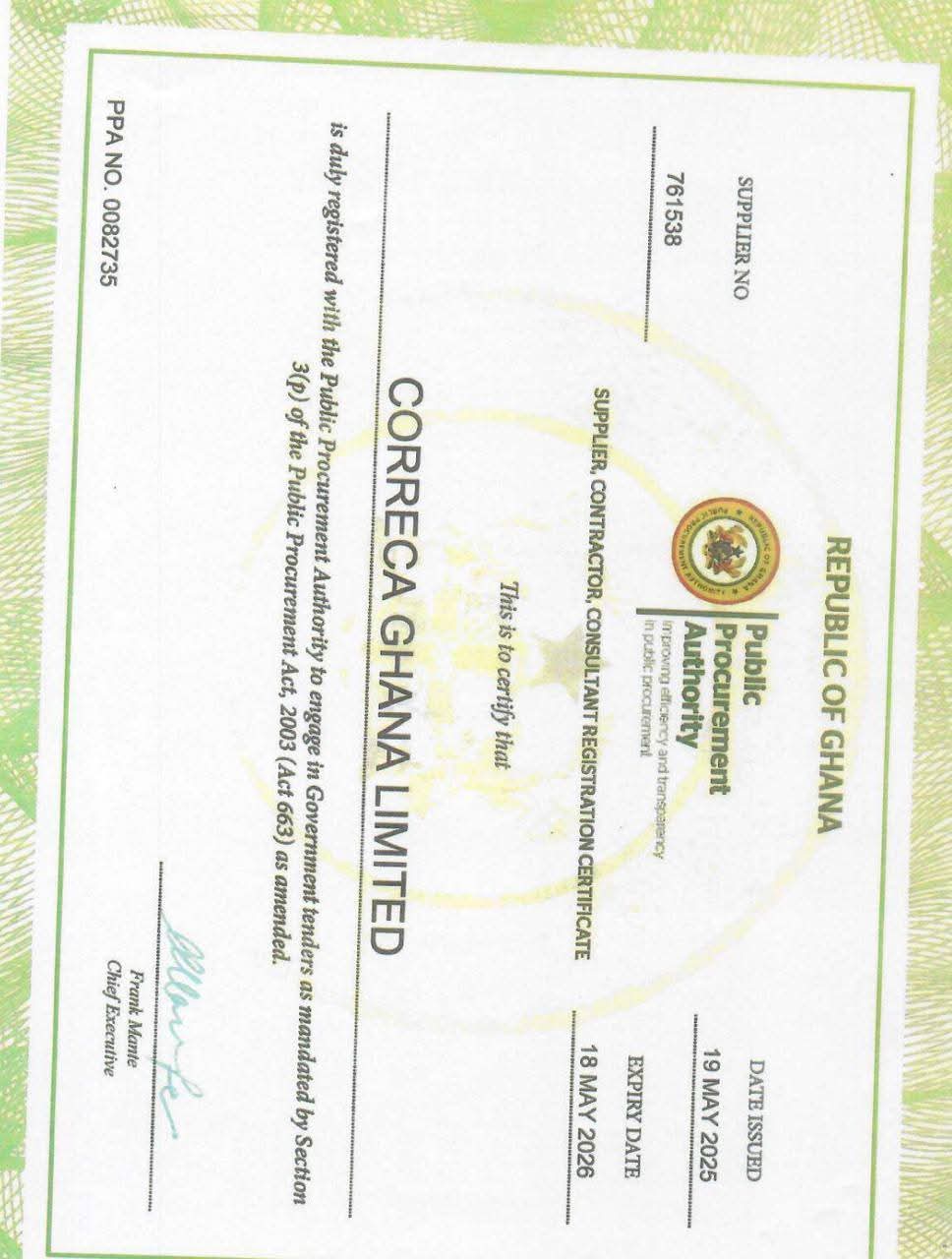
Among these requirements are valid certification from the Ministry of Works and Housing and registration with the Public Procurement Authority (PPA), which confirms that a company meets the technical and administrative standards necessary to undertake public projects.
However, the procurement trail surrounding the GoldBod renovation contract has raised serious questions about the company’s eligibility at the time the contract was allegedly awarded.

Available records indicate that Correca Ghana Limited obtained its PPA certificate in May 2025, enabling it to participate in government procurement processes.
But further documents suggest that the company’s Works and Housing certificate expired on June 17, 2025, barely a month after it secured the PPA certification.

Despite this situation, sources claim that GoldBod awarded Correca Ghana Limited a contract valued at GH¢11 million in July 2025 through a sole-sourcing procurement method, meaning the contract was awarded without a competitive bidding process.
The timing of the award has raised eyebrows among procurement experts because it occurred just two months after the company received its PPA certification and barely one month after its Works and Housing certification had expired.
Under normal procurement practice, companies seeking government contracts must maintain active and valid certifications for a sustained period before they are considered eligible to execute public works.
These certifications are meant to assure the government that contractors possess the technical competence, regulatory compliance and operational capacity to undertake such projects.
The apparent discrepancy in Correca’s certification timeline has therefore prompted critics to question whether the contract award met the required procurement standards.
The contract itself reportedly involves the renovation of the former Bank of Ghana office building, which is currently being used as the headquarters of the Ghana Gold Board (GoldBod). GoldBod was recently established as part of government reforms aimed at strengthening oversight of the gold trade and improving revenue collection from the mining sector.
The institution is expected to coordinate gold purchases, regulate transactions and help curb illegal gold trading.
Critics, however, are questioning whether the GH¢11 million renovation cost is justified, particularly given that the building in question was reportedly occupied by the Bank of Ghana only weeks before the refurbishment project was proposed.
The critics especially opposition members argue that it is unusual for a facility that was recently in active use by the central bank to require such extensive renovation works.
They have even suggested that the amount involved could potentially finance the construction of an entirely new office complex.
Beyond the cost concerns, the central issue driving public debate is the perceived conflict of interest involving Stan Dogbe. As Deputy Chief of Staff, Dogbe occupies a strategic position within the Presidency that places him in close proximity to government decision-making and oversight of key public institutions.
Critics argue that if a company connected to his family secured a government contract through sole sourcing, it raises serious ethical and governance questions.
They also note that it would be difficult for any government agency or official to refuse or challenge a contract involving a company associated with such a senior presidential aide. This perception, they say, undermines the principle of fairness in government contracting and could discourage open competition among other qualified companies.
The controversy has also reignited comparisons with previous cases involving public officials and private business interests.
In earlier situations, some government appointees were required to distance themselves from companies that sought to do business with the state in order to avoid conflicts of interest.
They further argue that the same ethical standards should apply in this case to maintain public confidence in the integrity of the procurement system.
They are therefore calling for a full disclosure of the GoldBod renovation contract, including the detailed bill of quantities, procurement approval documents, justification for the sole-sourcing method, and the ownership structure of Correca Ghana Limited.
They insist that such disclosure is necessary to determine whether the contract followed the law and whether the price quoted reflects the actual scope of renovation works.
So far, neither Stan Dogbe, GoldBod officials, nor Correca Ghana Limited has publicly addressed the allegations surrounding the contract. With public scrutiny intensifying, the issue is expected to draw attention from oversight bodies such as the Public Procurement Authority, the Auditor-General, and other anti-corruption institutions.