BY Grace Zigah
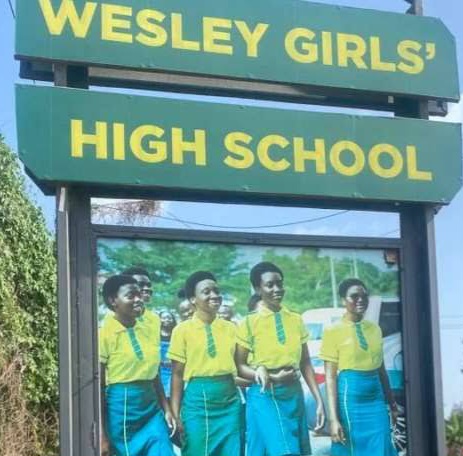
The Supreme Court has taken a decisive step in the ongoing legal battle over religious rights at Wesley Girls’ Senior High School (SHS), directing the school to formally respond to allegations that it restricts Muslim students from practicing their faith.
The case, initiated in December 2024 by Lawyer Shafic Osman, challenges Wesley Girls’ SHS policies that allegedly prevent Muslim students from observing key religious practices such as wearing the hijab, fasting during Ramadan, and performing other Islamic rites.
Osman argues that these restrictions contravene constitutional guarantees under the 1992 Constitution, including freedom of religion, equality, and protection from discrimination.
During Tuesday’s Supreme Court sitting, the court granted Democracy Hub, a civil society organization, leave to file a written submission as amicus curiae, or “friend of the court,” allowing broader civil society participation in the case.
This development signals the court’s recognition of the public interest and the potential precedent the case could set for religious accommodation in Ghana’s mission schools.
The Attorney-General, Dr. Dominic Ayine, representing Wesley Girls’ SHS and the Ghana Education Service (GES), applied to withdraw and replace the government’s original Statement of Case.
The Supreme Court allowed the amendment but emphasized that the first defendant, the Board of Governors of Wesley Girls’ SHS, must directly address the specific allegations regarding Muslim students’ rights.
The Deputy Attorney-General Dr. Justice Srem-Sai noted that the amended statement primarily outlined constitutional frameworks without directly engaging with the factual claims of religious restriction.
Wesley Girls’ SHS, founded and managed by the Methodist Church of Ghana, is partially funded by the government.
The school has argued that its right to maintain Methodist traditions, including religious activities, falls within its constitutional freedom to exercise its denominational identity.
The Attorney-General’s office contends that accommodating unrestricted religious practices for other faiths could undermine the school’s Methodist values, drawing on precedents from local and international law that recognize the autonomy of faith-based educational institutions.
This legal dispute has reignited public debate over the responsibilities of government officials, particularly Muslim leaders, in defending religious freedoms.
In May 2021, the current Government Spokesperson, Felix Kwakye Ofosu publicly urged former Vice President Mahamudu Bawumia to take a clear stance when similar concerns arose, noting that silence from prominent Muslim leaders on such issues could be perceived as a betrayal of their communities.
Critics now question whether government officials, including Education Minister Haruna Iddrisu, should intervene or provide guidance on reconciling denominational policies with constitutional protections.