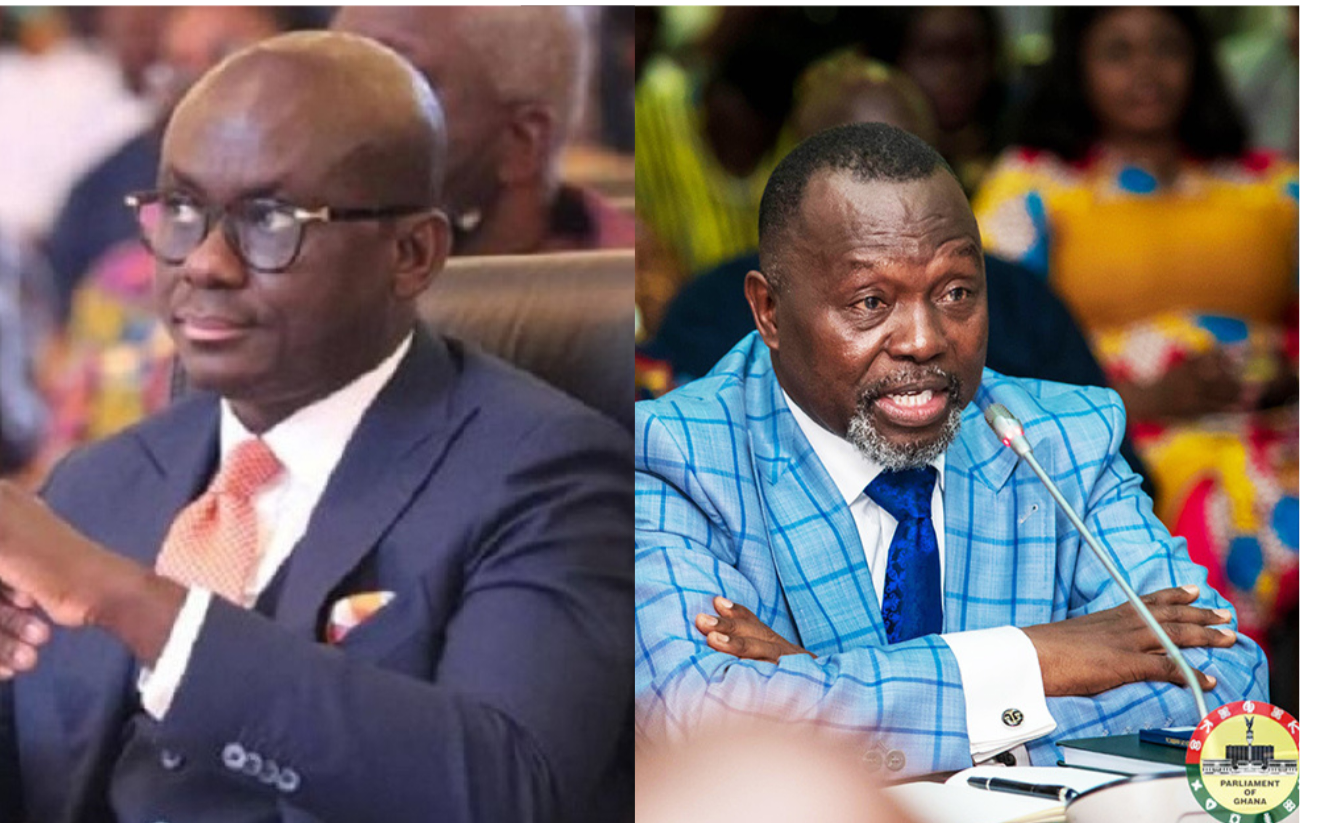
- By Daniel Bampoe
The credibility of the Mahama administration’s flagship anti-corruption initiative, Operation Recover All Loot (ORAL), has come under renewed scrutiny following startling revelations by former Auditor-General, Daniel Yao Domelevo that the data collected under the project included “garbage” entries gathered without any form of verification.
Speaking on Joy News’ PM Express on Tuesday, October 22, Domelevo conceded that the ORAL team—tasked with tracing and recovering stolen state resources—merely received and compiled complaints from the public without authenticating the information.
“As for us, we just collected data and summed it up. We didn’t do any investigation,” he said, stressing that many of the submissions could have been baseless.
“I completely agree,” he told the host, responding to Deputy Attorney-General Justice Srem Sai’s recent comments that the estimated $21 billion in supposed recoverable assets was exaggerated.
“Those figures were simply a summation of all the complaints received. Some could shrink, others could balloon, depending on audit or court findings. The actual game is in the courtroom,” Daniel Domelevo explained.
The former Auditor-General revealed that the ORAL Secretariat accepted every complaint, whether or not it was supported by credible evidence.
“Nobody came to us that we turned away. Some even came by email without documents. What if the person was just making it up?” he asked rhetorically, adding that many of the entries might have lacked substance or authenticity.
According to Domelevo, even where court rulings might favor the state, recovering the money remained a major hurdle.
He cited the infamous Woyome case as an example of how legal victories do not automatically translate into asset recovery. “Winning a case is one thing, but collecting the money is another ball game altogether,” he said.
The former Auditor-General also praised the Attorney General for clarifying that there had been no attempt by any NDC official to influence the ORAL process, describing such transparency as “very necessary.”
The ORAL Initiative
Operation Recover All Loot (ORAL) was launched on December 18, 2024, by President John Mahama as part of his administration’s anti-corruption agenda.
The initiative was designed to trace and reclaim state funds allegedly looted by former officials.
The ORAL Committee—comprising Daniel Domelevo, legal practitioner Martin Kpebu, retired Commissioner of Police Kofi Boakye, and the EOCO Executive Director—Raymond Archer with Samuel Okudzeto Ablakwa, Foreign Minister as its chairman was mandated to receive complaints from the public and forward credible cases to the Attorney General for prosecution.
Government spokesperson Felix Kwakye Ofosu earlier disclosed that the team received nearly 25,000 complaints nationwide, of which 2,500 were processed, and only 280 were deemed to have merit.
However, Deputy Attorney-General Justice Srem Sai later admitted that many of the early reports were based on “hearsay” and lacked substantive evidence. He revealed that the government had nonetheless made progress, with some implicated individuals voluntarily returning ill-gotten assets and others agreeing to serve as witnesses in court.
NPP Declares ORAL a “Waste of Time”
Reacting to Daniel Domelevo’s latest confession, the Member of Parliament for Manhyia South, Nana Agyei Baffour Awuah, said the New Patriotic Party (NPP) had been vindicated in its long-held position that ORAL was a “complete waste of time and resources.”
In an interview with Joy News, the MP criticized the committee’s inability to verify data before compiling its report, arguing that it undermined the entire credibility of the exercise.
“With people like Daniel Domelevo, Martin Kpebu, and Kofi Boakye on that committee, Ghanaians expected professionalism,” he said
“But all they did was to receive documents and hand them over without verifying their usefulness or authenticity. What was the utility of ORAL then?”
He maintained that the final report submitted to the President was “unrefined” and of “no use to the Attorney General,” asserting that the committee failed to apply the expertise expected of its members.
“Mr. Kpebu is a senior lawyer who knows what constitutes admissible evidence. If he could not evaluate the documents properly, then the utility of the ORAL project is really questionable,” he added.