
By Grace Zigah
The Ghana 24-Hour Economy Authority has disclosed that it has secured bankable investment agreements valued at over $8 billion within the last 90 days, a development officials say demonstrates growing investor confidence in the government’s flagship 24-Hour Economy programme.
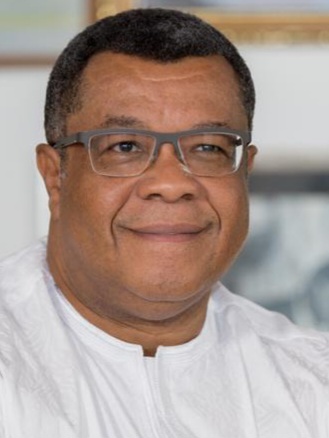
The revelation was made by the Chief Export Development Officer of the Ghana 24-Hour Economy Authority, Gabriel Opoku-Asare, during a roundtable discussion on the theme, “Unlocking Africa’s Single Market: How Can Ghanaian Businesses Win Under AfCFTA?” on Channel One TV as part of activities marking the 2026 Citi Business Festival.
According to Opoku-Asare, the agreements represent a significant milestone in the implementation of the government’s economic transformation agenda, which seeks to stimulate industrial growth, increase exports, create jobs, and position Ghana as a competitive manufacturing and trade hub under the African Continental Free Trade Area (AfCFTA).
The official explained that unlike traditional government-led development projects that often rely heavily on public borrowing and sovereign guarantees, the 24-Hour Economy Authority is deliberately pursuing a model anchored on private sector participation and investment.
He noted that the strategy is intended to reduce pressure on the country’s public finances while ensuring the long-term sustainability of major economic projects and industrial corridors being developed under the programme.
“We are enabling private capital in the development of all the projects we are talking about and the economic corridors we are building. Once private capital comes in, our work is coordination and enabling investment, so it is not sitting on sovereign debt. That is very important to ensure permanence in the long term,” Opoku-Asare stated.
The 24-Hour Economy policy remains one of the flagship economic initiatives of the John Mahama administration.
The programme is designed to encourage round-the-clock economic activity in selected sectors by improving infrastructure, expanding industrial production, boosting exports, and creating employment opportunities through extended operational hours.
Government officials have repeatedly argued that the policy has the potential to transform the economy by increasing productivity, attracting investment, and maximizing the use of existing infrastructure and human resources.
Since assuming office, the administration has maintained that the success of the programme will depend largely on partnerships with the private sector rather than excessive dependence on government expenditure.
Opoku-Asare indicated that the Authority’s role is increasingly evolving from direct financing of projects to serving as a facilitator and coordinator that creates an enabling environment for investors to commit capital to strategic sectors of the economy.
He emphasized that the signing of more than $8 billion worth of bankable agreements within a relatively short period is a strong indication that international and domestic investors are responding positively to the government’s vision.
“I’ve spoken about, in the last 90 days, all the bankable agreements that we’ve signed already, which is like over $8 billion,” he disclosed.
The announcement comes at a time when Ghana is intensifying efforts to leverage opportunities under AfCFTA, whose Secretariat is headquartered in Accra. Policymakers believe that strengthening industrial production, expanding export capacity, and attracting long-term investment will be critical if Ghanaian businesses are to compete effectively in the continent-wide market.
While details of the individual agreements have yet to be publicly disclosed, officials insist that the investments will support the development of key economic corridors, industrial projects, and export-oriented initiatives aimed at accelerating economic growth and job creation.
The Authority maintains that its investment-driven approach will not only help deliver the objectives of the 24-Hour Economy agenda but also ensure that development projects remain financially sustainable without adding significantly to the debt burden.


