By Nadia Ntiamoah
The Apinto Divisional Council has intensified pressure on the government over the future of Gold Fields Ghana Limited’s Tarkwa Mine, arguing that decades of mining have left host communities bearing significant environmental and economic costs without receiving development commensurate with the impact of the company’s operations.
The traditional authorities contend that although mining has generated substantial economic activity in the Tarkwa area, communities within the Apinto Traditional Area have suffered extensive degradation of their lands, disruption of farming activities and loss of other livelihood opportunities.
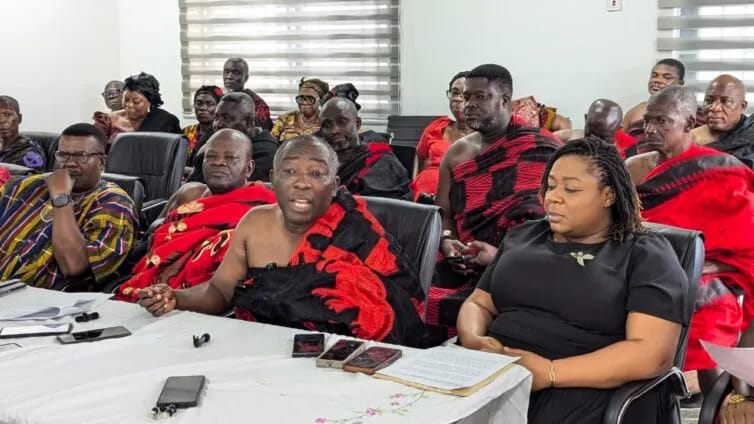
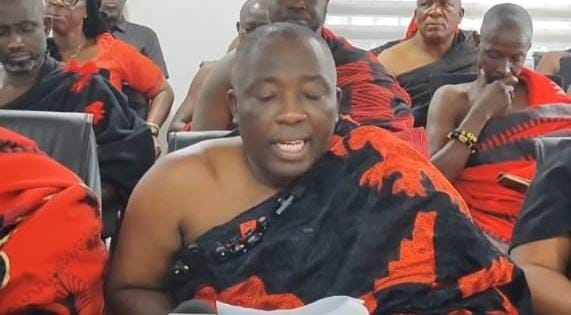
At a media briefing, the Gyasehene of the Apinto Divisional Council, Nana Adarkwa Bediako III, said an assessment undertaken by the Council showed that more than 4,000 hectares of Apinto lands had been degraded through mining activities.
According to the chiefs, the loss and degradation of productive land have particularly affected farming communities and young people who previously depended on agriculture and other land-based economic activities for their livelihoods.
The Council believes that the social and developmental interventions undertaken by Gold Fields Ghana Limited over the years have not adequately compensated communities for the environmental and economic consequences associated with the company’s operations.
“We believe that the operations of Gold Fields Ghana Ltd in Tarkwa have been less beneficial to the Apinto communities than they should have been,” Nana Adarkwa Bediako III stated.
He argued that the scale of development within the affected communities does not correspond with the extent of environmental degradation the traditional authorities say residents have endured.
The concerns have now moved beyond demands for additional corporate social responsibility projects, with the traditional leaders calling for a fundamental change in the ownership and management of the Tarkwa mining concession.
The Apinto Divisional Council is asking the government not to renew Gold Fields Ghana Limited’s mining lease when it expires in April 2027.
Instead, the chiefs want the concession allocated to a Ghanaian-owned mining company under an arrangement they believe should provide host communities with greater participation in the ownership, governance and economic benefits derived from the area’s mineral resources.
The traditional authorities maintain that after decades of large-scale mining, communities sitting on some of the country’s mineral resources should have more to show for the extraction of gold from their lands.
They argue that the benefits of mining should extend beyond royalties, compensation payments and occasional corporate social responsibility interventions to sustainable local economic development capable of surviving long after mining operations have ended.
The Council’s position also raises broader questions about the relationship between multinational mining companies and host communities across Ghana, particularly as mining towns continue to demand a greater share of the wealth generated from natural resources extracted from their traditional lands.
Tarkwa remains one of the most important mining enclaves and has played a significant role in the country’s gold production for decades. Mining has consequently become deeply connected to the economy of the area, providing direct and indirect employment while also generating revenues for the state and traditional authorities.
However, mining communities have over the years raised concerns about land degradation, access to agricultural land, environmental protection, compensation and whether the economic transformation of host communities adequately reflects the value of mineral resources extracted from their areas.
It is against this background that the Apinto chiefs say the approaching expiration of the Tarkwa Mine lease in April 2027 presents government with an opportunity to reconsider the existing mining model.