By Grace Zigah
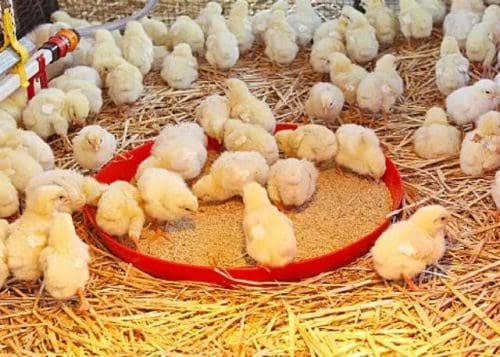
The National Democratic Congress Government is set to begin distributing birds under its flagship poultry revitalization initiative — the Nkoko Nkitinkiti Programme — by mid-November this year, as part of a nationwide plan to boost domestic poultry production and reduce reliance on imports.
Deputy Minister of Food and Agriculture, John Dumelo, disclosed the timeline during an interview on PM Express Business Edition recorded in Washington D.C. on the sidelines of the IMF/World Bank Annual Meetings.
According to Dumelo, the first phase of the programme will see the distribution of about three million birds to farmers across all constituencies in Ghana.
The government, he said, is providing not just birds but also starter feed and vaccines to ensure that beneficiaries can immediately begin production.
“We’re giving about 10,000 birds per constituency, targeting around 200 households with 50 birds each. Every bird will be vaccinated, and we’ll monitor the process to ensure transparency and success,” he said.
The Nkoko Nkitinkiti initiative was first announced by President John Mahama during his 2025 State of the Nation Address as a key component of his government’s Agriculture for Economic Transformation Agenda (AETA).
The President revealed that 55,000 households would benefit from the project, which seeks to tackle Ghana’s overdependence on imported poultry products — a situation that costs the country more than US$300 million annually.
Under AETA, government aims to modernize agriculture, expand agribusiness, and achieve food self-sufficiency.
The poultry project complements other interventions such as the Feed Ghana Programme, Vegetable Development Project, and Livestock Development Project, all designed to enhance productivity, reduce food prices, and create jobs, especially for the youth and women in rural communities.
Distribution Plan And Implementation
Dumelo said the poultry distribution will start with constituencies that have already completed beneficiary selection and infrastructure assessment.
The Ministry of Food and Agriculture (MoFA) will collaborate with local assemblies and agricultural extension officers to supervise the process. Beneficiaries will receive not only the birds but also basic training on biosecurity, feeding, and housing management to prevent mortality.
“We are prioritizing people who already have some experience in poultry farming. We don’t want the birds to die; this is an investment in livelihoods,” the Deputy Minister emphasized.
He added that the initiative is designed to be self-sustaining, encouraging participants to reinvest the proceeds from their first batch of birds to expand production.
Existing Poultry Businesses
Responding to fears that the initiative might distort the poultry market or disadvantage existing private farms, Dumelo clarified that the Nkoko Nkitinkiti project is not in competition with private sector operations.
“This is a complementary effort. The aim is to strengthen local production capacity and reduce imports, not to take over the market,” he stated.