BY Daniel Bampoe
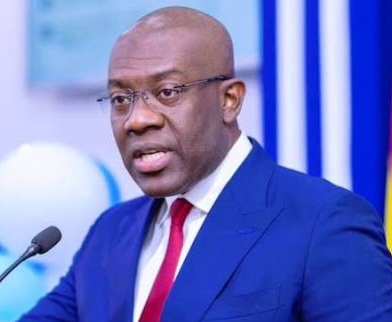
Member of Parliament for Ofoase-Ayirebi, Kojo Oppong Nkrumah, has called for a fundamental shift in the approach to tackling perennial flooding, arguing that the country already knows the technical solutions to the problem but continues to fail in implementing them due to inadequate funding, weak project execution, poor enforcement of planning regulations, and the politicisation of flood disasters.
Contributing to a statement on the floor of Parliament on Wednesday, the former Works and Housing Minister began by expressing sympathy to the thousands of Ghanaians affected by recent floods across the country.
He noted that flood-related devastation has become an annual occurrence, particularly during the rainy season, with political leaders often reduced to conducting aerial inspections, wading through floodwaters, distributing relief items, and offering condolences after disasters strike.
According to him, the recurring nature and increasing severity of floods should serve as a clear indication that the country is failing to address the root causes of the problem.
Drawing from his experience as Minister for Works and Housing, Oppong Nkrumah said the challenge is not a lack of technical knowledge or engineering solutions.
Rather, he argued, one of the biggest obstacles has been the failure to release funds earmarked for flood-control programmes.
He revealed that year after year, ministries responsible for flood mitigation receive only a fraction of their approved budgets, making it impossible to undertake critical interventions such as desilting drains, dredging waterways, and constructing modern drainage systems.
According to him, many flood prevention projects remain on paper because less than a quarter of allocated funds are often released for implementation.
The former minister stressed that if the government is serious about moving beyond rhetoric and emergency responses, it must ensure the timely release of funds for flood-control projects.
He acknowledged that the challenge of delayed budget releases existed during his tenure and suggested that successive ministers have faced similar difficulties. Without adequate and timely financing, he warned, flood disasters would continue to worsen regardless of the plans and strategies developed by government agencies.
Beyond funding constraints, Oppong Nkrumah also pointed to poor project execution as a major contributor to the flood challenges.
He noted that even where projects are supported by grants, donor funding, or alternative financing arrangements outside the central treasury, implementation often falls behind schedule.
According to him, some projects remain incomplete despite available resources, while accountability for delays and underperformance remains weak.
He therefore called on both local assemblies and central government agencies to improve supervision and accelerate the delivery of flood-control infrastructure.
The Ofoase-Ayirebi legislator further criticised the authorities’ failure to enforce building regulations and planning standards.
He questioned why structures are allowed to be erected in waterways and flood-prone zones, only for demolition exercises to be organised after the buildings are completed.
He argued that local authorities must be held accountable for permitting illegal developments that contribute significantly to flooding in urban communities.
Oppong Nkrumah also urged political leaders across the divide to stop exploiting flood disasters for partisan advantage. Recalling previous political exchanges over flooding, he noted that the issue has often been used as a tool for political attacks rather than a national challenge requiring collective solutions.
He cited criticisms of the administration of former President Nana Addo Dankwa Akufo-Addo during major flooding incidents and cautioned against repeating the same political blame game under the current administration.
According to him, the growing frequency and intensity of floods should encourage policymakers to focus on long-term solutions rather than partisan point-scoring.
He maintained that the flood problem can only be addressed through sustained investment in flood-control infrastructure, improved project delivery, strict enforcement of planning laws, and a national commitment to treating flooding as a development challenge rather than a political weapon.
He concluded by urging government and all stakeholders to depoliticise discussions on flooding and prioritise practical interventions that can protect lives, property, and livelihoods, stressing that the country’s future resilience depends not on the quality of ideas available, but on the willingness to translate those ideas into action.