BY Grace Zigah
The Essipong Sports Stadium—once a symbol of national pride when Ghana hosted the 2008 Africa Cup of Nations—is now confronting one of the worst cases of sports infrastructure decay in the country.
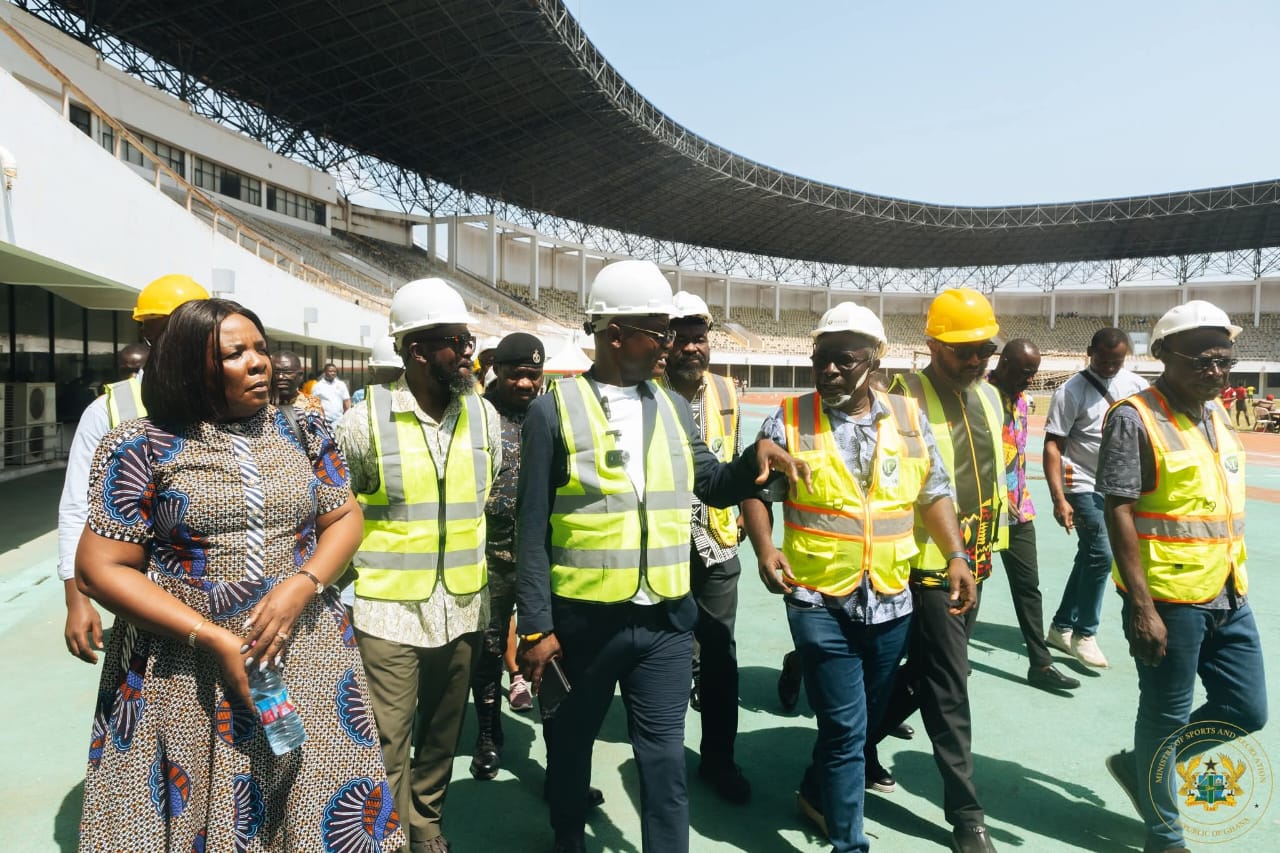
During an inspection tour on Monday, the Minister for Sports and Recreation, Kofi Iddie Adams, together with the Director General of the National Sports Authority (NSA), Yaw Ampofu Ankrah, revealed the extent of the deterioration, describing the stadium’s condition as “deeply worrying” and calling for swift intervention.
The 20,000-seater stadium, which was commissioned as part of Ghana’s grand AFCON 2008 infrastructure push alongside the Tamale, Accra, El-Wak and Kumasi venues, has seen little to no major rehabilitation in its 17 years of existence.
Over time, a combination of rusting metal frames, cracked seating areas, damaged roofing sheets, malfunctioning electrical systems, and failing washroom facilities has rendered large sections of the facility unfit for professional sporting activity.
The stadium, which once hosted major continental matches, has in recent years become an occasional training ground and an abandoned shell of its former self.
Government’s earlier rehabilitation plans—Phase I and II—had outlined remedial works including reroofing with anti-rust materials, replacing old seating, refurbishing deteriorated washrooms, installing air-conditioning systems, fixing protective sunglasses for the stands, upgrading the lighting system, and mounting a modern digital scoreboard.
Some portions of the project have been completed, but progress has been slow, and critical components remain outstanding.
What shocked the Minister even more during the tour was the discovery that private developers had encroached on lands around the stadium—areas originally earmarked for future sports infrastructure expansions, parking, auxiliary facilities, and commercial development.
Kofi Adams described the encroachment as “a national setback” and called on the Western Regional Coordinating Council and traditional authorities to immediately halt the illegal developments and reclaim the lands.
Beyond the initial scope of works, the Ministry is considering a broader revival plan that would extend to upgrading the playing pitch, modernizing the public address system, enhancing corporate boxes, refurbishing hostel accommodation, improving athlete security zones, and completing additional dressing room facilities not captured in previous contracts.
These added works are intended to make the stadium fully functional for national and international events once again.
Kofi Adams used the occasion to stress the dire need for sustained funding to support sports infrastructure across the country.
He called on journalists to help champion the National Sports Development Fund, explaining that Ghana must shift from episodic funding to a long-term, structured financing approach.
This, he insisted, aligns with President John Dramani Mahama’s renewed commitment to reposition sport as a tool for youth development, tourism, and national branding.
Despite expressing satisfaction with the quality of work completed so far, the Minister voiced frustration with the slow pace of execution.
He warned contractors and stakeholders that delays would no longer be tolerated, especially as the Essipong facility remains crucial for the Western Region’s sporting ecosystem.