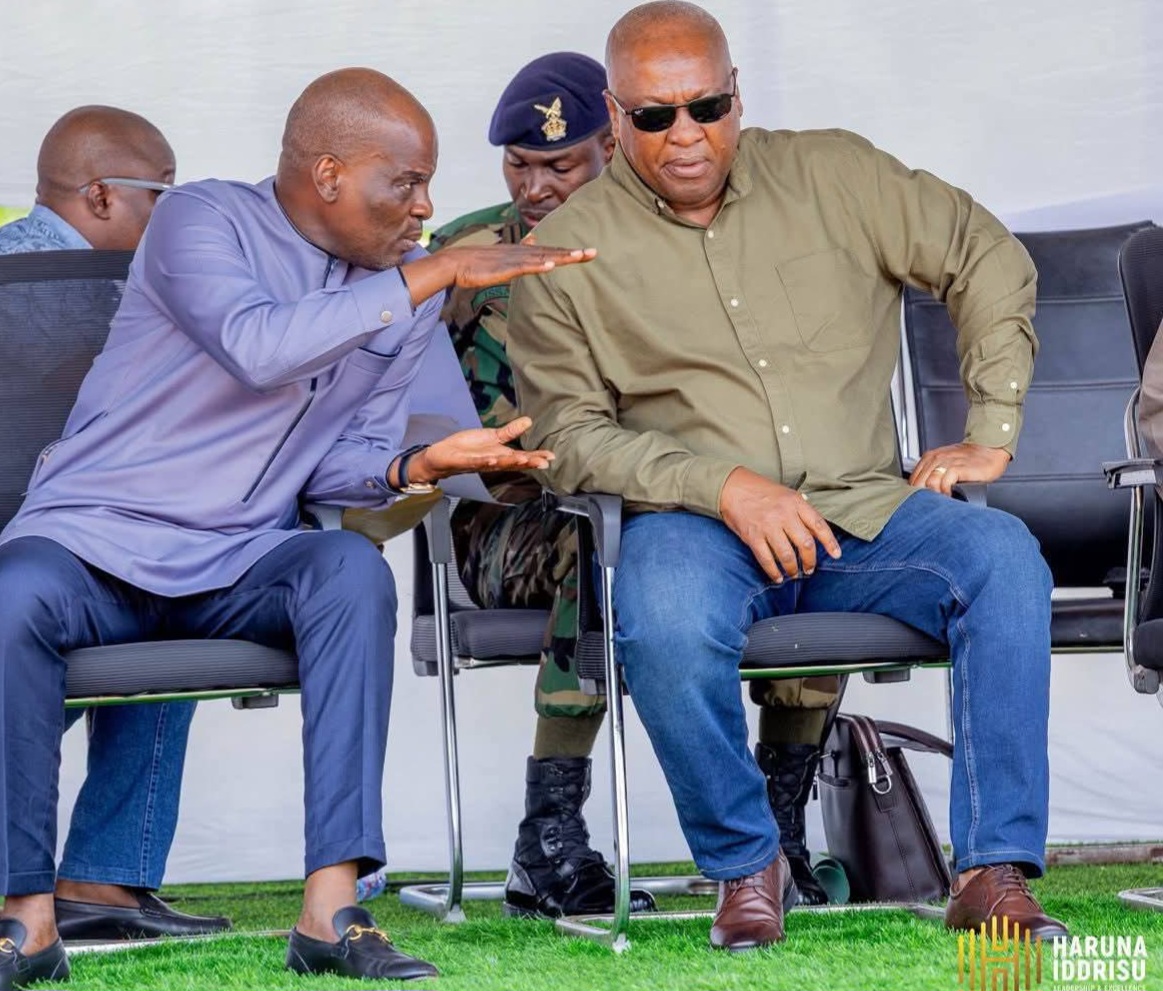
By Issah Olegor
The National Democratic Congress government says the feeding challenges threatening Ghana’s Free Senior High School programme have now been resolved following emergency financial interventions and renewed funding assurances from the Ministry of Education and the Ghana Education Trust Fund.
The announcement by Education Minister Haruna Iddrisu comes just days after intense public concern over possible food shortages in senior high schools, delayed payments to suppliers, and warnings from school heads that some institutions could shut down if urgent action was not taken.
Speaking during the commissioning of the National Teaching Council’s regional office complex in Tamale, the Minister assured Ghanaians that government has secured adequate resources to sustain the Free SHS programme and prevent future disruptions in feeding.
According to him, a comprehensive review of the implementation of the flagship policy exposed recurring operational weaknesses, particularly in the area of food supply and student feeding.
He indicated that measures have now been introduced to address those concerns permanently.
“Having examined the feeding of Free Senior High School students, we realised that there were many times that schools had to be closed down or, in the course of the academic year, students had to be asked to go home because there was inadequate food. That is now a thing of the past,” the Minister stated.
Haruna Iddrisu further disclosed that government has strengthened the financing structure of the programme through GETFund to ensure uninterrupted support for schools across the country.
“There are adequate resources and adequate funding from GETFund to finance Free Senior High School,” he stressed.
The Minister’s assurance follows the recent release of GHS199.47 million by GETFund to senior high and technical school heads to settle outstanding feeding arrears and facilitate the procurement of perishable food items including meat, eggs, vegetables, and other essential supplies.
The emergency disbursement came after a crucial stakeholder meeting involving the Ministry of Education, GETFund officials, leadership of the Conference of Heads of Assisted Secondary Schools, and the Conference of Principals of Technical Institutions (COPTI).
The meeting had been convened amid growing tension within the education sector as school authorities complained about severe delays in payments for perishables, forcing many institutions to depend on credit arrangements with local suppliers to keep students fed.
In some schools, administrators warned that the situation had become financially unsustainable and risked disrupting academic activities and preparations for the West African Senior School Certificate Examination (WASSCE).
Earlier reports had suggested that disagreements between the Education Minister and GETFund Administrator Paul Adjei contributed to delays in resolving the crisis.
However, sources familiar with the discussions later clarified that no confrontation occurred during the meeting.
According to insiders, the GETFund Administrator merely explained the Fund’s statutory procurement framework and cautioned against bypassing established commitment authorisation structures that govern procurement responsibilities within the education sector.
Despite those procedural concerns, GETFund eventually approved the direct release of funds to schools to allow immediate procurement of perishable food items and stabilise feeding operations nationwide.
The latest intervention appears to have temporarily eased tensions within the sector, but it has also drawn attention to deeper administrative and coordination challenges surrounding the implementation of Free SHS.
Background to the feeding difficulties dates back several years, when concerns over food shortages, delayed supplies, and procurement inefficiencies became recurring issues under the policy. Successive debates over whether food procurement should remain centralised through the Buffer Stock system or be decentralised to school heads have continued to shape policy discussions.
Interestingly, the current administration had previously criticised aspects of the Free SHS implementation under former President Nana Addo Dankwa Akufo-Addo, arguing that poor coordination and feeding challenges undermined the programme’s effectiveness.
Now in government, the administration of President John Dramani Mahama faces growing expectations not only to sustain the programme but also to address the structural bottlenecks it once condemned.
While the release of funds has brought immediate relief, observers say the long-term success of Free SHS will depend on stronger institutional coordination, timely financing, and a sustainable procurement framework capable of preventing future feeding crises.