By Daniel Bampoe
The theft of a four-day-old baby boy from the postnatal ward of Mamprobi Polyclinic in Accra has exposed not only a disturbing personal tragedy but also deep institutional failures within the public health and security systems.
What initially appeared as a simple criminal act has evolved into a complex story of desperation, negligence, trauma, and public distrust in hospital security structures.
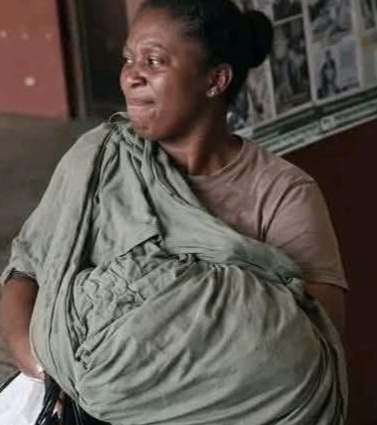
At the centre of the case is Latifa Salifu, a cloth seller who, according to police investigations and government briefings, allegedly has been living for years with the emotional burden of childlessness. Officials from the Gender Ministry revealed that the suspect confessed to being “desperate for a child” and admitted that she exploited what she described as a “convenient environment” within the hospital to carry out the act.
Authorities say her actions were not spontaneous but calculated, taking advantage of weak identification systems and poor access control in sensitive hospital wards.
The incident occurred on Tuesday, February 17, 2026, when Salifu allegedly disguised herself as a nurse, wearing a peach-coloured uniform to blend in with hospital staff.
She reportedly entered the postnatal ward under the pretext of administering medication and took the newborn boy, who had been delivered just four days earlier. CCTV footage later captured a woman believed to be the suspect carrying a baby out of the facility in a sack—an image that quickly circulated on social media and triggered public outrage across the country.
The child was missing for five days, heightening fear and anxiety within the family and community.
His recovery came after Salifu reportedly took the baby to a clinic in Nkaobang, where alert nurses recognized the child from viral social media posts and contacted authorities.
This tip-off led to her arrest by the Dansoman Police, following coordinated efforts by the Ghana Police Service. The baby was rescued and returned to medical care, bringing an end to a tense nationwide search.
Following the recovery, the Gender Minister disclosed that the infant was running a temperature but was quickly stabilized by medical staff. He was later reunited with his biological mother at Mamprobi Polyclinic.
However, the emotional relief was short-lived, as the family raised new concerns over identity verification.
The baby’s uncle, Frank Banks Misbau, publicly demanded a DNA test, insisting that the family could not rely solely on visual identification, birthmarks, or the suspect’s claims.
He warned that failure to scientifically confirm the child’s identity could create future legal and travel complications for the child and the family.
The Director-General of the Ghana Health Service, Dr. Samuel Kaba Akoriyea, attributed the success of the theft to staff negligence, particularly the failure of workers to wear proper uniforms and ID tags.
He stated that these lapses made it easy for an impersonator to move freely within the facility.
In response, the GHS has declared staff identification protocols “non-negotiable,” announcing stricter enforcement of ID usage, improved ward supervision, and upgraded CCTV surveillance across health facilities nationwide.
Public reaction has been divided. While some relatives of the mother and members of the public accuse hospital staff of complicity or gross negligence, nursing officers and professional bodies have pushed back, arguing that hospitals are open environments where many non-staff individuals move freely, making security a shared responsibility between health authorities and law enforcement.
Latifa Salifu on Thursday was put before court on charges of child stealing.

The Government officials have emphasized that while the act constitutes a serious criminal offence, the suspect’s mental and emotional state cannot be ignored, calling for psychosocial assessment and support alongside prosecution.
Beyond the courtroom, the Mamprobi case has become a national symbol of broader systemic failure—highlighting the vulnerability of maternity wards, the dangers of weak hospital security, and the silent psychological struggles that can push individuals toward extreme actions.