BY Daniel Bampoe
A fresh political storm is brewing over youth development in Ghana, as Vincent Ekow Assafuah, Member of Parliament for Old Tafo, publicly accused the administration of John Dramani Mahama of abandoning the country’s young population through what he describes as a deliberate starvation of the National Youth Authority (NYA) of critical funding.
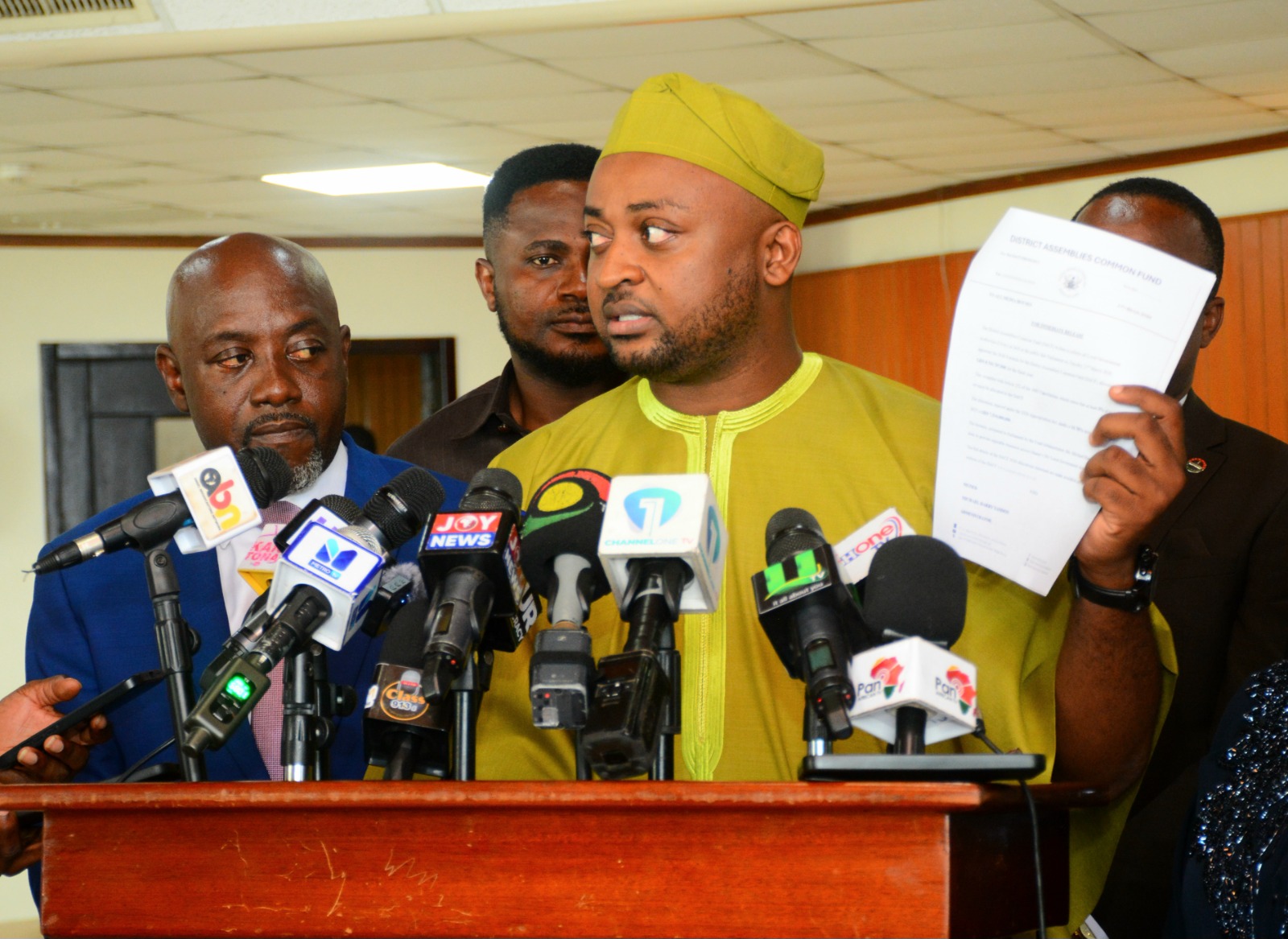
Addressing a press conference, the MP painted a grim picture of a once-promising national agenda for youth empowerment now reduced, in his words, to “mere rhetoric,” as thousands of young Ghanaians face diminishing opportunities and stalled programmes.
He argued that the growing frustration among the youth reflects a deeper disconnect between political promises and governance reality.
At the centre of the controversy is the 2026 budget, which, according to Assafuah, has effectively left the NYA without operational support.
He revealed that the Authority has received no allocation from the District Assemblies Common Fund (DACF)—a key statutory funding source under the National Youth Authority Act, 2016 (Act 939).
He described this omission as “not just a policy gap, but a painful abandonment of responsibility.”
Drawing a sharp contrast with previous years, the Old Tafo MP outlined how the NYA had consistently received funding between 2017 and 2025, enabling it to coordinate youth programmes nationwide. That trend, he said, has now collapsed entirely, with the 2026 allocation reduced to zero—an outcome he characterised as unprecedented and dangerous for the country’s future
Although government figures indicate a GH₵180 million allocation for the NYA in the 2026 budget, Assafuah dismissed this as misleading.
According to him, GH₵150 million of that amount is tied strictly to the National Apprenticeship Programme, leaving only GH₵30 million for the Authority’s operations—funds he warned may never be released.
“They promised the youth a ladder to opportunity,” Assafuah declared, “but after the election, they kicked the ladder away.”
The MP further questioned government priorities, noting that while the DACF has increased significantly—from GH₵7.51 billion in 2025 to GH₵8.77 billion in 2026—the NYA has been excluded from benefiting from this expanded resource envelope.
He described the situation as a “national contradiction” that raises serious concerns about how public funds are being allocated.
He also highlighted what he called troubling spending choices, pointing to allocations such as nearly GH₵10 million for other initiatives and GH₵131 million for DACF administrative operations, while the main institution responsible for youth development struggles to survive.
Beyond the numbers, Assafuah warned of the real-life consequences already unfolding across the country.
He cited incomplete youth centres, struggling district offices, and stalled programmes as evidence that the funding gap is beginning to take a human toll.
“This is not just about budgets,” he stressed. “It is about the future of young people whose opportunities are quietly slipping away.”
The MP used the platform to raise a series of pressing national questions, including the whereabouts of the statutory 5 percent DACF allocation meant for youth development and why announced budgetary commitments are not translating into tangible support.
He called for urgent corrective measures, including the immediate restoration of NYA funding from the DACF, the release of outstanding operational funds, and enhanced parliamentary oversight to ensure transparency and accountability in public spending.