BY Daniel Bampoe
The political temperature around the anti-corruption fight has intensified following claims by the Minority in Parliament that recent legal, political and judicial actions against the Office of the Special Prosecutor (OSP) are part of a deliberate and coordinated attempt to weaken the institution after it pursued high-profile cases.
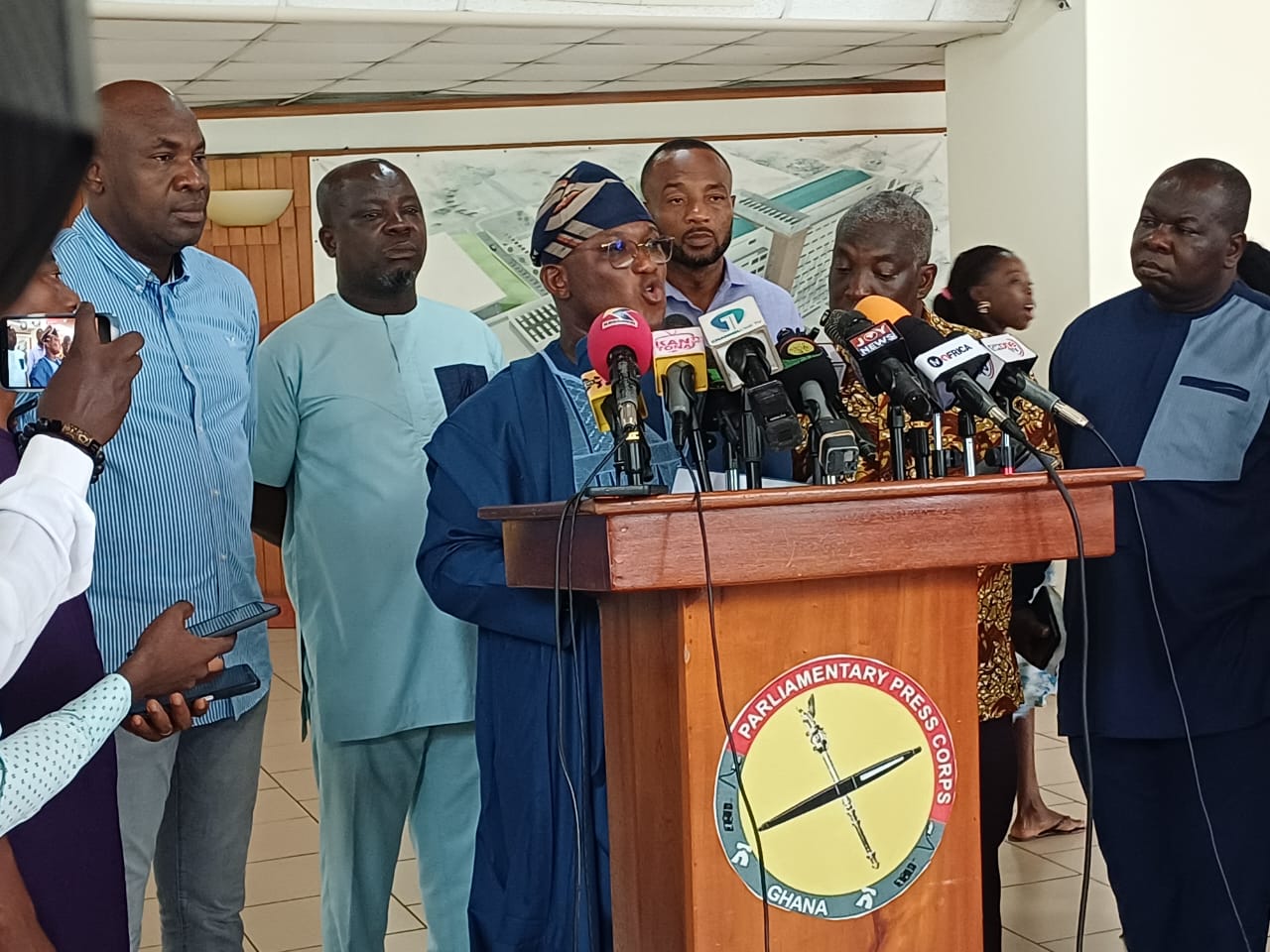
Addressing a press conference on behalf of the New Patriotic Party (NPP) Minority, the Member of Parliament for Gushegu and deputy Ranking Member on Parliament’s Constitutional and Legal Affairs Committee, Hassan Tampuli Sulemana, argued that the sequence of petitions, parliamentary manoeuvres and court actions targeting the OSP cannot be viewed as isolated developments.
According to him, the actions form what he described as a calculated strategy to dismantle an institution that has been actively carrying out its anti-corruption mandate.
“The petitions were not serious legal instruments. They were political weapons designed to harass, delegitimise, and remove from office a public servant whose crime was that he was doing his job,” he stated.
His comments follow the April 15, 2026 ruling by the Accra High Court, which declared all prosecutions initiated by the OSP null and void and directed that such cases be taken over by the Attorney-General.
The decision has since triggered widespread legal and political debate over the powers and future of the anti-graft body.
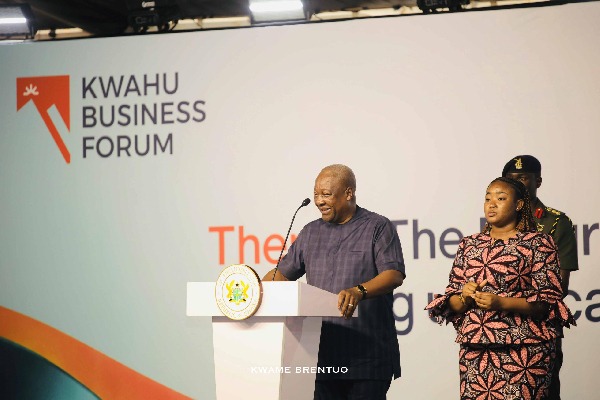
Tampuli further alleged that petitions submitted to President John Dramani Mahama seeking the removal of the Special Prosecutor were “coordinated and strategically timed” to create a perception of public dissatisfaction.
He noted that after being referred to the Chief Justice, none of the petitions established a prima facie case.
According to the Minority, the next phase involved efforts in Parliament to curtail the powers of the OSP—moves they claim were also unsuccessful.
The group pointed to the introduction of the Office of the Special Prosecutor (Repeal) Bill, 2025, laid before Parliament on December 8 by Majority Leader Mahama Ayariga and Majority Chief Whip Rockson‑Nelson Dafeamekpor.
The bill sought to abolish the OSP entirely and transfer its functions to the Attorney‑General’s Department.
Although the bill was later withdrawn following public backlash and comments by President John Mahama describing the move as “premature”, the Minority insists the withdrawal merely shifted the strategy from Parliament to the courts.
“The repeal bill was abandoned publicly, but the mission to kill the OSP remained intact,” the Minority said, arguing that a wave of removal petitions against the Special Prosecutor soon followed. By their account, as many as 15 petitions were filed with the Presidency, all alleging misconduct or incompetence on the part of Kissi Agyebeng.
Tampuli then pointed to a pending suit before the Supreme Court of Ghana, filed by a private legal practitioner challenging the constitutionality of the OSP’s prosecutorial authority, describing it as the “third phase” of what he termed a sustained campaign.
“When you cannot kill an institution by statute, you attempt to do so through constitutional litigation,” he argued, insisting that the timing of these developments—petitions, parliamentary efforts, and court actions—suggests a coordinated agenda.
In response to the High Court ruling, the Minority has issued a set of demands aimed at preserving the OSP’s role. Chief among them is a call for the OSP to immediately appeal the decision, seek a stay of execution, and pursue a definitive interpretation from the Supreme Court.
They also urged that the pending Supreme Court case, referenced as J1/3/2026, be expedited due to its national importance, arguing that only the apex court has the authority to conclusively determine the constitutional question surrounding the OSP’s prosecutorial powers.
The Minority further called for parliamentary scrutiny of the Attorney-General’s legal position in ongoing cases involving the OSP, expressing concern about the implications of the state assuming control over prosecutions previously handled by the anti-corruption office.
Perhaps the most politically charged demand was directed at President Mahama, with the Minority accusing him of inconsistency in his stance on the OSP.
“We call on President Mahama to come clean with Ghanaians… The President must choose — does he stand with the OSP, or does he stand with the campaign to destroy it?” Tampuli said.
The caucus also criticised what it described as contradictions in the government’s anti-corruption posture, arguing that public praise previously offered by the President for the OSP’s independence does not align with recent developments.
They described such praise as “settings,” a term they used to suggest political posturing rather than genuine commitment.
The Minority recalled that while in opposition, the National Democratic Congress (NDC) made anti-corruption a central campaign issue, presenting President Mahama’s return to power as the beginning of a new era of accountability and institutional respect.
However, they contend that ongoing developments, including investigations involving individuals linked to the governing party and legal challenges affecting the OSP, raise questions about consistency and commitment to that agenda.
The controversy comes at a time when the High Court’s ruling has already shifted prosecutorial control of OSP cases to the Attorney-General, pending proper authorization. With a Supreme Court decision now looming, the battle over the independence and authority of the OSP is increasingly taking center stage in the governance and accountability discourse.