BY Daniel Bampoe
Former Finance Minister and Member of Parliament for Karaga, Dr Mohammed Amin Adam, has formally petitioned the International Monetary Fund over what he describes as serious economic risks arising from the 2025 audited accounts of the Bank of Ghana, warning that the country’s fiscal outlook and post-programme credibility may be under threat.
In a detailed letter dated May 2, 2026, addressed to the IMF Mission Chief for Ghana’s Extended Credit Facility (ECF) programme, Dr. Amin Adam raised alarm over what he called the “material implications” of the central bank’s financial performance.
He cautioned that the findings from the Bank’s accounts could have far-reaching consequences for “Ghana’s macroeconomic stability, fiscal outlook, and post-programme policy credibility.”
While acknowledging the IMF’s role in stabilising Ghana’s economy during the 2022–2023 crisis, he stressed that “as the programme comes to an end, it is imperative that greater attention is paid to safeguarding the durability of these gains.” However, he noted that the newly published financial statements have “raised deep concerns,” particularly around fiscal risks, monetary operations, and governance.
Dr. Amin Adam did not mince words about the condition of the central bank’s balance sheet. He stated that “the Bank of Ghana remains in a severe negative equity position,” revealing that group negative equity worsened significantly from GH¢58.62 billion in 2024 to GH¢93.82 billion in 2025.
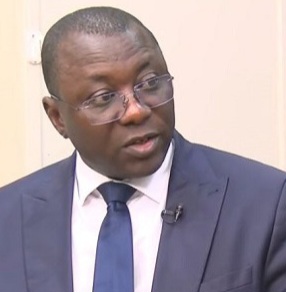
According to him, this deterioration shows that “meaningful balance sheet repair has not yet commenced in substance,” leaving government exposed to “a large and growing recapitalisation obligation.”
On profitability, he highlighted that the Bank’s financial performance had worsened despite increased income.
The Bank recorded a loss of GH¢15.63 billion in 2025, compared with GH¢9.49 billion in 2024,” he wrote, adding that this decline occurred “even though operating income increased,” due to persistently high costs including open market operations, exchange losses, revaluation effects, and gold-related transactions.
He further warned that the headline loss understates the true financial impact. “An analysis based on comprehensive income suggests that the full impact… is more severe than what is reflected in the profit and loss account,” he noted.
He explained that while 2024 losses were offset by positive reserves, 2025 recorded both higher losses and negative reserve movements, resulting in “a total comprehensive loss of GH¢34.95 billion,” which “gets to GH¢44 billion when net gains from the sale of gold is added.”
A major area of concern, according to the former Finance Minister, is the rising cost of monetary policy implementation.
He pointed out that “the cost of open market operations rose sharply from GH¢8.60 billion in 2024 to GH¢16.73 billion in 2025,” describing it as “structurally heavy” and accounting for about 75 percent of the Bank’s operating income. Without one-off gains from gold sales, he warned, “OMO costs would have exceeded the Bank’s operating income,” raising “serious questions about the sustainability of current policy operations.”
He also linked these monetary interventions to broader economic challenges, arguing that “the cost of controlling inflation should not only be interpreted from the high cost of sterilisation, but also the near collapse of domestic production.”
He added that imported goods such as rice, maize, and soyabeans have become cheaper than locally produced alternatives, with negative implications for job creation and local industry.
Dr. Amin Adam challenged the Bank’s claim of being policy solvent, stating that the reported surplus “requires careful interpretation.”
He noted that the Bank’s positive policy solvency figure of GH¢5.5 billion includes a “GH¢9.57 billion net gain from the sale of refined gold,” and warned that “without this one-off gain, the underlying policy solvency position appears materially weaker and potentially negative.”
On the gold programme, he raised concerns about transparency and sustainability, revealing that while the Bank recorded “GH¢9.57 billion gain from the sale of refined gold,” it also posted “GH¢9.05 billion in net losses on gold deals.”
He pointed to rising gold-related receivables and liabilities as signs of “complex and potentially recurring operational exposures,” cautioning that “the economic net benefit of the gold programme is therefore significantly smaller than the headline gains suggest.”
He further highlighted the sharp decline in the Bank’s revaluation reserves, which fell from GH¢25.80 billion in 2024 to GH¢2.18 billion in 2025, largely due to exchange rate and valuation losses. This, he said, underscores “the high sensitivity of the Bank’s balance sheet to exchange-rate movements.”
The former Finance Minister also questioned the rationale behind the sale of about 18 tonnes of gold reserves, which generated roughly GH¢40 billion. While the Bank described it as a portfolio rebalancing strategy, he argued that the financial statements suggest the proceeds were also used to support income. “This raises the possibility that gold sales were not only a reserve management decision, but also an important factor in offsetting underlying losses,” he wrote.
Beyond the Bank itself, Dr. Amin Adam warned of significant fiscal implications for government. He described the central bank’s negative equity as “effectively a deferred fiscal cost,” noting that recapitalisation will ultimately fall on the state.
“If government issues bonds to recapitalise the Bank, this could increase gross public debt, future interest obligations, or rollover pressures,” he cautioned.
He also warned of a potential feedback loop between monetary policy and fiscal pressure, stating that if sterilisation costs remain high, “future central bank losses may require additional Government support,” thereby undermining fiscal consolidation efforts.
Looking ahead, he urged the IMF to take a more active role in addressing these risks, recommending a transparent recapitalisation plan, improved disclosure of quasi-fiscal operations, and stricter oversight of gold transactions.
He also called for “a recurring policy solvency measure” that excludes one-off gains, and an independent review of accounting practices used in the Bank’s financial reporting.
Dr. Amin Adam emphasised that Ghana’s transition out of the IMF programme must not obscure underlying vulnerabilities. “Ghana’s fiscal adjustment should not be assessed only through the central government budget,” he wrote, but must include “central bank losses, quasi-fiscal costs, unresolved debt restructuring effects, and recapitalisation obligations.”
In a pointed closing remark, he warned that the sustainability of Ghana’s economic recovery depends on transparency and discipline.
“The durability of that progress will depend on whether fiscal consolidation is supported by credible central bank recapitalisation and strict safeguards against renewed monetary financing.”
The letter signals growing pressure on both the Bank of Ghana and government as debate intensifies over the true state of the economy, the cost of stabilisation, and the long-term sustainability of current policy choices.