By Nadia Ntiamoah
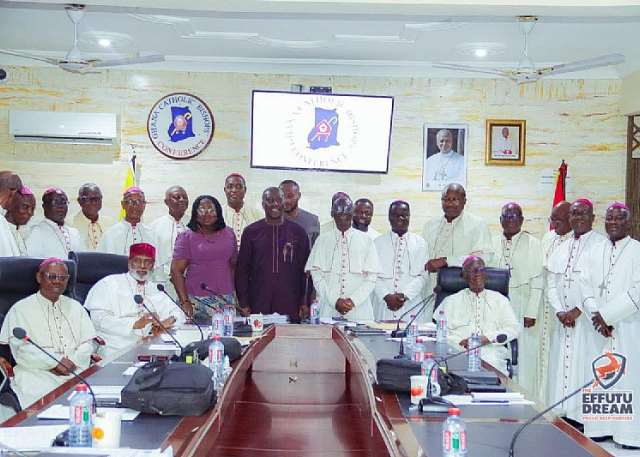
The leadership of the Minority Caucus in Parliament has held high-level discussions with the Ghana Catholic Bishops’ Conference (GCBC) on a range of national issues affecting governance, constitutional democracy, institutional accountability, and social cohesion in Ghana.
The meeting, which took place on Friday, May 8, 2026, formed part of ongoing engagements between religious institutions and political stakeholders aimed at promoting dialogue and national stability amid growing public debate over governance and democratic accountability.
The Minority delegation, led by Minority Leader Alexander Afenyo-Markin, was granted audience during the Plenary Assembly of the Catholic Bishops’ Conference following a formal request by the Minority Caucus.
Dialogue Amid National Political Tensions
The engagement comes at a time of heightened political discourse in Ghana, with concerns being raised by opposition parties, civil society groups, and sections of the public over issues relating to governance, judicial independence, constitutional interpretation, economic management, and political polarization.
Against this backdrop, the Minority Caucus sought direct engagement with the Catholic Bishops, one of the country’s most influential voices on religious and moral matters, to discuss issues they described as critical to the country’s democratic health and long-term stability.
According to details from the meeting, discussions covered a broad range of national concerns, including legislative practice, the administration of justice, institutional independence, constitutional governance, social policy, and the management of national resources.
The Minority Leadership reportedly used the opportunity to express appreciation to the Bishops for creating space for open and reflective engagement on issues affecting the Ghanaian people and the functioning of the country’s democratic institutions.
Bishops Reaffirm Commitment To National Interest
During the meeting, the Ghana Catholic Bishops’ Conference reiterated the Church’s longstanding commitment to promoting the common good, ethical leadership, social justice, and national unity.
The Bishops emphasized the importance of leadership grounded in integrity, patriotism, humility, dialogue, and service to citizens, stressing that public office should always be exercised in the best interest of the people, rather than for partisan or personal gain.
The Conference also expressed concern about increasing political polarization and governance practices that risk eroding public trust in state institutions.
Without directly aligning with any political position, the Bishops cautioned against vindictiveness, intolerance, and actions capable of undermining democratic stability and social harmony.
Church Pledges Continued Advocacy For Truth And Justice
The Bishops further underscored the Church’s readiness to continue speaking responsibly on matters affecting society, especially issues involving justice, truth, peace, accountability, and human dignity.
Over the years, the Catholic Church in Ghana has played a significant role in national conversations on governance, elections, corruption, economic hardship, and constitutional rule, often positioning itself as a moral voice advocating restraint, dialogue, and responsible leadership.
The Conference encouraged sustained engagement among political actors and urged all stakeholders to place the long-term interests of Ghana above temporary political advantage.
According to the Bishops, preserving national cohesion and strengthening democratic institutions requires collective responsibility, mutual respect, and continuous dialogue among all sectors of society.
Minority Deepens Engagements With Key National Institutions
The meeting with the Catholic Bishops forms part of a broader strategy by the Minority Caucus to engage major national institutions and opinion leaders on current political and governance developments.
In recent months, the opposition has intensified consultations with religious bodies, civil society organisations, and professional groups over issues they believe have implications for constitutional governance and democratic accountability.