By Daniel Bampoe
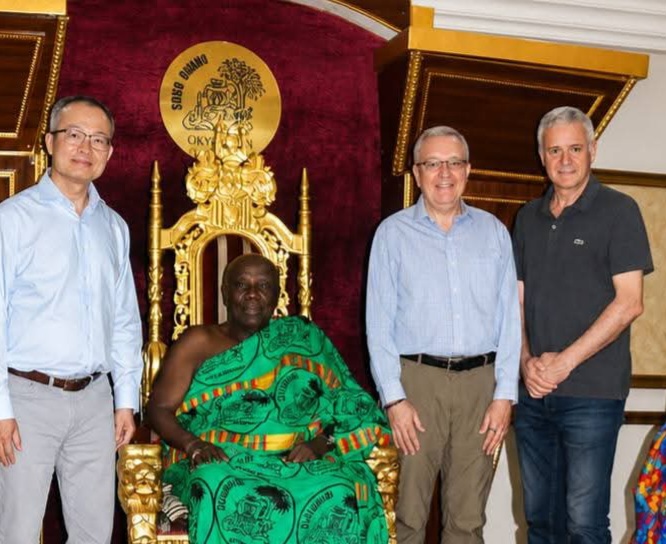
Senior officials of the World Bank have held high-level discussions with the Okyenhene, Osagyefuo Amoatia Ofori Panin, on the future of the Atiwa Forest and the need to balance environmental conservation with sustainable development for surrounding communities.
The meeting took place on June 1, 2026, at the Ofori Panin Fie in Kyebi, where the Vice President of the World Bank, the Regional Director for West and Central Africa, and the World Bank Country Director for Ghana paid a courtesy call on the revered traditional ruler.
The visit underscored the growing international attention being given to the Atiwa Forest, one of Ghana’s most ecologically significant natural resources and a critical water catchment area that supports millions of people across the country.
Discussions centred on the conservation of the forest reserve, its environmental importance, and opportunities for sustainable development that can improve livelihoods while preserving the ecosystem for future generations.
The Atiwa Forest has long been the subject of national and international debate due to its rich biodiversity, unique wildlife habitats, and role in protecting major river systems that serve communities across southern Ghana.
Environmental groups, traditional authorities, and development partners have consistently advocated stronger measures to safeguard the forest against activities that threaten its ecological integrity.
Osagyefuo Amoatia Ofori Panin, who has over the years emerged as one of Ghana’s most outspoken advocates for environmental protection, has repeatedly called for the preservation of the Atiwa Forest and opposed activities that could undermine its long-term sustainability.
The Okyenhene has consistently argued that protecting natural resources such as the Atiwa Forest is essential for ensuring water security, combating climate change, preserving biodiversity, and securing the future wellbeing of communities that depend on the forest’s ecosystem services.
The World Bank delegation’s visit reflects the institution’s continued interest in supporting environmental sustainability, climate resilience, and community-centred development initiatives across Africa.
The engagement also provided an opportunity for both sides to explore strategies that can promote responsible development while protecting the ecological value of the forest reserve.
The meeting ended with a shared commitment to safeguarding the Atiwa Forest and exploring sustainable development opportunities that will benefit both present and future generations while preserving one of the most important natural assets.