BY Nadia Ntiamoah
The Presidency has mounted a strong defence against allegations that President John Dramani Mahama has increased the salaries of presidential staff and political appointees, insisting that the current salary structure was inherited from the previous Akufo-Addo administration and remains unchanged.
The controversy erupted after recent budget figures revealed a sharp increase in the projected compensation bill for the Office of the President, despite a significant reduction in the number of political appointees and overall staff at the Jubilee House.
The development has triggered public debate over the true cost of running the Presidency under the Mahama administration and whether the reduction in political appointments has translated into lower government expenditure.
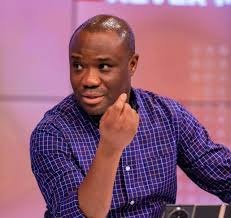
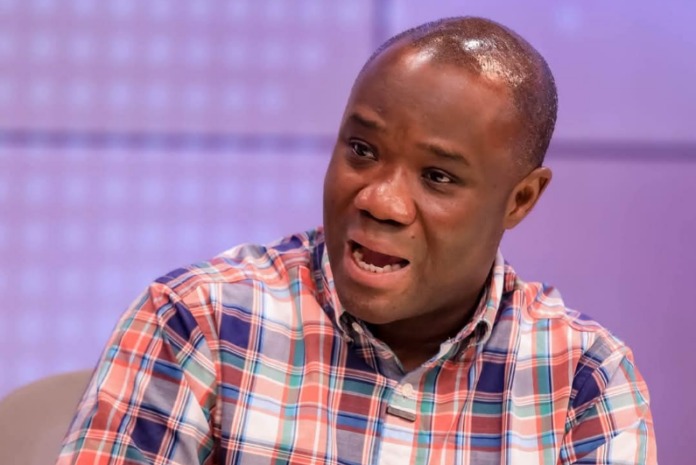
Responding to the concerns, Government Spokesperson and Minister of State in charge of Government Communications, Felix Kwakye Ofosu, categorically rejected suggestions that President Mahama had approved salary increments for presidential staff.
According to him, claims that the current administration had inflated the salaries of appointees were completely false.
“President Mahama has not added one cedi to the salaries of presidential appointees,” Kwakye Ofosu stated, describing reports suggesting otherwise as a “flat lie.”
He explained that the salaries and conditions of service currently enjoyed by Article 71 office holders, including ministers, senior presidential staffers and other top government officials, were determined and approved during the administration of former President Nana Addo Dankwa Akufo-Addo.
The Government Spokesperson emphasized that since assuming office, President Mahama has neither established a committee to review emoluments nor approved any salary increase for presidential appointees.
Instead, he argued that the current administration has inherited and maintained the salary structure put in place by its predecessor.
The clarification comes against the backdrop of figures contained in recent government reports and budget documents which indicate that compensation expenditure at the Office of the President is expected to rise sharply in 2026.
Under Section 11 of the Presidential Office Act, 1993 (Act 463), the Office of the President is required to submit annual reports to Parliament detailing staffing levels and operations within the Presidency.
In March 2026, President Mahama’s administration submitted its first staffing report covering the 2025 fiscal year.
The report showed that the Presidency employed four Ministers of State, 39 Senior Presidential Staffers and 190 junior political appointees, bringing the total number of political appointees to 233.
The figures represented a substantial reduction when compared with the last publicly available staffing report from the Akufo-Addo administration in 2023.
That report recorded one Minister of State, 43 Senior Presidential Staffers and 313 junior political appointees, for a total of 357 political appointees.
The comparison suggests that President Mahama reduced the number of political appointees by 124 within his first year in office.
The reduction has been one of the key arguments advanced by the National Democratic Congress (NDC), which while in opposition consistently criticised the size of the Akufo-Addo Presidency and argued that the large number of appointees imposed a significant financial burden on the state.
The latest staffing report appears to support claims that the Mahama administration has pursued a leaner presidential structure.
Beyond political appointments, total staffing levels at the Presidency, including civil servants and public servants on attachment, declined from 921 in 2023 to 808 in 2025, representing a reduction of 113 employees.
However, while staffing numbers have fallen, compensation costs have moved in the opposite direction.
Official records indicate that compensation expenditure at the Office of the President stood at GH¢125 million in 2023 before increasing to GH¢153 million in 2024.
The figure subsequently dropped to GH¢100 million in 2025, a decline many analysts attributed to the reduction in staff numbers following the transition of government.
The surprise emerged in the 2026 budget, which projects compensation expenditure of approximately GH¢248 million.
The projected increase of nearly 148 percent has prompted questions about why compensation costs are expected to rise so dramatically at a time when staffing levels have been reduced.
Addressing the issue, Kwakye Ofosu argued that the figures have been widely misunderstood.
According to him, the higher compensation allocation does not reflect salary increments introduced by President Mahama.
Rather, he explained that part of the increase is linked to statutory salary adjustments and obligations inherited from previous administrations.
He noted that some payments relate to arrears and outstanding obligations owed to current and former Article 71 office holders.
The Government Spokesperson also pointed out that although compensation allocations may appear larger on paper, the actual wage bill for the current administration remains lower because fewer political appointees are being paid from the public purse.
He maintained that the reduction in political appointments has generated savings despite the operation of a salary structure inherited from the previous government.
Kwakye Ofosu further challenged claims that the Presidency is now operating with excessive financial resources.
He clarified that broader budget figures often cited by critics, including references to a GH¢2.7 billion allocation to the Presidency, do not represent discretionary funds available to the President.
Instead, he explained that such allocations cover the salaries of civil servants, operational expenditures and the activities of various state agencies that fall under the administrative umbrella of the Office of the President.
The debate has also drawn attention to how presidential appointments are classified.
Although the Mahama administration officially reports 39 Senior Presidential Staffers, analysts have identified several additional advisers and directors whose responsibilities appear comparable to positions classified as senior appointments under the Akufo-Addo administration.
Among those identified are Director of Operations at the Presidency Nathan Kofi Boakye, Presidential Advisor on the 24-Hour Economy and Accelerated Export Development Goosie Tanoh, Presidential Staffer at the Sustainable Development Goals Secretariat Priscilla Santuo-Ocrah, and a number of policy advisers operating from the Office of the Vice President.
Observers argue that if some of these positions were classified using the same methodology employed by the previous administration, the number of senior-level appointees could exceed the figures recorded under Akufo-Addo.
Nevertheless, government officials insist that the current structure reflects administrative reorganisation rather than expansion.
They argue that President Mahama has decentralised several advisory functions into specialised secretariats and the Office of the Vice President instead of concentrating them directly within the Presidency.
The controversy has therefore evolved into a broader debate about transparency, classification methods and the real cost of governance.