By Issah Olegor
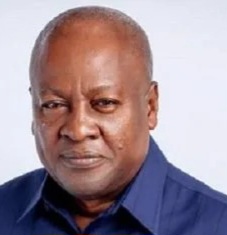
President John Dramani Mahama has renewed Ghana’s call for fundamental reforms to the United Nations Security Council, demanding permanent representation for Africa with the same rights, responsibilities and veto powers enjoyed by the council’s existing permanent members.
Addressing the General Debate of the 81st United Nations General Assembly in New York on Thursday, September 24, 2026, President Mahama argued that Africa’s continued exclusion from permanent membership was inconsistent with the continent’s population, political weight and contribution to the international system.
The President said Africa, with about 1.5 billion people and more than 18 per cent of the world’s population, remains the largest regional bloc in the General Assembly but has no permanent seat on the Security Council.
“This is fundamentally unacceptable in the 21st century,” he told world leaders.
His demand went beyond simply adding an African country to the council. He called for permanent African representation with “all the rights and responsibilities,” a position that includes the veto power currently held by the five permanent members — China, France, Russia, the United Kingdom and the United States.
The call is consistent with the position Ghana has advanced at previous UN gatherings. At the 80th General Assembly in September 2025, President Mahama argued that Africa deserved permanent representation with veto power and questioned why the authority should remain concentrated in five countries.
Mahama rejects ‘favour’ to Africa
President Mahama rejected the idea that giving Africa a permanent seat would amount to a concession by the existing global powers.
He argued that Security Council reform was necessary for the legitimacy and credibility of the United Nations itself.
His position is based on the principle of sovereign equality of states, which he said was difficult to reconcile with a Security Council structure largely shaped by the geopolitical realities that existed at the end of the Second World War.
The President warned that an international institution whose most powerful decision-making body does not adequately reflect present-day geopolitical realities risks losing public confidence and authority.
The issue has been a longstanding concern for African governments. The African Union’s common position calls for greater African representation on the Security Council, including permanent seats with the same rights and responsibilities as existing permanent members.
The UN’s current leadership has also acknowledged the need to address Africa’s underrepresentation. At the opening of the 81st General Assembly session, General Assembly President Khalilur Rahman said Africa, despite being the region with the largest number of UN member states and being central to UN peacekeeping, remains underrepresented on the Security Council.
From political representation to economic inequality
President Mahama linked Security Council reform to broader inequalities within the international system.
He argued that developing countries face significantly higher borrowing costs than industrialised economies, with some developing nations paying interest rates several times higher.
According to the President, the problem becomes particularly severe when developing countries are hit by climate-related disasters.
He said countries facing floods, droughts and other climate shocks can be forced to borrow heavily to rebuild infrastructure and restore their economies, increasing debt burdens and limiting resources available for social and economic development.
His proposed response was greater access to long-term, affordable and concessionary financing to enable developing countries to invest in human capital, industrialisation and climate adaptation.
President Mahama therefore presented reform of global financial institutions as part of the same broader effort to make international governance more representative.
Warning against a new scramble for Africa’s minerals
The President also used his address to warn against what he described as a new scramble for Africa’s natural resources.
He highlighted the continent’s youthful population, agricultural potential and deposits of critical minerals that are increasingly important to renewable energy and other emerging technologies.
But he insisted that Africa should not simply export raw materials while foreign economies capture most of the value generated from them.
“Africa will not remain a passive arena for a new scramble for resources,” he said.
He called instead for greater processing of African minerals on the continent, arguing that local value addition would create jobs, strengthen industrial capacity and retain more economic value within African economies.
President Mahama also pointed to the African Continental Free Trade Area, whose secretariat is based in Accra, as an important vehicle for increasing intra-African trade and supporting industrial transformation.
“Africa does not seek charity. Africa seeks equal partnership,” he said.
Mahama warns of weakening multilateralism
The President ended his intervention with a broader warning about the future of the international system.
He expressed concern about the rise of unilateralism, disregard for international rules and what he described as an erosion of multilateral norms.
Drawing a historical parallel with the League of Nations, Mahama warned that international institutions could become ineffective if member states failed to respect the rules and principles on which they were established.
He argued that the UN Charter must remain the foundation of international relations and that the veto should not become a mechanism for shielding impunity.
“The veto power must never serve as a licence for impunity; sovereign equality cannot be a privilege that is reserved only for nations that are aligned with global superpowers,” he said.