BY Issah Olegor
The controversy over the presidential term limit has taken a new and politically sensitive turn, with five separate cases now reportedly before the Supreme Court as Chief Justice Paul Baffoe-Bonnie facing scrutiny over comments made during his recent state-institution tour, and senior NDC figures warning against any attempt to extend President John Dramani Mahama’s stay in office.
What began as a constitutional question over the meaning of presidential term limits has increasingly become entangled with political succession, judicial independence and speculation about President John Dramani Mahama’s future beyond 2028.
At the centre of the latest controversy is Chief Justice Paul Baffoe-Bonnie, whose recent tour of state institutions and comments about President Mahama’s agenda have triggered questions over whether his public engagements could eventually intersect with the growing legal debate over presidential tenure as he prepares to preside over the pending cases.
The question being asked by critics is provocative but straightforward: Could the Chief Justice eventually be required to preside over, or otherwise participate in judicial proceedings concerning presidential term limits while having publicly expressed support for the success of the incumbent President’s agenda?
There is currently no established evidence that Justice Baffoe-Bonnie is pursuing a third-term project for President Mahama, nor is there evidence that the Chief Justice has been instructed by the President to advance such an agenda.
However, insiders suggest that the highly sensitive Mahama tunure elongation may be the last cases to be presided over by Justice Baffoe-Bonnie he proceeds on terminal leave prior to retirement.
Indeed, President Mahama has repeatedly said that he will respect the constitutional limit and will not seek a third term.
But the legal proceedings now before the Supreme Court mean that the issue is no longer merely political speculation.
The Controversy Started With The CJ’s Tour
The latest political storm followed Justice Baffoe-Bonnie’s visits to the Social Security and National Insurance Trust (SSNIT) and the Minerals Income Investment Fund (MIIF) on September 2, 2026.
During the visit to MIIF, the Chief Justice praised the institution’s management and expressed surprise at what he described as improvements in several state institutions under the current administration.
He said some of what he had seen and heard had caused him to wonder what Ghana had been doing during the previous eight years.
“Sometimes when we hear how well some state organisations are doing now, we wonder what we really have been doing in the past eight years,” he said.
The remarks immediately attracted political attention because the eight-year period corresponds largely with the tenure of the previous NPP administration.
The Chief Justice then made an even more politically sensitive statement while addressing officials at MIIF.
He referred to President Mahama as the “old man” and urged officials to do everything possible to ensure that his agenda succeeded.
That statement has become the central point of criticism from the opposition NPP and other commentators, who argue that the head of Ghana’s Judiciary should be particularly cautious about publicly endorsing the political agenda of an incumbent President.
The NPP subsequently questioned the Chief Justice’s neutrality, arguing that his constitutional allegiance should be to the Constitution rather than to the agenda of any President or political party.
The comments also prompted broader public criticism, with the Ghana Center for Democratic Development (CDD-Ghana) calling on the Chief Justice to exercise the highest possible restraint and discretion in his public engagements and commentary to protect the impartiality and credibility of the Judiciary.
Judicial Service Responds After Public Backlash
The controversy became serious enough for the Judicial Service to issue a clarification.
In a statement dated September 4, the Judicial Service said the Chief Justice had taken note of the mixed public reaction to observations he made about the performance of state-owned entities during his outreach engagement.
It stressed that the observations were made in good faith and were not intended to serve any purpose inimical to judicial independence.
The statement reaffirmed Justice Baffoe-Bonnie’s commitment to maintaining the integrity and independence of the Judiciary and promoting justice and equality before the law.
That clarification has not, however, ended the political debate.
Instead, it has raised a further question: why did comments intended as institutional outreach produce such a strong reaction that the Judicial Service had to publicly defend their context?
The Third-Term Question Had Already Entered The Supreme Court
Long before the Chief Justice’s controversial tour, the question of whether a former President who has served two non-consecutive terms could seek another term had already begun moving through the judicial system.
The legal argument centres on Article 66(2) of the 1992 Constitution, which provides that a person elected as President “shall not be elected to hold office as President for more than two terms.”
Supporters of the litigation have sought interpretations of the constitutional provision, with some arguing that the wording could be interpreted as restricting consecutive terms rather than permanently preventing a former President who has already served two separate terms from returning to office.
That argument has significant implications for President Mahama because he served his first presidential term from 2013 to 2016 and returned to office in 2025 after an eight-year break.
Under the conventional understanding of Ghana’s constitutional term limit, that second tenure is his final presidential term.
But the court applications have reopened the legal debate.
5 Cases Now Before The Supreme Court
The number of cases reportedly pending before the Supreme Court against the Attorney-General on the presidential term-limit question has now risen to five.
The first is Azubila E. Salam v. The Attorney-General, referenced as J1/4/2026, filed on December 23, 2025.
The second is Kenneth K.A. Kuranchie v. The Attorney-General, referenced as J1/20/2026, filed on June 30, 2026.
The third is Ganiwu Alhassan v. The Attorney-General, referenced as J1/21/2026, filed on July 9, 2026.
The fourth is Eric Appiah v. The Attorney-General, referenced as J1/26/2026, filed on July 20, 2026.
The fifth is New Patriotic Party v. The Attorney-General, referenced as J1/27/2026, filed on July 30, 2026.
The expansion from three cases to five has significantly increased the political importance of the issue.
What began as litigation initiated by individual citizens has now attracted direct political-party interest, with the NPP itself becoming a plaintiff in one of the reported cases.
The Supreme Court will ultimately have to determine the constitutional questions properly placed before it, rather than political speculation surrounding the cases.
Mahama Says He Will Not Seek A Third Term
President Mahama, for his part, has repeatedly attempted to close down the political speculation.
In July 2026, he reiterated his commitment to the presidential term limit and said he would respect the constitutional provision.
During an engagement in the Volta Region, he acknowledged that citizens had gone to court seeking an interpretation of the constitutional provision but maintained that his own understanding of the Constitution was clear.
“The people of Ghana gave me a mandate for one additional term, and I remain fully committed to fulfilling the promises I made to them,” the President said, according to the Ghanaian Times.
That position creates an important distinction in the current debate.
The fact that individuals have gone to court seeking an interpretation of Article 66 does not necessarily mean President Mahama is behind those cases.
Nor does the existence of the cases establish that the President intends to contest the 2028 election.
The courts are being asked to interpret the Constitution, while the President says he intends to respect it.
Asiedu Nketiah: It Is Not About President Mahama
Perhaps the most significant complication for those promoting a “third-term agenda” narrative is the position of senior figures within the governing NDC itself.
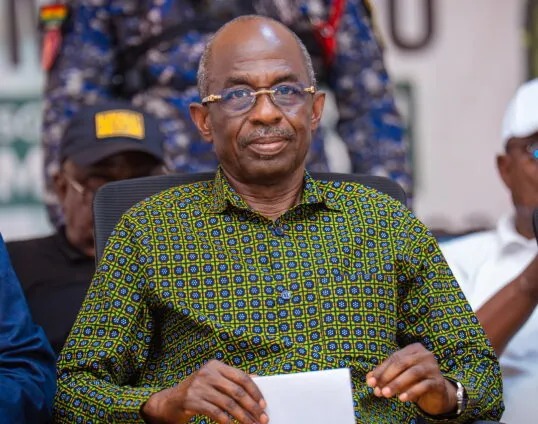
NDC National Chairman Johnson Asiedu Nketiah has publicly warned against framing the presidential term-limit debate around President Mahama personally.
His position is particularly important because, as National Chairman, he is one of the most influential figures in the governing party and is also a potential beneficiary of the party’s future succession and leadership arrangements.
Asiedu Nketiah has insisted that the debate should be about Ghana’s democratic system rather than about finding a way for President Mahama to remain in power.
“The underlying principle is about whether the nation should remove term limits or hold on to our constitutional term limits for presidents. It’s not about President Mahama,” he said.
He has warned that Ghana should be extremely cautious about weakening the constitutional guardrails that have helped the country achieve peaceful transfers of power.
According to him, presidential term limits were introduced to facilitate alternation of power and protect the country’s democratic system.
He cited former President Jerry John Rawlings and former President John Agyekum Kufuor as examples of leaders who left office despite their popularity because the constitutional system required them to do so.
Asiedu Nketiah has gone further, describing the push for a third term for President Mahama as dangerous.
In August 2026, he cautioned that people opposing a third-term bid were increasingly being portrayed as enemies of the President, while supporters were portrayed as those who genuinely loved him. He warned that such a situation could divide the NDC and damage healthy political debate.
His position is therefore a major obstacle to any claim that the NDC as a whole is secretly preparing a third-term project.
Asiedu Nketiah’s Political Stake
Yet his position introduces another interesting dimension.
As National Chairman of the NDC, Asiedu Nketiah has a direct interest in the party’s future beyond Mahama’s second tenure.
A constitutional change that enabled President Mahama to seek another term could significantly alter the succession dynamics within the NDC.
Conversely, preserving the existing two-term limit would mean the party must prepare for a new presidential candidate ahead of the 2028 election.
That makes Asiedu Nketiah’s opposition to a third-term campaign politically significant.
He is not simply speaking as an outside constitutional commentator.
He is a senior figure within the governing party whose political future and influence are connected to what happens after Mahama’s current term.
His argument, however, has remained consistent: the issue should not be reduced to whether Mahama personally wants another term.
It should be about whether Ghana wants to retain presidential term limits.
The Fight Is Also Within The NDC
Asiedu Nketiah is not the only senior NDC figure to caution against political personality cults.
Former NDC General Secretary Fifi Fiavi Kwetey has previously warned party supporters against sycophancy, bootlicking and excessive loyalty to individual politicians.
He argued that the NDC was founded on principles rather than personalities and recalled that even former President Rawlings, despite his popularity, respected the constitutional requirement to leave office.
These statements are important because they demonstrate that resistance to a third-term agenda is not exclusively an opposition-NPP position.
There are influential voices within the governing party who appear to regard the two-term limit as an essential democratic safeguard.
Then Why Are The Court Cases Still Growing?
That is the question now occupying political observers.
If President Mahama has categorically said he will not seek another term, why are multiple plaintiffs continuing to ask the Supreme Court to interpret the provision?
The answer may ultimately be legal rather than political.
Citizens have a constitutional right, subject to the applicable legal requirements, to bring matters before the courts.
The existence of a case does not prove that the President commissioned it.
However, the multiplication of cases means that the issue is becoming increasingly difficult for the country to ignore.
The latest case filed by the NPP has transformed the matter further by bringing an organised political party directly into the constitutional dispute.
Where Does The Chief Justice Fit Into All This?
This is where Justice Baffoe-Bonnie’s recent comments become politically sensitive.
The Chief Justice is expected to retire in December 2026, according to the retirement rules applicable to the office.
The Supreme Court is the institution that will ultimately determine the constitutional meaning of Article 66 if the relevant cases proceed to substantive determination.
That does not mean the Chief Justice personally controls the outcome of cases before the court.
Supreme Court decisions are matters for the constitutionally constituted panel hearing a particular case, and judges are bound by law rather than political instructions.
Nevertheless, because the Chief Justice occupies the leadership position within the Judiciary and because the current term-limit litigation has become politically charged, his public comments are naturally attracting greater scrutiny.
Critics therefore ask whether his statement that “the old man’s agenda” should succeed could create an appearance problem if the Judiciary is later called upon to determine a constitutional question that could have consequences for President Mahama’s eligibility.
The question is about perception, not proof.
There is no established evidence that Justice Baffoe-Bonnie intends to influence any Supreme Court case concerning presidential term limits.
The Third-Term Debate Has Attracted Legal Scholars
The issue has also drawn strong responses from constitutional experts.
Professor H. Kwasi Prempeh has argued that the two-term limit should not be circumvented through judicial interpretation and has warned against what he describes as a constitutional amendment by stealth.
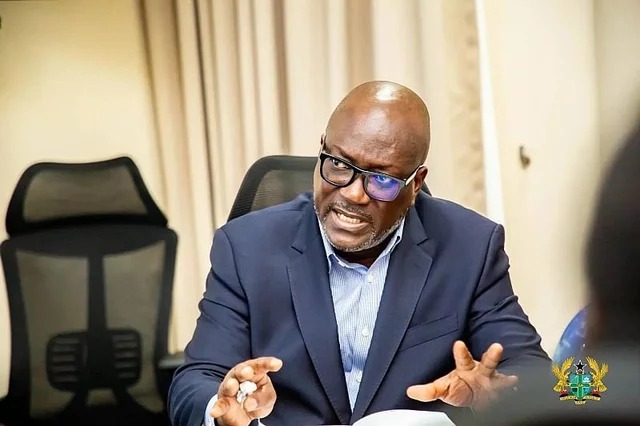
Professor Kwaku Asare, popularly known as Kwaku Azar, has likewise argued for a strict understanding of the two-term constitutional limit.
Their position is that if Ghanaians genuinely want to change the constitutional arrangement, the proper route is constitutional amendment rather than an interpretation that effectively rewrites the provision.
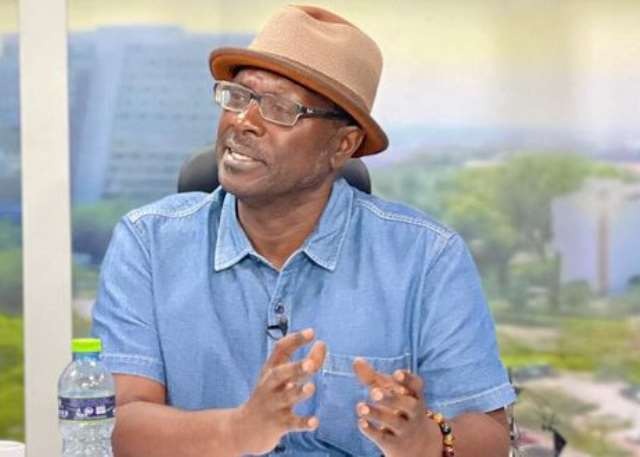
NPP stalwart and lawyer Gabby Asare Otchere-Darko has also criticised the emerging third-term narrative and warned about the consequences of weakening presidential term limits.
The debate therefore extends well beyond President Mahama personally. It concerns the architecture of the Fourth Republic.