BY DANIEL BAMPOE
The government’s renewed call for commercial banks to expand financing to women-owned businesses has reopened a political and policy debate over the status of the Women’s Development Bank, a flagship commitment the National Democratic Congress (NDC) made during the 2024 election campaign and subsequently provided for in the national budget.
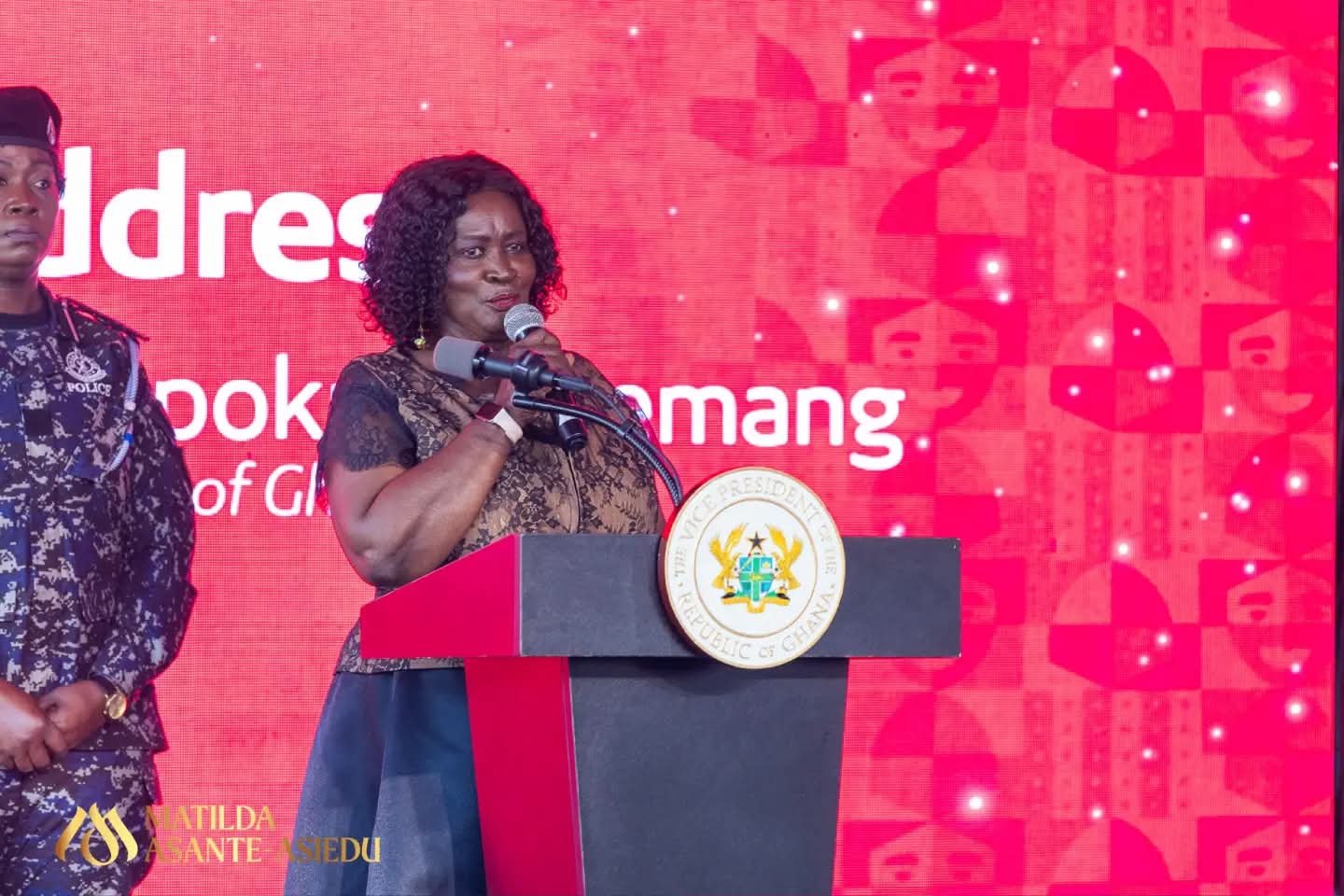
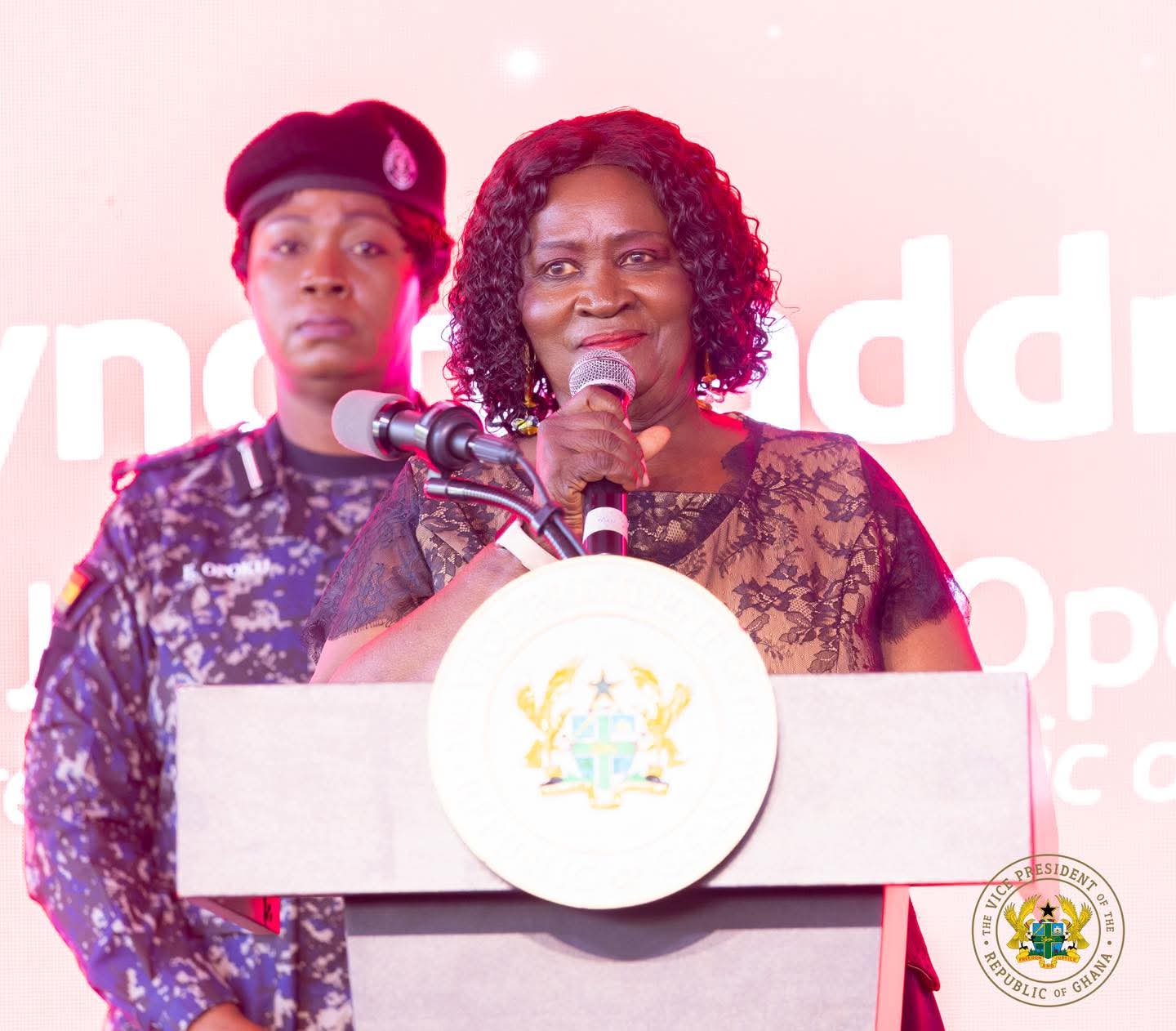
The latest discussion follows remarks by Vice President Professor Jane Naana Opoku-Agyemang at the commissioning of Absa Place, the new head office of Absa Bank Ghana in Accra, where she urged the financial institution to expand access to finance for women-owned businesses and young entrepreneurs.
The Vice President also called on Absa to develop practical financial solutions for businesses in agriculture, manufacturing and trade, while leveraging technology to deepen financial inclusion.
The appeal has nevertheless prompted questions about the government’s own promised specialised financial institution for women, particularly among observers asking when women entrepreneurs will begin accessing the dedicated financing facility promised by the NDC.
The issue is significant because the 2024 NDC manifesto explicitly pledged to establish a Women’s Development Bank, describing it as a special-purpose bank to support women-owned and women-led businesses with low-interest loans and tailored financial services on flexible terms.
Subsequent budget statements have made provisions for the establishment of the bank.
The Women’s Development Bank was not presented merely as a campaign slogan. During the 2024 election campaign, the NDC repeatedly promoted the proposed bank as a mechanism for addressing the difficulty women entrepreneurs face in accessing affordable capital.
The party’s manifesto stated that the bank would provide low-interest financing and tailored financial services to women-owned and women-led enterprises, with the broader objective of economic empowerment.
The policy was also publicly promoted by then NDC running mate and current Vice President Professor Jane Naana Opoku-Agyemang during engagements with market women in 2024.
At the time, she presented the initiative as part of the party’s proposed approach to improving women’s access to finance.
After assuming office, the government incorporated the commitment into its fiscal programme.
In the 2025 Budget, Finance Minister Dr Cassiel Ato Forson announced that government would establish the Women’s Development Bank and provide seed funding as the initial capitalisation for the institution.
The 2025 allocation was subsequently reported as GH¢51.3 million for the establishment and preparatory work.
The government then went further in the 2026 Budget, allocating an additional GH¢401 million to the Women’s Development Bank to crowd in finance for women-owned micro, small and medium-sized enterprises. The Ministry of Finance’s 2026 Budget document confirms the GH¢401 million allocation.
So, where is the Women’s Development Bank?
That question has increasingly featured in public discussions because, despite the budget allocations, the bank had not yet commenced full operations by September 2026.
There has, however, been progress behind the scenes. In July 2026, Dr Ato Forson told Parliament that WDB GH LTD had formally been incorporated on January 26, 2026, and that government had applied to the Bank of Ghana for the required banking licence.
He further disclosed that the Ministry of Finance had deposited GH¢400 million with the Bank of Ghana as the institution’s initial capital to satisfy the capital requirement for licensing.
The Finance Minister said at the time that the Women’s Development Bank was expected to commence full operations before the end of 2026.
This means that, contrary to claims that no steps have been taken, the government says the institution has moved from a campaign promise to incorporation and capitalisation, but is still awaiting the regulatory process necessary before it can operate as a bank.
It is against this backdrop that the Vice President’s remarks at Absa Place have generated renewed attention.
Addressing the ceremony, Professor Opoku-Agyemang told Absa that its investment should translate into increased opportunities for businesses and customers rather than remain confined to the physical infrastructure of its new headquarters.
She specifically called on the bank to “expand access to finance for women-owned businesses and young entrepreneurs” and to develop practical financial solutions for businesses in agriculture, manufacturing and trade.
She also encouraged Absa to use technology to deepen financial inclusion while ensuring that customers who need personalised support are not left behind as banking services become increasingly digital.
The Vice President additionally placed emphasis on cybersecurity and information security, warning that innovation in financial services must be accompanied by systems and safeguards capable of protecting customers’ money, personal information and transactions.
The contrast has become a point of discussion because the Women’s Development Bank was specifically conceived to address gaps that conventional financial institutions have struggled to close.
Trade Minister Elizabeth Ofosu-Adjare said in May 2026 that the proposed Women’s Development Bank would provide low-interest financing, flexible collateral requirements and tailored business support for women-led enterprises.
She said the institution was being established partly because traditional financial institutions had not adequately served women entrepreneurs.