BY DANIEL BAMPOE
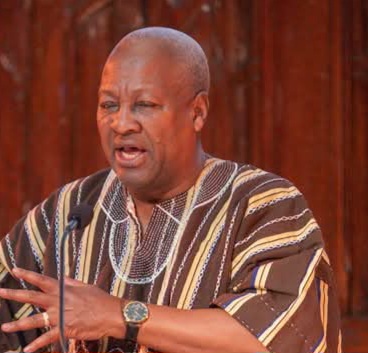
President John Dramani Mahama has sought to draw a distinction between personal insults directed at him and the wider question of how Ghana should regulate TikTok and other emerging digital platforms, saying he does not personally take offence at criticism but believes the country must collectively determine where the limits of online expression should lie.
Speaking during a town hall engagement with Ghanaians in New York on September 25, 2026, on the sidelines of the 81st United Nations General Assembly, Mahama said he had endured years of political criticism, including being vilified and voted out of office, and therefore had developed what he described as “crocodile skin.”
“As a leader, I don’t mind being insulted. I’ve been insulted, I was vilified, I was voted out of office. So for me, this skin is a crocodile skin,” Mahama said.
He added that insults would not prevent him from carrying out his responsibilities, saying he was focused on doing what he could for Ghana and Africa.
The President’s remarks came amid public debate over the arrest and prosecution of some social-media users and content creators following posts or livestreams involving public officials.
Mahama said he does not personally direct the police to arrest people who insult him and disclosed that he sometimes learns about such arrests through the media.
“A lot of these arrests, I don’t even know about them. I also hear them on the media,” he said.
He further said some of the cases concern him when the stated reason for an arrest is simply that an individual insulted him.
The President questioned whether some of the material cited as justification for arrest was serious enough to warrant such action, saying there were instances where the alleged insult itself would not ordinarily be repeated publicly.
Mahama said Ghana now faces a new communications environment in which virtually anyone with a mobile phone can publish content that may subsequently reach a large audience through platform algorithms.
He said the issue was not unique to Ghana, pointing to a broader international debate over how governments and societies should address information integrity on platforms such as TikTok.
“Anybody who has a phone just puts it in front of him and just says whatever he likes and once they put it out it has an algorithm that shares it,” he said.
According to Mahama, the speed with which content is distributed creates a challenge that traditional media did not face in the same way, because material can be repeatedly amplified to users without passing through conventional editorial processes.
He therefore argued that Ghana needs to decide collectively how the new media environment should be governed rather than leaving the issue to individual police interventions.
Rather than proposing that the government alone determine the rules, Mahama called for the Ghana Journalists Association (GJA), the Media Foundation for West Africa (MFWA) and other stakeholders to convene a national discussion.
He proposed that the stakeholders hold a workshop or forum to determine whether the police should become involved in online speech cases and, if so, what form regulation should take.
“What we should do is, Ghana Journalists Association, you saw the letter from my executive secretary, Media Foundation for West Africa, bring all the stakeholders together and hold a workshop or a forum and let’s all collectively take a decision on what we want to do with the new media,” he said.
He said the discussion should specifically examine the question: “Should the police get involved or they shouldn’t get involved? How do we regulate it?”
Mahama also warned that once arrests begin to become a response to online expression, determining where the boundary should be drawn could become difficult.
“Sometimes the police can go to the extreme and you never know. Once you start arresting, you don’t know where to stop,” he said.
The President nevertheless distinguished between insulting a public official and online activity that could amount to a threat or incitement to violence.
He cited a hypothetical social-media threat against US President Donald Trump, asking whether authorities would ignore a post threatening an assassination attempt at the White House.
The comparison was used to illustrate Mahama’s argument that a discussion about free expression must also consider conduct that may cross into criminal threats or incitement.
Mahama said personal attacks against him were not the issue. The question, in his view, was how Ghana should balance free expression, information integrity, public safety and accountability in an era when anyone with a smartphone can broadcast to a potentially large audience.