BY Issah Olegor
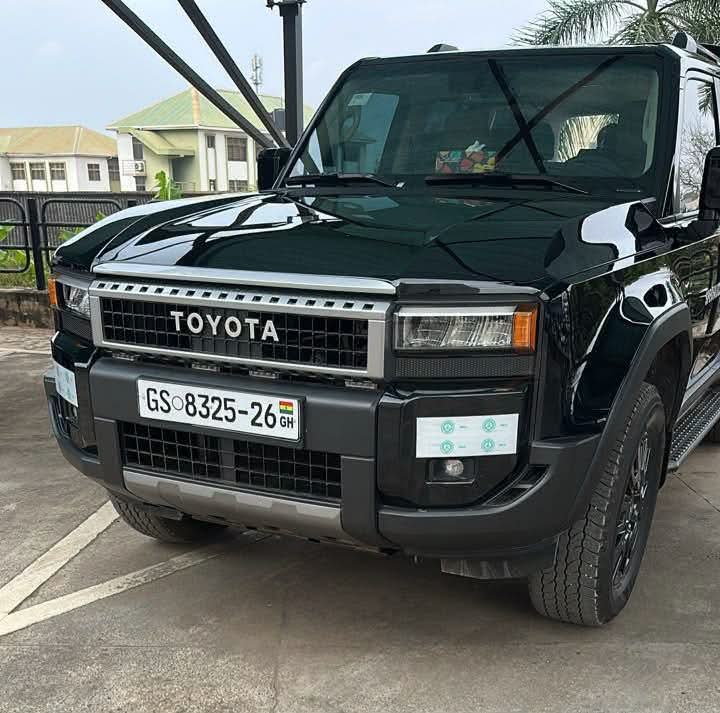
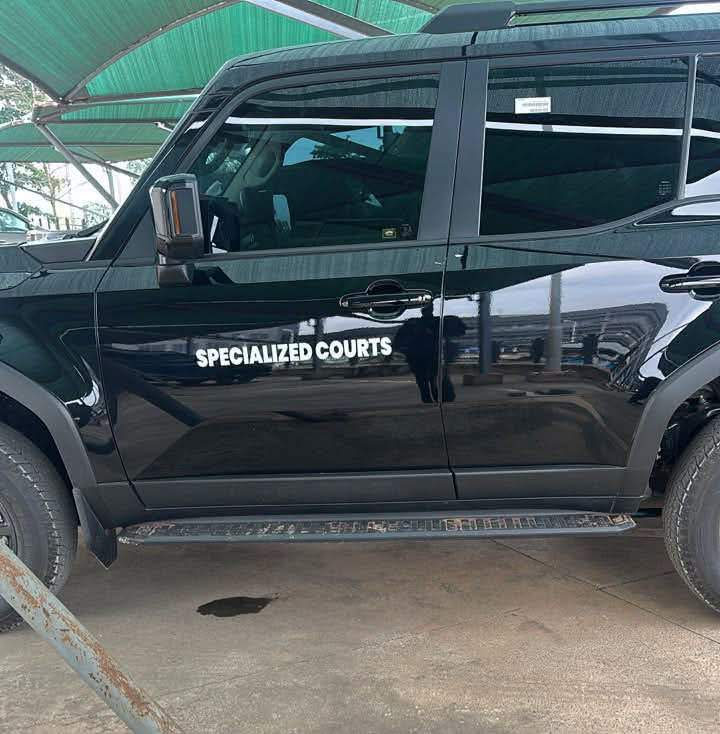
The reported allocation of special Toyota Land Cruiser vehicles fitted with sirens to judges serving at the two specialised courts has triggered fresh questions about preferential treatment within the Judiciary, with concerns being raised over why the judges should receive a different category of official vehicles from their colleagues at other High Courts.
The controversy comes at a particularly sensitive time, as one of the specialised courts is handling the high-profile criminal case involving former National Signals Bureau (NSB) Director-General Kwabena Adu-Boahene, his wife Angela Adjei-Boateng and their company, Advantage Solutions Limited.
Critics are demanding answers from the Judicial Service and government over the justification for the alleged provision of Land Cruiser vehicles to the two specialised courts, while other High Court judges reportedly operate Toyota Fortuner without sirens.
They want to know what makes the specialised courts more deserving of such vehicles and whether the arrangement is based on security considerations, the nature of the cases being handled or an administrative decision that has not been adequately explained to the public.
The questions have also revived concerns about the need to protect the independence of the Judiciary, particularly when courts are handling politically sensitive cases involving alleged financial misconduct and recovery of state funds.
Why Should Two Courts Receive Special Vehicles?
At the centre of the controversy is the allegation that government has procured Toyota Land Cruiser fitted with sirens exclusively for judges assigned to the two specialised courts.
While the full details of the alleged procurement, including the number of vehicles, cost and official authorisation, have not been independently established, the claims have generated demands for transparency.
Critics argue that all High Court judges perform important judicial functions and that the provision of special vehicles to only two courts requires a clear explanation.
If the vehicles are intended to address security threats associated with the sensitive cases handled by the specialised courts, the authorities are being urged to explain the security assessment behind the decision and the criteria used to determine which judges qualify for such arrangements.
They also want to know whether similar security considerations have been extended to other judges handling high-profile criminal, corruption and financial cases.
Adu-Boahene Case Brings Timing Into Focus
The controversy has become more pronounced because of proceedings in the GH¢49.1 million cyber-defence funds case involving Adu-Boahene.
The case is being presided over by Justice Francis Apangabuno Achibonga at Specialised Court 1, where the accused persons have filed a submission of no case to answer, arguing that the prosecution has failed to establish sufficient evidence requiring them to open their defence.
The prosecution, led by Deputy Attorney-General Dr Justice Srem-Sai, has opposed the application and urged the court to direct the accused persons to present their defence.
The case concerns allegations that GH¢49.1 million earmarked for the acquisition of a US$7 million cyber-defence system for the state was diverted. The accused persons have pleaded not guilty to the charges.
The timing of the vehicle controversy has therefore prompted questions about whether the reported special arrangements could create perceptions of preferential treatment at a time when the public is closely following the court’s handling of the case.
Can Official Vehicles Influence Judicial Decisions?
The questions being raised are whether the provision of special vehicles could create an impression of indebtedness to the government among judges who are expected to determine cases involving the state and individuals accused of wrongdoing.
Could the alleged arrangement undermine public confidence in the impartiality of the courts? Does the Judicial Service have a transparent policy governing official vehicles and security arrangements for judges?
There is, however, no established evidence that the alleged vehicles were provided to influence Justice Achibonga or that his handling of the Adu-Boahene case has been compromised.
The judge’s decision must ultimately be determined by the evidence presented in court and the applicable law, not by speculation surrounding official transportation.
Nevertheless, the authorities have a responsibility to address legitimate questions that could create doubts about the administration of justice.
Specialised Courts and Their Establishment
The specialised High Court division was established through an administrative directive issued by Chief Justice Paul Baffoe-Bonnie on February 5, 2026, under Section 14(3) of the Courts Act, 1993 (Act 459).
The division was designed to improve the handling of cases involving corruption and public accountability, natural resources and illegal mining, state asset recovery, and organised crime and security.
Its establishment was an institutional decision of the Judiciary, rather than a direct creation of the NDC government, although the courts operate within the current political and administrative environment.
Judicial Service Must Provide Answers
The Judicial Service is being urged to clarify the reported allocation of the Land Cruisers and explain whether the vehicles were procured with public funds, who authorised the arrangement and the specific reasons for fitting them with sirens.