BY DANIEL BAMPOE
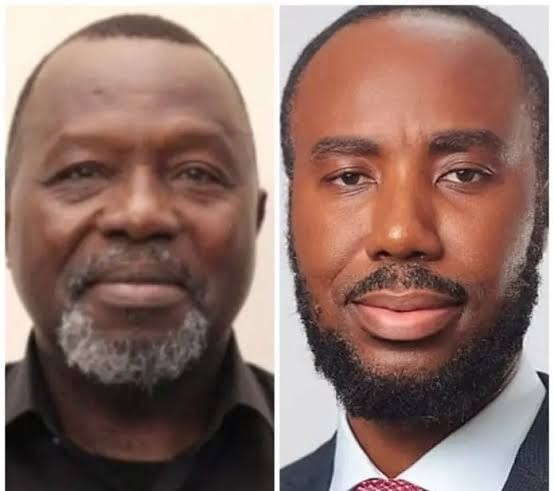
The legal battle involving former National Signals Bureau (NSB) Director-General Kwabena Adu-Boahene and his co-accused has taken another dramatic turn, with the defence filing two fresh legal processes challenging the Attorney-General’s response to their submission of no case to answer.
The accused persons, through their lead counsel, Samuel Atta Akyea, have accused the prosecution of allegedly introducing fabricated evidence and attributing statements to witnesses that were never made during the trial.
In a motion on notice filed before the Specialized Court 1 of the Accra High Court, the defence is asking the court to strike out portions of the prosecution’s submissions filed on October 9, 2026.
The accused persons contend that the disputed passages contain material that does not form part of the evidence presented before the court.
The defence’s application places the accuracy and integrity of the prosecution’s written arguments at the centre of the latest courtroom dispute, as the parties await a ruling on whether the accused persons must open their defence.
Defence Challenges Prosecution’s Written Arguments
According to the accused persons, the prosecution’s response contains statements allegedly attributed to witnesses who did not make those statements during their testimony.
The defence argues that written submissions must be grounded in the evidence actually placed before the court and cannot be used to introduce new facts or materials that were never established during the proceedings.
Through the motion, Atta Akyea is asking the court to remove the disputed portions from the prosecution’s submissions.
The allegation remains the defence’s position, and the court is expected to determine the application after hearing arguments from both sides.
The motion is particularly significant because the case has reached a stage where the court must assess whether the prosecution’s evidence is sufficient to require the accused persons to enter a defence. At this point, the parties’ written arguments are expected to address the evidence already presented rather than substitute allegations for proof.
Defence Files Reply to Attorney-General’s Response
In a separate process, the accused persons have filed their reply to the Attorney-General’s response to their submission of no case to answer.
The defence contends that the prosecution failed to address more than 38 evidential questions raised in its original submission.
According to the accused persons, rather than responding directly to the specific gaps and unanswered questions identified by the defence, the prosecution merely repeated allegations contained in the charge sheet and presented them as proof of guilt.
The defence argues that allegations in a charge sheet are not, by themselves, proof that the offences charged have been committed. It maintains that the prosecution must demonstrate through admissible evidence that the essential elements of the alleged offences have been established.
The reply therefore seeks to persuade the court that the prosecution’s response has not resolved the evidential concerns raised after the Republic closed its case.
GH¢49.1m Dispute Remains at the Heart of the Case
The underlying criminal proceedings concern allegations relating to approximately GH¢49.1 million associated with a purported cyber-defence system procurement.
The prosecution has accused Adu-Boahene and his co-accused of offences arising from the alleged handling of the funds. The accused persons have denied the allegations and are challenging the sufficiency of the evidence presented by the Republic.
Throughout the trial, the defence has questioned the prosecution’s account of the source, purpose and intended destination of the money, as well as the alleged connection between the funds and properties, vehicles, investments and businesses attributed to the accused persons.
The defence has also challenged aspects of the prosecution’s financial reconstruction and argued that key questions remain unanswered about the accounts through which the money moved and the officials responsible for authorising the transactions.
After the prosecution concluded its case, the defence filed a submission of no case to answer, asking the court to determine whether the evidence presented by the Republic establishes a sufficient basis for requiring the accused persons to open their defence.
The prosecution subsequently filed its response on October 9, 2026, prompting the latest reply and the separate application seeking to strike out the disputed passages.
Over 38 Questions and Alleged Evidential Gaps
The defence says its original no-case submission identified more than 38 evidential questions that, in its view, the prosecution needed to address.
These concerns reportedly relate to alleged gaps in the evidence, the interpretation of financial transactions, the connection between the disputed funds and the assets cited by the prosecution, and the evidential foundation of the charges.
The accused persons maintain that the prosecution’s response has failed to answer those questions adequately.
They further argue that the Republic’s reliance on allegations without addressing the specific evidential challenges raised by the defence reinforces their position that the prosecution has not established a prima facie case.
The court, however, will have to consider the submissions of both parties and the evidence on record before reaching its decision. The filing of the defence’s reply does not, in itself, establish that the prosecution’s case is defective or that the allegations against the accused persons have failed.
2 Important Court Dates Ahead
The court has scheduled the hearing of the defence’s motion to strike out the disputed portions of the prosecution’s submissions for Monday, October 26, 2026.
The application will require the court to consider the defence’s complaint about the material allegedly introduced into the prosecution’s written arguments and determine whether the challenged passages should remain part of the submissions.
A separate and potentially decisive date has also been set for Thursday, November 5, 2026, when the court is expected to deliver its ruling on the submission of no case to answer.
That ruling will determine whether the prosecution has presented sufficient evidence to require Adu-Boahene and his co-accused to open their defence.