By Daniel Bampoe
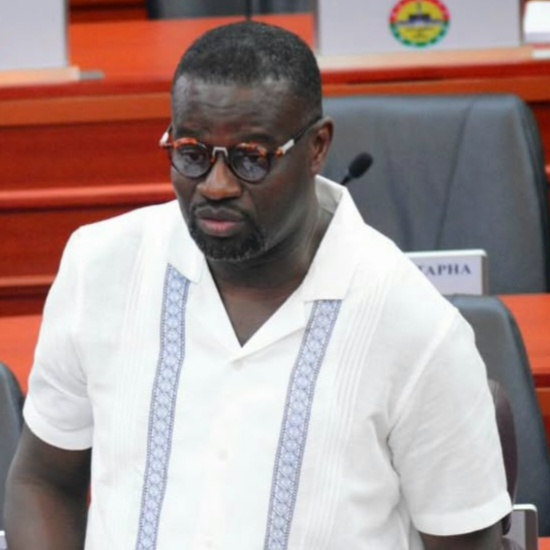
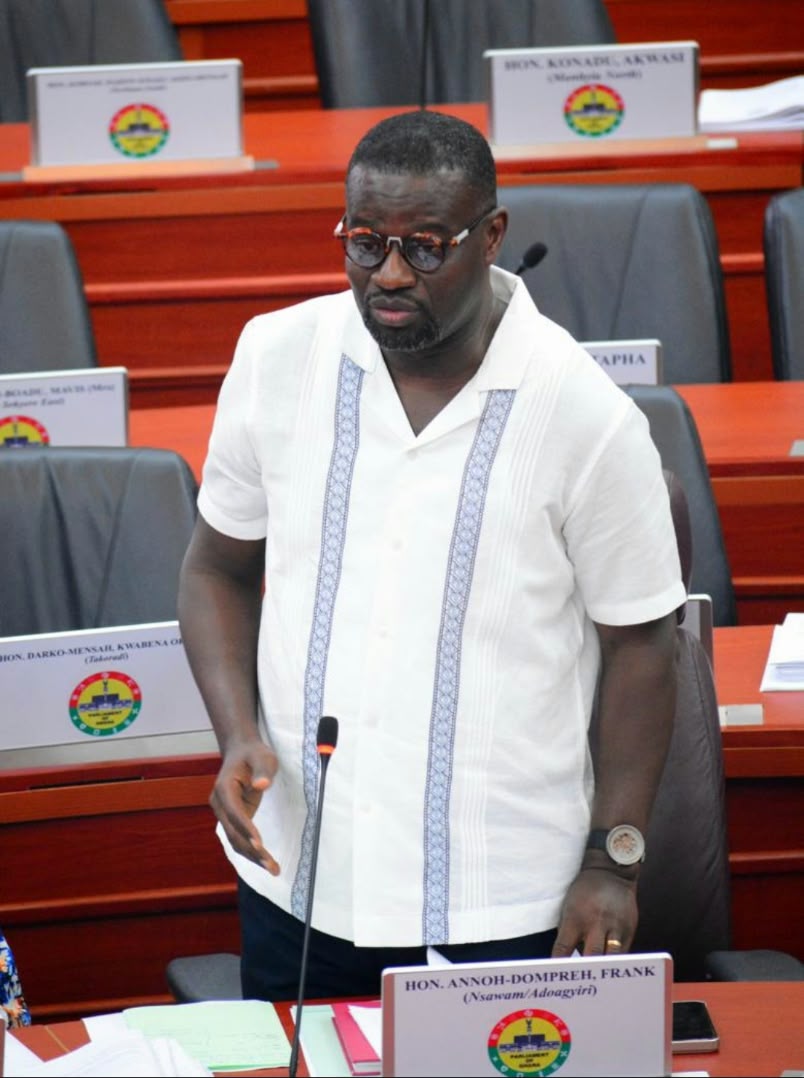
Minority Chief Whip and Member of Parliament for Nsawam-Adoagyiri, Hon. Frank Annoh-Dompreh, has raised concerns over what he describes as a growing food glut in Ghana, warning that farmers and market women are suffering financial losses because they cannot sell their produce despite the country’s increased agricultural output.
Addressing Parliament, Annoh-Dompreh said the situation exposed a troubling contradiction in Ghana’s agricultural sector: farmers invest heavily in cultivating maize, rice, cassava, yam, soya beans, and other food crops, only to struggle to find buyers after harvest. He noted that some farmers were being offered prices below their production costs, leaving them unable to recover their investments, repay loans, pay workers or prepare for the next planting season.
He also drew highlighteddifficulties confronting market women, who transport foodstuffs to markets but are ucannot selluse consumers lack the purchasing power to buy the produce.
According to him, the crisis goes beyond an oversupply of food and points to serious weaknesses in the connection between agricultural production, market demand, storage, processing, transportation and distribution.
The Minority Chief Whip warned that the failure to address the problem could have consequences beyond the immediate financial losses facing farmers and traders. He argued that if farmers become discouraged and reduce production or abandon agriculture because they cannot sell their harvests, Ghana could eventually move from a food glut to food shortages.
Annoh-Dompreh further argued that the situation raises constitutional and national development concerns, pointing to provisions of the 1992 Constitution that require the State to promote economic development, improve livelihoods, support agriculture and ensure that citizens have access to the necessities of life.
He specifically referenced Article 34(1), Article 36(1), Article 36(2)(a), (d) and (e), as well as Articles 36(3) and 36(5), which guide public policy, economic management, agricultural development and the welfare of citizens. He also cited Article 103 as the basis for Parliament to exercise its oversight responsibilities and investigate matters of national concern.
According to the MP, food security must be treated as an important part of Ghana’s national resilience because a prolonged breakdown in food markets could deepen rural poverty, weaken household purchasing power, discourage future production and expose the country to supply disruptions.
He stressed that although every surplus of food should not automatically be regarded as a national security emergency, the inability to preserve, purchase and distribute agricultural produce over an extended period requires coordinated attention from government.
NAFCO’s capacity and government funding under scrutiny
The Minority Chief Whip turned his attention to the National Food Buffer Stock Company (NAFCO), an institution whose responsibilities include purchasing excess food produce, preserving stocks and supporting price stability.
He cited Ghana News Agency reports from May 2026 which, according to his statement, indicated that NAFCO had installed storage capacity of approximately 129,000 metric tonnes, but only about 40,000 to 44,000 metric tonnes were usable at the time.
He questioned the gap between the reported storage capacity and the actual facilities available for use, particularly in view of reported government support of GH¢300 million for strategic food reserves.
He also referred to a June 2026 report indicating that 45 licensed buying companies had been registered, alongside budgetary support comprising GH¢100 million and an additional GH¢200 million in the 2026 Budget.
Annoh-Dompreh argued that these financial allocations and institutional arrangements must be measured against the actual quantities of food purchased, the promptness of payments to farmers and the availability of functional storage facilities.
He maintained that government announcements and budgetary commitments must translate into tangible relief for farmers rather than remain figures on paper.
Seven-point intervention proposed to rescue farmers and traders
To address the crisis, the MP called for an emergency food-purchasing programme through NAFCO and other appropriate institutions, with transparent pricing, regional purchasing targets and prompt payment to farmers.
He further proposed that public institutions, including schools, universities, hospitals, the Ghana Prisons Service and the Ghana Armed Forces, should prioritise the purchase of locally produced food for their catering needs, subject to quality, procurement and value-for-money requirements.
According to him, such a policy would create a more predictable market for local farmers while reducing the pressure on producers struggling to sell their harvests.
On storage and preservation, Annoh-Dompreh called for an urgent audit of public warehouses, the rehabilitation of unusable facilities and the expansion of storage infrastructure in major farming communities. He also urged the government to provide drying, grading, packaging and cold-chain facilities, alongside a credible warehouse-receipt system that would allow farmers to store their produce and use verified receipts to access financing.
He also highlighted the need to strengthen food processing and value addition, arguing that surplus agricultural produce could be transformed into commercially viable products. He cited cassava processing into gari, starch and flour, tomatoes into paste, maize and soya beans into animal feed, and rice into properly milled and packaged Ghanaian brands.
The MP further called for improved distribution and market access through aggregation centres, organised transportation, digital market information and partnerships involving farmer cooperatives, market associations, processors and institutional buyers.
He urged government and financial institutions to consider appropriate restructuring of viable agricultural loans affected by the food glut and improve access to affordable working capital for market women and small-scale traders, particularly women-led cooperatives.
He also proposed the establishment of safe systems to collect, preserve, process and redistribute surplus food in partnership with local assemblies, processors, charities and private distributors, subject to food-safety standards.
Annoh-Dompreh demands answers from Agriculture Minister
Beyond the proposed interventions, the Minority Chief Whip called on Parliament’s relevant committees responsible for Food, Agriculture and Cocoa Affairs; Finance; and Trade, Industry and Tourism to undertake an urgent assessment of the situation.
He urged the committees to visit affected farming communities and markets to establish the extent of the crisis and obtain first-hand information from farmers, cooperatives and traders.
He also called on the Minister for Food and Agriculture to provide Parliament with detailed information on the volume of unsold produce by commodity and region, the number of affected farmers and cooperatives, the quantities actually purchased by NAFCO and licensed buying companies, funds disbursed, outstanding payments and the current usable storage capacity.
The Minister, he said, must also account for the operational status of the 45 registered buying companies and explain the government’s plans for institutional procurement and the management of food imports.
Annoh-Dompreh further demanded a time-bound national intervention plan with clear targets, implementation timelines and regular reports to Parliament. He insisted that the Ministries responsible for Food and Agriculture, Finance, Trade and Industry, and Local Government must coordinate their response, while Parliament demands transparent procurement, independent audits and accountability for public funds.
Concluding his submission, the Minority Chief Whip warned against allowing increased food production to become a source of economic hardship for the very people responsible for feeding the country.
He argued that farmers needed buyers rather than sympathy, while market women required functioning markets and consumers with sufficient purchasing power.
He maintained that food security cannot be measured only by the volume of food produced, but must also be assessed by the country’s ability to preserve, purchase, distribute and make food affordable.
He therefore urged Parliament to rise above partisan considerations and push for urgent measures to protect farmers, traders and the wider population from the growing food-market crisis.