
By Daniel Bampoe
Dr. Mahamudu Bawumia, the 2024 Presidential Candidate of the New Patriotic Party (NPP), has openly admitted that a combination of internal arrogance, controversial economic policies, and widespread disunity led to the party’s historic defeat in the 2024 general elections.
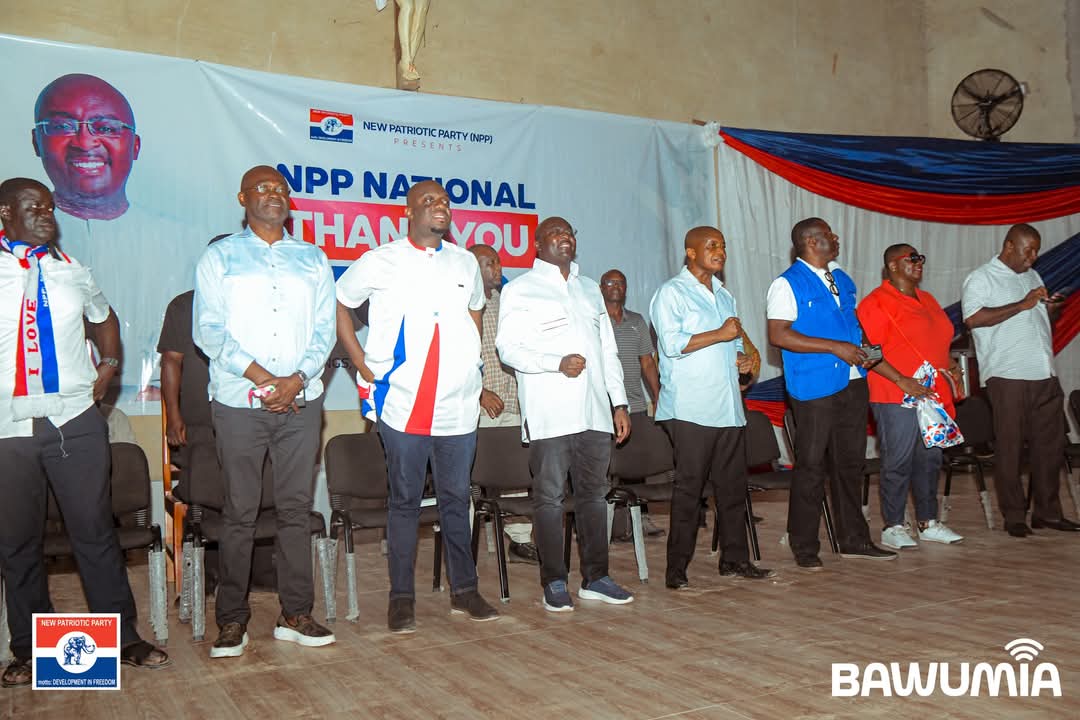
Speaking during his nationwide “Thank You Tour” at Takoradi Technical University on Saturday, April 26, 2025, Dr. Bawumia broke his silence on the party’s painful loss.
Addressing party faithful and sympathizers, he painted a frank picture of how a series of self-inflicted wounds, more than any external threat, sealed the NPP’s fate.
According to Dr. Bawumia, several factors were pivotal. Chief among them was what he described as the “arrogance of power” that had taken root within the party hierarchy.
After nearly eight years in office, he noted, the NPP leadership increasingly ignored the sentiments of ordinary Ghanaians and grassroots party members.
Despite repeated calls from within the party base to reshuffle underperforming ministers, the leadership refused, breeding resentment and frustration.
Adding to the woes, he said, was the controversial introduction of the Electronic Transfer Levy (E-Levy) in 2022 — a policy that was broadly unpopular and viewed by many citizens as insensitive amidst economic hardships. Coupled with the Debt Exchange Programme (DDEP), which involved painful “haircuts” on domestic bondholders, the economic mismanagement narrative gained ground.
These policies, Bawumia admitted, alienated not just opposition sympathizers but even the NPP’s traditional support base.
“The high cost of living, the skyrocketing prices of goods and services, and our failure to listen when people cried out against these policies contributed significantly to our loss,” Bawumia told the gathering.
He further lamented that programmes such as NABCo, Youth in Afforestation, and School Feeding, which had once been flagship employment and social intervention schemes, were crippled due to government’s inability to pay beneficiaries, worsening public discontent.
In a revealing admission, Bawumia also addressed persistent claims that his religion — being a Muslim — played a role in voter apathy among Christian communities.
While acknowledging that religious bias may have played a minor role, he firmly stated that internal divisions, arrogance, and failed promises were far more decisive factors in the defeat.
“When you study all the reports we have so far, internal disunity was glaring. Even in regions traditionally friendly to us, like the Western Region, our campaign efforts were weak.”
“The opposition NDC didn’t even need a solid campaign message. They simply replayed our internal fights and damaging utterances to the electorate,” he explained.
Dr. Bawumia’s remarks reflect a significant shift from the earlier, more defensive posture the NPP leadership adopted immediately after the 2024 defeat.
Back then, blame was largely cast outward — on economic conditions inherited from COVID-19, global inflation, and alleged voter manipulation.
Dr Bawumia’s confession marks one of the first major public acknowledgments by a leading NPP figure that the party’s undoing was, in large part, self-inflicted.
The 2024 election loss was a dramatic fall for the NPP, which had dominated Ghanaian politics since 2016.
After winning re-election in 2020, many believed the party was poised for a historic third consecutive term — a feat no party had achieved under Ghana’s Fourth Republic.
However, the arrogance of incumbency, unpopular policies, and internal strife proved to be the Achilles heel.
Dr Bawumia ended his address with a sober warning to party members: “If we do not learn from our mistakes — especially the arrogance, the failure to listen, and the internal attacks — the NPP risks further decline. We must guard our utterances and rebuild unity if we are to stand a chance in the future.”


