

By Daniel Bampoe
A growing political storm is brewing over the future of Ghana’s vaccine production efforts, as members of the opposition New Patriotic Party, NPP, accuse the current administration of attempting to rebrand a flagship initiative launched under former President Nana Addo Dankwa Akufo-Addo.
At the heart of the controversy is the National Vaccine Institute, a pivotal institution intended to spearhead local vaccine production.
During a recent public event, the Minister for Health, Kwabena Mintah Akandoh proudly announced the establishment of the National Vaccine Institute, emphasizing Ghana’s preparedness to manufacture its own vaccines.
“Ghana is strategically positioned at the moment to manufacture our own vaccines,” he said.
“We have established what we call the National Vaccine Institute… we are well-placed to produce our own vaccines.”
But these remarks have been met with sharp criticism from some quarters of the opposition, who argue that the Mahama government is attempting to claim credit for a project initiated and significantly developed under President Akufo-Addo’s leadership.
The Origins of the Vaccine Institute
The National Vaccine Institute was born out of lessons learned during the COVID-19 pandemic.
During that time, many developed nations withheld vaccine exports to prioritize their own populations—a move that left developing countries, including Ghana, vulnerable and dependent on the goodwill of others.
In response, President Akufo-Addo, on 28th February 2021, launched the Vaccine Manufacturing Committee.
The committee’s mandate was to lay the foundation for Ghana’s self-reliance in vaccine production.
The urgency and foresight were clear: to ensure that never again would Ghana be a passive recipient in the global vaccine supply chain.
By May 10, 2023, this vision had materialized significantly.
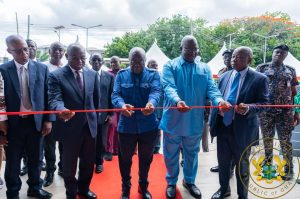
President Akufo-Addo commissioned the National Vaccine Institute building, a physical symbol of Ghana’s ambition to take charge of its public health future.
In his address at the commissioning, he stated, “We needed to take our destiny into our own hands… [we] committed twenty-five million dollars ($25 million) to coordinate and facilitate the capacity of domestic pharmaceutical companies to fill, finish and package mRNA COVID-19, malaria, and tuberculosis vaccines.”
The Institute’s Governing Board, which was inaugurated before the commissioning, includes high-profile health and science experts such as Dr. Anarfi Asamoa-Baah (Chair), Prof. William Ampofo, Dr. Delese Darko, Prof. Alex Dodoo, and Prof. Rita Akosua Dickson.
Political Tensions Flare
While Minister Akandoh’s recent comments did not directly attribute the founding of the Institute to the Mahama administration, the lack of acknowledgment of the previous government’s efforts has fueled accusations of political opportunism.
The NDC, now in power under President John Mahama, has been accused of rebranding the Institute as its own achievement.
The issue strikes at a broader pattern that the opposition has cited: the Mahama administration has claimed credit for numerous projects that were initiated during Akufo-Addo’s tenure, even as it publicly criticized his governance.
The Path Forward
Despite the political tensions, the work of the National Vaccine Institute continues. Ghana’s capacity to manufacture vaccines domestically is seen as a critical step toward improving healthcare security and strengthening the pharmaceutical sector.
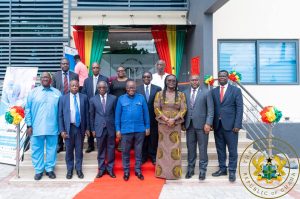
With partnerships being developed with international pharmaceutical companies and ongoing investment in local expertise and infrastructure, the Institute is expected to play a transformative role in Ghana’s health landscape in the years ahead.


