
By Nadia Ntiamoah
President John Dramani Mahama government is launching one of the most ambitious anti-corruption drives in Ghana’s recent history, seeking to recover over $21 billion allegedly stolen or lost through illicit deals, smuggling, and public sector corruption.
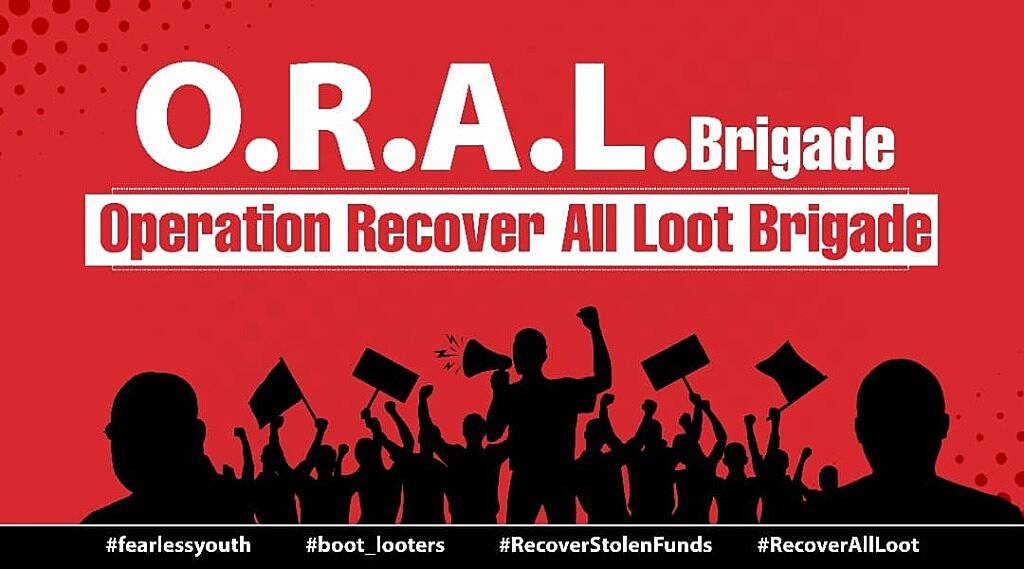
This recovery campaign is being spearheaded by a new independent agency known as Operation Recover All Loot (ORAL), which was established within six months of Mahama’s return to office.
The agency’s mandate is clear: identify, investigate, and retrieve state resources siphoned off by corrupt individuals, particularly those linked to the former Akufo-Addo administration.
According to officials, the staggering $21 billion figure stems from just 36 high-value corruption cases currently under investigation by ORAL, involving embezzlement, tax evasion, illegal land acquisitions, and illicit movement of goods across Ghana’s borders.
ORAL: A Bold Step Toward Accountability
Foreign Affairs Minister Samuel Okudzeto Ablakwa, who previously chaired the ORAL board, described the project as a crucial step in Ghana’s bid for economic independence.
Speaking earlier this year, he stated that the estimated amount of looted funds far surpasses the financial support Ghana is seeking from international institutions like the International Monetary Fund (IMF).
“We’re chasing $21.19 billion in potential recoveries,” Ablakwa noted. “That’s more than any loan or grant we’ve begged for—with strings attached—from the IMF or World Bank. It’s time we look inward.”
Smuggling and Tax Evasion: The Hidden Drain
One of the biggest sources of lost revenue, according to government data and multiple investigations, is cross-border smuggling, especially along Ghana’s frontier with Togo.
Despite the presence of customs and immigration officers, Ghana’s borders remain notoriously porous, allowing for illegal trade in cocoa, gold, petroleum products, rice, sugar, and spare parts.
A field investigation in the Volta Region revealed that Okada riders and small traders are playing a central role in smuggling networks operating through border communities such as Shia, Kpedze, Honuta, and Nyive.
One smuggler, speaking anonymously, described how he transports 67 kg sacks of cocoa beans from Ghana into Togo at night, earning GH₵500 per trip.
On his return journey, he carries contraband items like cooking oil, rice, and sugar to Ghanaian markets for an additional GH₵500.
He admitted that with legal trade routes burdened by high taxes and bureaucratic delays, smuggling has become a more attractive livelihood for many youths.
Local residents claim officials at border posts often look the other way—or demand bribes to allow the goods through—undermining enforcement efforts.
Cocoa and Gold: The Billion-Dollar Losses
Ghana’s most prized commodities—cocoa and gold—are also at the heart of the financial haemorrhaging.
According to COCOBOD, the country lost 160,000 tonnes of cocoa to smuggling in the 2023–2024 crop season, a figure that represents more than one-third of total national output.
In response, COCOBOD raised the producer price by 45% and tightened surveillance at key border zones.
However, smuggling operations have continued due to price incentives in neighbouring countries and the lucrative nature of the illicit trade.
Gold smuggling poses an even more serious concern.
A June 2025 report by Swiss NGO Swissaid found that Ghana lost over $11.4 billion in unreported gold exports between 2018 and 2023.
The majority of the smuggled gold ended up in Dubai, exploiting lax export controls and unregulated artisanal mining.
The report exposed a 229-metric-tonne discrepancy between Ghana’s official gold exports and what appeared on import records in the United Arab Emirates—a massive trade gap attributed to smuggling, under-invoicing, and non-declared shipments.
The Role of Corruption at Border Posts
Experts argue that Ghana’s customs and immigration systems are riddled with corruption, which enables these massive leakages.
In 2022, an investigative documentary revealed how some customs officers facilitated the illegal importation of cooking oil, costing the state more than GH₵300 million in tax revenue.
In rural border towns, residents and traders believe some officials are directly involved in smuggling operations or are bribed to remain silent.
This culture of impunity has made it almost impossible for genuine traders to survive without bending the rules.
Policy Blind Spots and Economic Impact
Economists and trade experts argue that Ghana’s high tax regime is a root cause of the smuggling crisis.
Professor Evans Akwasi Gyasi, an international trade lecturer at Anglia Ruskin University in the UK, said Ghana’s import duties and port charges are “simply not competitive” compared to neighbouring Togo or Côte d’Ivoire.
“Our port costs and taxes are forcing businesses underground,” Prof. Gyasi said. “This is not about criminals versus law-abiding citizens—this is about economic survival.”
He urged the government to reduce port duties, simplify customs procedures, and offer tax relief for small traders to discourage smuggling.
Can Ghana Recover the $21 Billion?
The Mahama administration insists that the ORAL programme is not merely a publicity stunt but a legitimate effort to rebuild Ghana’s financial foundation.
With support from intelligence agencies and international partners, the government has started freezing accounts, seizing assets, and initiating prosecutions against suspected looters.
But some critics remain doubtful. Ghana has launched several anti-corruption campaigns in the past—many of which faded without accountability.


