
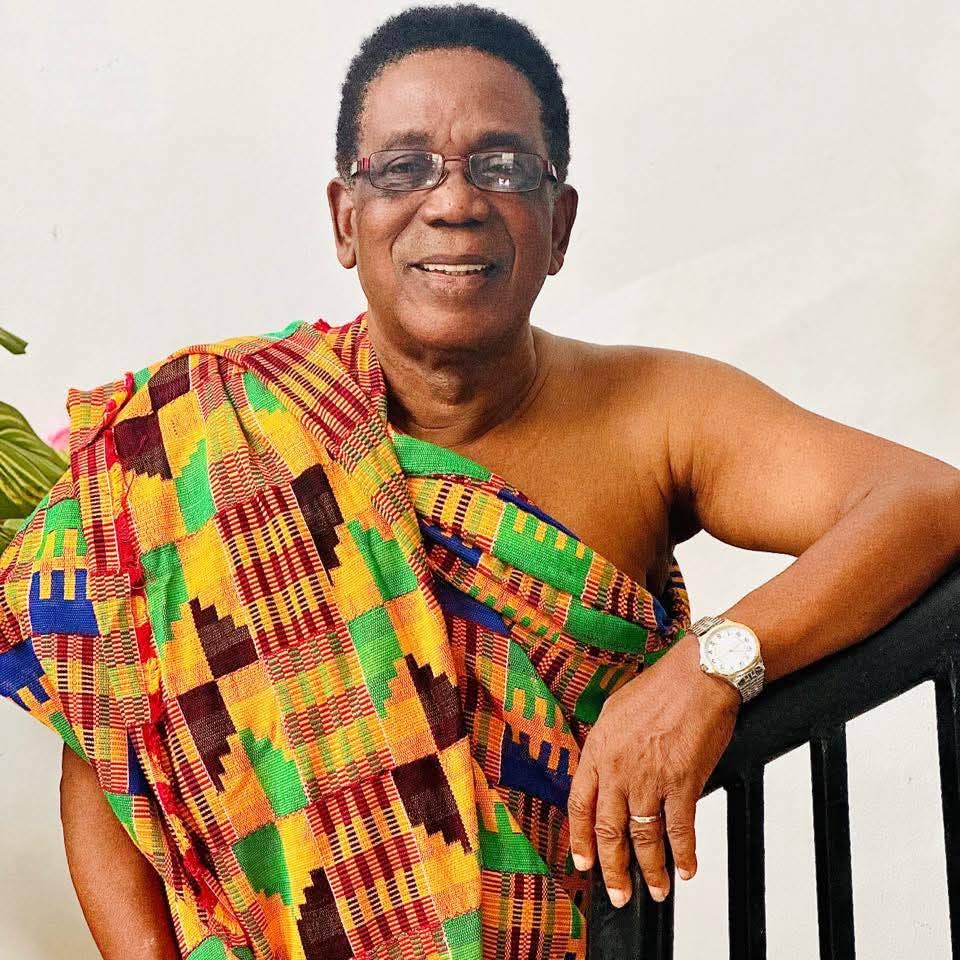
Professor Kwesi Yankah
Private Mail Bank
Accra, Ghana.
Dear Prof. Kwesi Yankah
In Defense of Democracy, Truth, and the People’s Mandate
I write to you not in anger, but with a heavy sense of civic responsibility and unshaken loyalty to the democratic will of the Ghanaian people. I have read your article, “Woman Beaters and Their Cheer Leaders”, and while I acknowledge the brilliance of your pen and the beauty of your prose, I am compelled to respond—not out of rivalry, but out of duty.
There comes a time in the life of a nation when silence becomes betrayal. Betrayal not just of conscience, but of democracy, posterity, and the v6
You, Prof., are a man of letters. You have shaped young minds and contributed to national discourse in numerous ways. But your recent commentary does a great disservice to our collective progress as a nation. It fails to reflect the broader context of where Ghana has come from, where she is, and where she is striving to go—especially under this new administration led by H.E. John Dramani Mahama.
I am writing not from a place of theory but of lived experience. I was on the ground that very day in Ablekuma North. I witnessed, firsthand, the mood of the people, the conduct of the process, and the sentiments of constituents. I do not speak from a doctorate seat, nor from the pedestal of professorship. I speak from the raw but real domain of today’s politics—the one that teaches us that respect is reciprocal, but truth must be clothed in integrity and anchored in sincerity. Too often, political lenses distort perception and destroy reputations. But when a person upholds truth and integrity, respect chases them—even from a distance.
Let us not be quick to forget that until just a few months ago, Ghana was shackled by a suffocating culture of silence. For years, people in education, healthcare, civil service, and especially the security sector could not speak truth to power without risking their livelihoods. Heads of public institutions were gagged. Some were demoted, others suspended. Many suffered quietly. The fear of losing one’s daily bread silenced many noble voices. But today, under a new administration, that fear is melting. The civic space is freer. Even individuals like yourself—who once served within a previous government—now speak boldly. That, Prof., is democracy working.
As the Ewe proverb goes, “Nunya, adidoe, asi me do go.” — Wisdom is not the preserve of a single person; it resides where honesty and effort live.
Prof., you chose to comment on an electoral incident that occurred during a by-election in Ablekuma North. Yet, in your commentary, you reached not for truth, but for metaphor. You painted the moment in the colours of pestles and cheers, of woman-beating and silent complicity. But truth, like fire, must be handled with care—it can warm a house or burn it to the ground.
The truth, dear Prof., is that the people of Ghana spoke loudly in January 2025. They voted not for poetic lamentation but for leadership. They voted out arrogance, nepotism, economic collapse, and failed leadership. They voted for a new dawn—and in just a few months, that dawn is already illuminating every corner of our Republic
Today, thousands of first-year students in public universities are attending school tuition-free. Yes, for the first time in our Fourth Republic, the doors of higher education have been opened wide to the children of farmers, fishers, head porters, and informal workers. Hope is returning to homes where ambition had long been abandoned.
This government has extended Free SHS benefits to Junior High graduates from private schools. It has fully restored nurses and teachers training allowances—restoring not just stipends, but dignity. Fuel prices have reduced. The cedi is stabilizing. Market women, trotro drivers, and ordinary citizens are beginning to breathe again.
More importantly, the youth are not asking for handouts anymore. They are asking:
“When will Youth in Fire Service Assistants begin?”
“When will the Community Protection Units resume?”
“What about Prison Service Assistants and Environmental Cadres?”
These are the real bread-and-butter questions of the day. These are the conversations we should be amplifying—not literary allusions to pestles and cheerleaders.
As another Ewe proverb rightly puts it, “Agɔ le agɔ me, mía nye be míevɔ nu vɔ̃ o.” — We may laugh, but this is not a game. Our lives and futures are at stake.
Prof., I also wonder: Where was your mighty pen when eight innocent Ghanaians were gunned down in Techiman South during the 2020 elections? Where was your academic rage when Ayawaso West Wuogon by-election descended into chaos and violence? Where were your metaphors when masked gunmen stormed polling stations and assaulted civilians?
These were not distant rumors. These were our fellow citizens—brutalised while exercising their civic duty. Yet I do not recall an article from you then titled, “State Beaters and Their Cheer Leaders.”
As the Akan say, “Sɛ aboa bi bɛka wo a, na efiri wo ntoma mu.” — If an animal bites you, it came from your own cloth. Silence in the face of yesterday’s violence but loudness in today’s peace can only suggest selective memory.
Let’s talk, also, about your defence of Hon. Hawa Koomson. This is a politician who has publicly admitted to firing a gun at a registration center in 2020. Her combative tone has been a matter of public concern for years. Her political environment remains shadowed by unresolved tensions, including the unfortunate and mysterious death of a constituency executive.
So we ask, Prof., with respect: Is it not worth investigating why a candidate known for such incidents walked again with pepper spray? Can we pretend violence does not have history here?
To quote again from the wisdom of our ancestors, “Etsɔ gbeƒe nyɔnu ƒe dzi, eye wòle gbɔgblɔ be éyɔ ɖe se.” — You cannot assault a woman and later pretend it was for her protection.
And let’s be clear—the by-election in Ablekuma North was not a battle of men versus women. It was a contest between two women. Two candidates stood on the ballot. One carried the burden of controversy; the other brought a fresh message. The people chose the latter. That is not oppression. That is democracy.
“Akokɔbɛnto mma mmɔfra ntu agorɔ.” — A mature rooster doesn’t frolic with chicks. Let us not pretend that the electorate is unschooled in discernment.
Was This Write-Up A Subtle Endorsement Package?
Which leads me to wonder, with no malice intended: Was your article, Prof., purely an independent thought? Or was it an attempt—subtle as it was—to rehabilitate the image of a controversial candidate? Was it a literary audition for 2028? Or simply a moment of emotional bias dressed up in literary prose?
Because if this was an attempt to project Hon. Hawa Koomson as a future Women’s Organizer of the NPP, then permit me to say respectfully, it is unnecessary and unconvincing. Ghanaians are watching, and they know the difference between genuine public interest and backstage political branding.
If this piece was aimed at drawing the path of personal relevance to whoever may emerge as the NPP’s next flagbearer—whether it be Dr. Bawumia, your favourite, or any other—then let us call it what it is. A strategic pen stroke meant to stay visible.
Did I lie?
Or am I being prophetic?
“Obi nnim a, ɔbɛkyere abɔfra na ɔnkyere ɔkɔtɔ.” — He who lacks wisdom corrects children, not crabs.
This new administration is focused on rebuilding—not on rehearsing excuses. So if you must write again, Prof., I humbly suggest you write about:
How Ghana is healing.
How broken systems are being repaired.
How young people are regaining faith in leadership.
Let your next article be about unity, not division. About facts, not metaphors. About hope, not helplessness.
“Agbenɔwɔla do go gbe o.” — A life well-lived makes no noise; its results do the speaking.
I could write on, but I believe the facts are already speaking for themselves.
So people can call me Honourable Amega Awadzi
From the floodplains of Aborlove-Nolopi to the chambers of grassroots governance, I speak not for self, but for the voiceless.
I write not for claps, but for posterity. And I act not in bitterness, but in defence of our democracy.
Let Ghana work.
Let the people breathe.
Let truth prevail.
Sincerely,
Hon. Amega Awadzi


