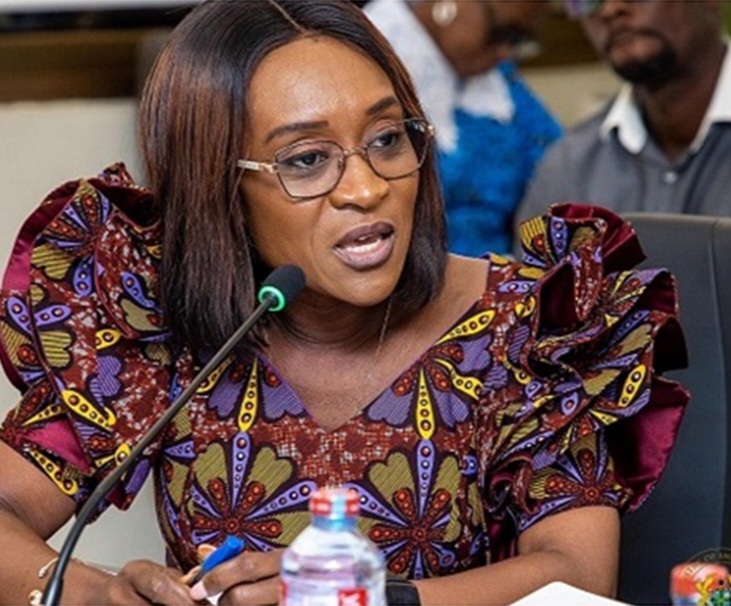
Member of Parliament for Atiwa East, Abena Osei-Asare, has raised concerns over the recent arrest, detention and remand of citizens over statements and publications, arguing that the development should concern Ghanaians irrespective of their political affiliations.
Her comments come amid the ongoing case involving Techiman-based senior nursing officer Salomey Awity Baffoe, who has been remanded for two weeks over alleged links to the anonymous TikTok account known as “Ghana Jollof.” Baffoe, 40, was arrested at her home in Hansua in the Techiman Municipality on September 13, 2026, according to reports.
The prosecution alleges that she assisted in the publication and circulation of content associated with the account. She has not been convicted of the allegations.
The case has attracted attention because of claims surrounding the circumstances of Baffoe’s arrest. Her family said three people who identified themselves as security operatives arrived at her residence late at night and took her away. Her lawyer, Nana Agyei Baffour Awuah, subsequently questioned the procedure surrounding the arrest and detention.
Against this background, Osei-Asare argued that freedom of expression must be protected even when the speech involved is offensive, irritating, unfair or strongly critical of those in government.
According to her, freedom of speech is not a privilege that governments should extend only to citizens who speak favourably about them, but a constitutional right whose importance is particularly tested when criticism is uncomfortable for those in power.
The Atiwa East MP also invoked Ghana’s history in dealing with laws governing speech and criticism of public officials. She recalled the repeal of criminal libel and seditious laws in 2001 under the government of former President John Agyekum Kufuor.
That reform was enacted through Act 602, during a period when Nana Addo Dankwa Akufo-Addo served as Attorney-General and Minister of Justice. Osei-Asare described the repeal as an important statement about the type of democratic Republic Ghana sought to establish.
She argued that Ghana should not recreate criminal libel “in substance” through different statutory provisions, while acknowledging that freedom of expression does not make every form of speech lawful.
In her view, threats, incitement to violence and other conduct that genuinely constitutes a criminal offence must be dealt with under the law. She also distinguished criminal conduct from offensive or inconvenient speech, noting that false and defamatory statements can attract civil remedies under Ghanaian law.
Osei-Asare further directed attention to the responsibilities of the Police and other security agencies, stressing that their powers should be exercised with restraint and in accordance with the Constitution.
She also placed responsibility on the Judiciary, saying the courts serve as an important protection for citizens against excessive use of State power. She cautioned that arrest, remand and onerous bail conditions should not effectively become punishment before an accused person has been tried.
Her comments come as the Salomey Baffoe case continues to generate public debate. According to MyJoyOnline, Baffoe had denied being connected to the Ghana Jollof account before her arrest, while the account itself subsequently published a video claiming that security agencies had arrested the wrong person. Those claims remain disputed matters in the ongoing proceedings.
Osei-Asare said the principles of free speech and equal application of the law must apply regardless of whether the individual involved is affiliated with the NPP, NDC or no political party.
“Governments change. The precedents we create while exercising power remain for those who come after us,” she said.
She warned that Ghana had travelled a difficult historical road away from what she described as a culture of silence and urged the country not to reverse that progress through new methods of restricting expression.
“Our democracy is strong enough to tolerate criticism,” she stated, adding that Ghana’s institutions must equally be strong enough to protect citizens’ freedom to make such criticism.
The MP concluded her statement with a direct call for the release of Salomey Baffoe and used the hashtag #FreeNurseSalomeyAwityBaffoe, placing the case within the broader national discussion about free expression, due process and the limits of State power.