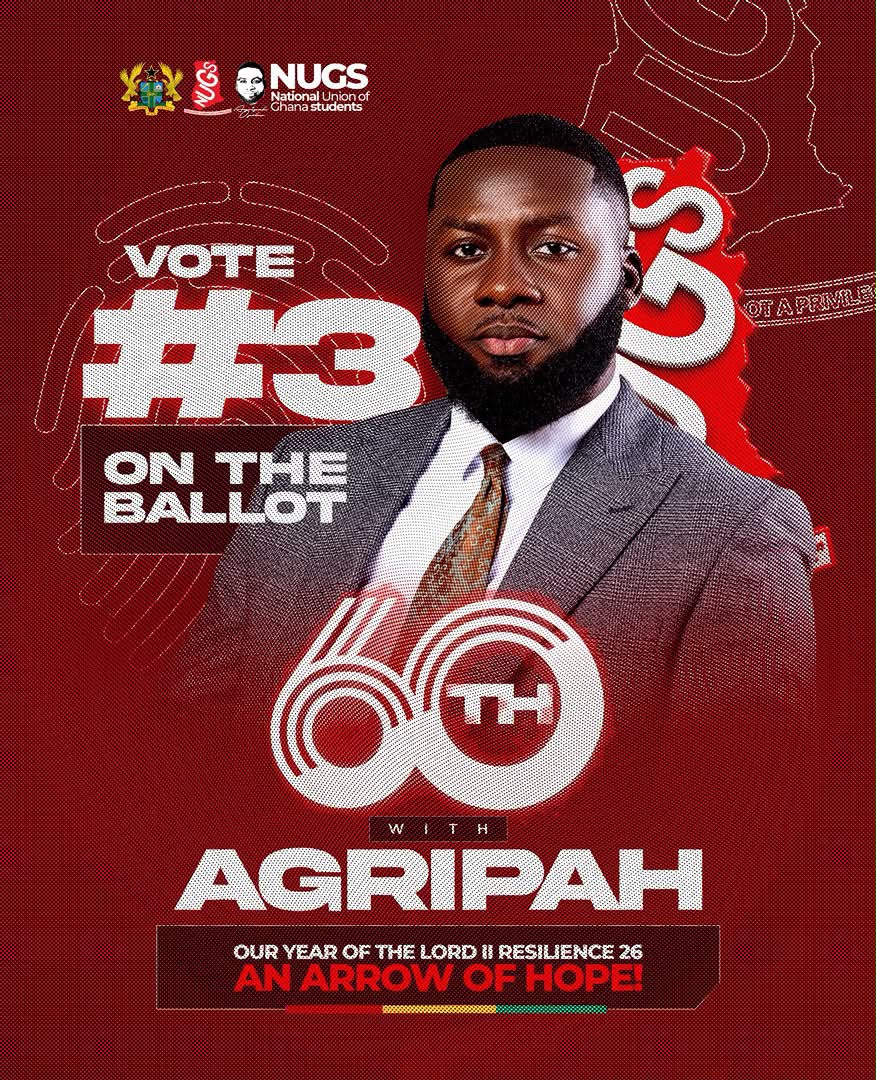
By Nadia Ntiamoah
Agripa Opoku has been elected the 60th President of the National Union of Ghana Students (NUGS) following a fiercely contested national congress held at the University of Energy and Natural Resources (UENR) in Sunyani, bringing an end to an intense electoral process that attracted student delegates, campaign teams and observers from tertiary institutions across the country.
Opoku’s election marks a significant transition in the leadership of Ghana’s national student movement as he prepares to take over from outgoing NUGS President Rashid Ibrahim. His victory comes after a congress characterised by spirited campaigning, procedural disagreements, intense competition among candidates and prolonged voting and counting before the final results were announced.
Challenges awaiting new leadership
Opoku is inheriting a union expected to play a significant role in advocating for students on issues affecting access to education, welfare and opportunities for young people.
Rising living costs, accommodation challenges and concerns about delays in student support remain among the issues confronting students in tertiary institutions.
The new administration is also expected to strengthen NUGS’ engagement with government and other stakeholders on education funding, student welfare and employment opportunities for graduates.
Beyond these policy concerns, Opoku faces the task of uniting a membership divided by the intense campaign and ensuring that the election does not weaken the union’s ability to represent students effectively.
The closely fought contest is likely to place pressure on the new leadership to demonstrate inclusiveness by engaging supporters of rival candidates and building consensus on the union’s priorities.
The congress drew widespread attention within student political circles, with rival camps mobilising supporters and seeking to persuade delegates to support their respective candidates.
The atmosphere on the UENR campus reflected the high stakes surrounding the election, as student leaders and campaign coordinators worked throughout the day to secure support for their preferred candidates.
From the early hours of the morning, delegates arrived in Sunyani from various parts of the country. Campaign teams gathered around the campus, distributing promotional materials, engaging delegates and making final efforts to influence voting decisions before proceedings formally began.
The growing number of participants created a charged atmosphere, with supporters wearing campaign-branded clothing, chanting slogans and expressing confidence in their candidates. The competing displays of support underscored the importance attached to the NUGS presidency and the influence the position carries in representing students on national education and welfare issues.
Election Procedures Become a Major Point of Contention
As accreditation got underway, delegates queued to have their identities and eligibility verified by election officials. The process attracted attention as officials checked names against registration records and examined identification documents before allowing delegates to participate.
Although accreditation was intended to ensure that only qualified delegates took part in the election, the waiting period tested the patience of some participants, contributing to tensions around the venue.
Security personnel were present to maintain order and prevent disagreements among rival supporters from escalating. Their intervention helped manage moments when opposing groups exchanged chants and arguments during the proceedings.
Once the congress was formally opened, procedural issues became a prominent feature of deliberations. Delegates raised points of order, questioned aspects of the proceedings and called for clarity on voting arrangements and compliance with the union’s constitutional requirements.
Supporters of competing candidates insisted that the process should follow established rules, although their interpretations and demands sometimes differed. The resulting exchanges occasionally disrupted proceedings, requiring the chair to call for calm before business could continue.
Despite the disagreements, the congress proceeded to the candidates’ presentations, where contenders outlined their positions on issues affecting students and the future direction of the union.
Education Costs and Student Welfare Dominate Campaign Debate
The campaign centred on concerns that have long shaped student politics in Ghana, particularly the rising cost of education, accommodation shortages, fees, financial support and employment prospects for graduates.
The debate also highlighted the need for a united student front capable of influencing national conversations on education policy and youth development.
Delegates used question-and-answer sessions to press candidates on the practical steps they intended to take to fulfil their promises. The questions reflected growing expectations that student leaders should move beyond campaign rhetoric and pursue measurable improvements in students’ academic and social conditions.
For many students, the NUGS presidency represents an opportunity to influence decisions affecting access to education, student financing, accommodation and the broader welfare of young people pursuing tertiary qualifications.
The winner therefore assumes office at a time when students expect stronger representation and tangible results from their national leadership.