BY Issah Olegor
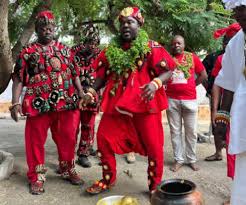
In the wake of the arrest of social media influencer Frederick Kumi, popularly known as Abu Trica, fresh claims by controversial spiritual leader Bishop Kwabena Boakye Asiamah—widely known as Ajagurajah—have added a new layer to public scrutiny surrounding the embattled internet personality.
Speaking during a live TikTok broadcast days after Abu Trica’s arrest, Ajagurajah disclosed that despite widespread public perception, the flashy social media figure never offered him any form of financial support.
Ajagurajah’s comments come at a time when Abu Trica’s once-glamorous public image has been overshadowed by serious legal troubles in both Ghana and the United States.
The Snapchat sensation, famed for showcasing luxury vehicles, bundles of cash and high-end properties, was arrested in Ghana on December 11, 2025, following a coordinated operation involving Ghanaian authorities and U.S. law enforcement agencies.
He has since been indicted in the United States for allegedly masterminding an international romance fraud scheme that reportedly defrauded elderly Americans of more than eight million dollars.
Addressing his followers during the live session, Ajagurajah recounted a personal interaction that contradicts long-held assumptions about Abu Trica’s generosity and influence within religious or spiritual circles.
According to him, he once reached out to Abu Trica for assistance but was politely declined.
Ajagurajah said the influencer explained that he was financially stretched at the time because his Tesla Cybertruck had just arrived in Ghana and he needed funds to clear it from the port.
“He told me he couldn’t help me, not even with GH¢1,” Ajagurajah claimed, explaining that Abu Trica said all his available money had been committed to clearing the vehicle.
The revelation has sparked debate online, particularly among those who believed Abu Trica was a financial pillar behind the Ajagurajah Movement.
Ajagurajah went further to categorically deny claims that Abu Trica has ever funded his movement or contributed to its activities.
He stressed that while several individuals donated money to support projects such as the acquisition of a bus for the movement, Abu Trica was not among the benefactors.
To emphasise his sincerity, Ajagurajah stated that he had never met Abu Trica in person and invoked divine judgement should his account be false.
These assertions emerge against a backdrop of growing public interest in Abu Trica’s finances and associations.
For years, his conspicuous displays of wealth on social media drew admiration from followers and scepticism from critics, many of whom questioned the source of his income.
Those questions have gained renewed relevance following U.S. prosecutors’ allegations that since 2023, he was part of a criminal syndicate that used sophisticated romance scams to exploit elderly victims.
According to the indictment, the alleged fraud network employed Artificial Intelligence tools to create convincing fake identities on social media and online dating platforms.
These digital personas were used to build emotional relationships with victims over time before they were manipulated into sending money under false pretences such as medical emergencies, travel needs or investment opportunities.