By Daniel Bampoe
Mampong, a historic town in the Ashanti Region, has become the epicenter of cultural reverence and royal tradition as thousands of mourners converge for the final funeral rites of the late Asante Mamponghene, Daasebre Osei Bonsu II.
The four-day Doteyie, the sacred Asante royal funeral ceremony, began on Thursday, June 6 and will climax on Monday, June 9, with final rites to be performed by Asantehene Otumfuo Osei Tutu II himself.

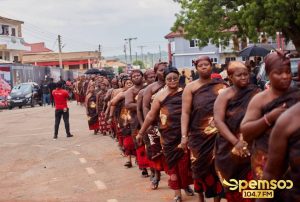
The atmosphere in Mampong is one of solemn dignity and cultural grandeur. Traditional drumming, chanting, and libation ceremonies echo through the town’s streets as courtiers, chiefs, and ordinary citizens don ceremonial black and red mourning cloths in a public expression of grief and respect.
The rich display of Akan customs underscores the significant stature Daasebre held within the Ashanti kingdom.
A Life of Service and Legacy of Peace
Born Saint Oswald Gyimah-Kessie on December 31, 1939, Daasebre Osei Bonsu II was enstooled as the 28th occupant of the Silver Stool of Mampong on August 25, 1996.

For nearly three decades, he served not only as the Mamponghene but also as the Krontihene (second-in-command) of the entire Asanteman traditional council.
His reign was marked by peacebuilding, traditional reform, and environmental advocacy.
Widely respected for his mediatory role, Daasebre successfully resolved multiple chieftaincy disputes that had previously undermined unity in the Mampong Traditional Area.
His decisive stand against illegal mining—known locally as galamsey—won him acclaim as a protector of both culture and the environment.
Academic And Administrative Career
Beyond his chieftaincy, Daasebre Osei Bonsu II had a distinguished academic and administrative career.
He was a long-serving Registrar of the Kwame Nkrumah University of Science and Technology (KNUST), a position he held from 1991 until his retirement in 2000.

His 28 years in public service left a lasting impact on Ghana’s higher education landscape.
His administrative acumen, humility, and mentorship influenced generations of university staff and students.
Tributes from KNUST alumni and former colleagues have poured in throughout the weekend, painting a portrait of a man whose dedication to leadership transcended the boundaries of the traditional and academic worlds.
Kingdom Mourns, Legacy Lives On
The funeral has drawn not only ordinary citizens but dignitaries from across Ghana, including traditional rulers, Members of Parliament, and government officials.
Lodging facilities in and around Mampong have reached capacity, and local businesses are operating on adjusted hours in deference to the solemnity of the occasion.
Security has been heightened as thousands gather to pay their last respects.
Cultural observers say the scale of the funeral is a testament to the deep respect Daasebre commanded across the country and within the Akan world.
The Asantehene, in line with tradition, will preside over the final rituals on Monday, a gesture reserved for only the most senior and revered members of the Asante royal family.
His presence marks the climax of the funeral rites and underscores Mampong’s central place in Asanteman’s traditional hierarchy.