BY Issah Olegor
The Mahama administration has come under renewed political criticism after the Ministry of Education announced a new target of 2029 to completely phase out the controversial double-track system in Senior High Schools (SHSs), a departure from the government’s earlier commitment to eliminate the system by 2027.
The revised timeline has provided fresh ammunition for the opposition New Patriotic Party (NPP), which argues that the National Democratic Congress (NDC) has failed to fulfil one of its key campaign promises after repeatedly criticising the Akufo-Addo administration over the introduction of the policy.
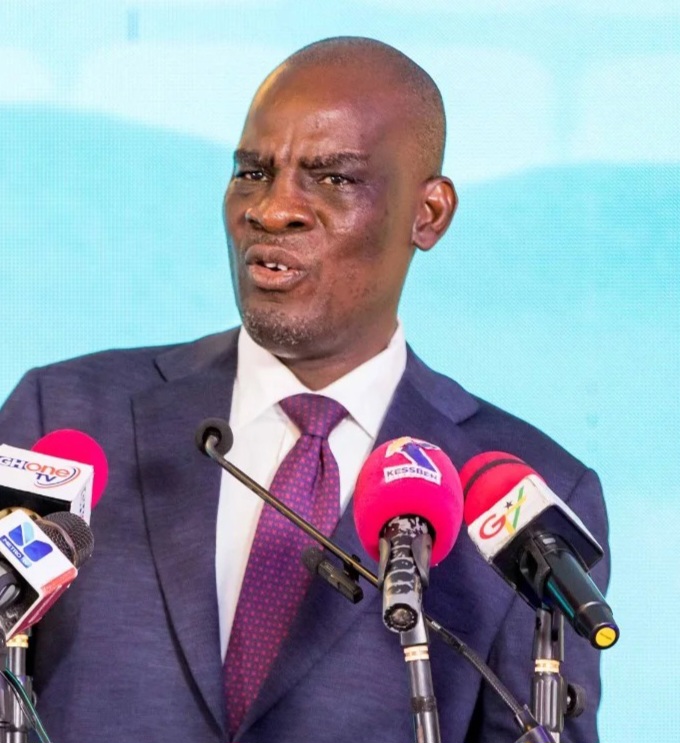
The announcement was made by Education Minister Haruna Iddrisu during the Government Accountability Series in Accra, where he disclosed that Cabinet had approved the STAR-J Infrastructure Programme, valued at US$331 million, to expand infrastructure across Senior High Schools, Senior High Technical Schools and Technical and Vocational Education and Training (TVET) institutions.
According to the Minister, the programme is expected to cover 210 educational institutions, including the rehabilitation of 112 senior high schools and 38 TVET institutions, the upgrading of 30 Category C schools to Category B, and the conversion of 20 Category B schools into Category A institutions.
Iddrisu explained that the infrastructure expansion is intended to address overcrowding created by the Free Senior High School (Free SHS) programme, which significantly increased student enrolment without corresponding expansion in classrooms, dormitories, laboratories and other facilities.
He said government now expects the double-track system to be completely phased out by 2029 through the implementation of the STAR-J initiative.
“By 2029, we should be done with double track with this intervention. Some of the double-track schools only need furniture. They are not asking for money. I hear about a hundred schools. If we provide them with adequate furniture, they are out of double track. So it is about coordinating the interventions we are undertaking,” the Education Minister stated.
The latest announcement, however, contrasts with earlier assurances given by President John Dramani Mahama, who had repeatedly promised that no student would remain on the double-track system by 2027.
The NDC had earlier promised during the 2024 electioneering campaign that the phasing out of the double track stop gap measure will take effect immediately the party assume office in 2025 and later moved to 2027 and now 2029.
Only days ago, President Mahama announced that government intended to submit a US$300 million World Bank loan to Parliament to finance the construction of 16 new senior high schools, describing the facility as a major intervention to eliminate the double-track system.
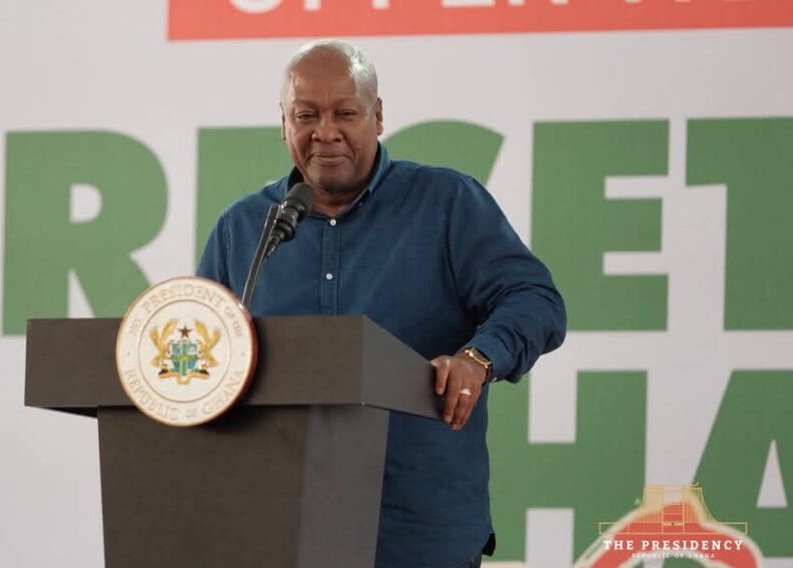
Speaking during his Resetting Ghana Tour of the Volta Region, the President stated that government remained committed to abolishing the system by 2027 through major investments in school infrastructure.
Earlier in April this year, the President also announced that about 100 schools had already reverted from double-track to the conventional academic calendar, expressing confidence that the remaining schools would follow before the 2027 deadline.
The differing timelines announced by the President and the Education Minister have since generated public discussion over the government’s implementation strategy.
The double-track system was introduced in 2018 by the Akufo-Addo administration following the implementation of the Free Senior High School policy to accommodate the sharp increase in student enrolment despite limited infrastructure.
Under the arrangement, students are divided into two groups that attend school at different periods of the academic year, enabling schools to admit more students without constructing new facilities immediately.
While the policy significantly expanded access to secondary education, it also attracted criticism from parents, teachers and education stakeholders who argued that the alternating calendar disrupted academic work and reduced instructional time.
Throughout the 2024 election campaign, the NDC consistently criticised the double-track system and pledged to eliminate it by investing heavily in educational infrastructure while maintaining the Free SHS policy.
Senior NDC officials, including party Chairman Johnson Asiedu Nketiah, repeatedly assured Ghanaians that an NDC government would abolish the policy and complete unfinished Community Day Senior High Schools to accommodate growing enrolment.
The NDC’s campaign promise was one of its major education policy commitments ahead of the 2024 general elections.
Meanwhile, the Education Minister says the STAR-J programme will also include the construction of new Community Day Senior High Schools at Nima and Kasoa, as well as a Special Needs Education facility in the Volta Region, with another special school being considered between Kintampo and a community in the Upper East Region.
Iddrisu further announced that this year’s Basic Education Certificate Examination (BECE) results are expected to be released on or before July 31, 2026, after which the Computerised School Selection and Placement System (CSSPS) will begin.
According to him, delaying school placement until after the release of the results is intended to minimise favouritism and improve transparency in the placement process.