By Daniel Bampoe
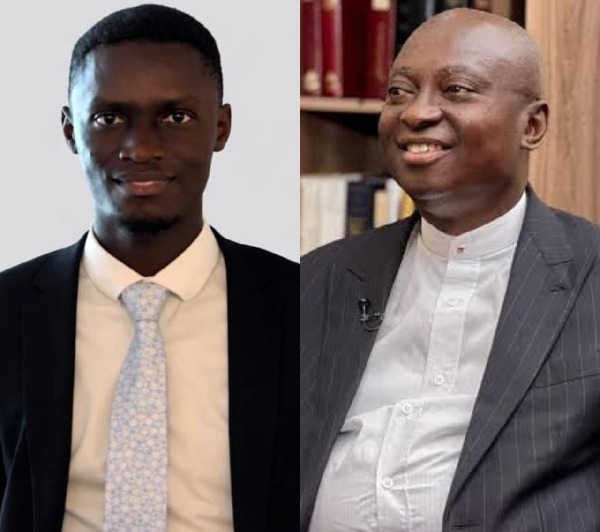
The High Court in Accra has granted lead counsel Samuel Atta Akyea one final opportunity to conclude his cross-examination of the prosecution’s fourth witness in the ongoing trial of former National Signals Bureau (NSB) Director-General Kwabena Adu-Boahene and his co-accused.
The decision was taken at the close of proceedings on Tuesday, September 1, 2026, after the defence made another request for additional time to complete its questioning of the witness, Frank Marshall Cromwell, a staff of the Economic and Organised Crime Office (EOCO) who has spent several weeks in the witness box.
The court subsequently adjourned the matter to Wednesday, September 2, 2026, at 11:30 a.m., when Atta Akyea is expected to conclude his cross-examination. The prosecution is then expected to close its case.
Justice Francis Apangabuno Achibonga, however, placed a strict limit on the latest extension. Counsel will have three hours to complete the cross-examination, after which the court will deem the exercise concluded whether or not the defence has exhausted all its questions.
Atta Akyea accepted the court’s arrangement.
The decision followed reservations from the Deputy Attorney-General, Justice Srem-Sai who opposed the latest request for additional time.
Despite the prosecution’s objection, the court granted the defence one final opportunity, but made clear that there would be no further extension beyond the three-hour period.
The latest development brings to an end a series of requests for additional time by the defence since the cross-examination of the fourth prosecution witness began.
Seven weeks in the witness box
The fourth prosecution witness has been subjected to extensive questioning by Atta Akyea, with the defence focusing on the investigation into the alleged GH¢49.1 million transaction at the centre of the case.
By July 22, the witness had already spent seven weeks in the witness box. At that stage, the court indicated that counsel would be given one additional day to complete his questioning.
Atta Akyea, however, requested four days. The court granted three days.
After that period expired, counsel again requested four additional days. The court reduced the request to two days.
When the two days elapsed, another application for four days was made. The court subsequently granted three days and scheduled proceedings for August 11, 13 and 17.
Those sittings were disrupted by issues surrounding proceedings during the legal vacation, resulting in the matter being adjourned to August 25.
Another extension after August 25
When the case resumed on August 25, the court again sought to bring the lengthy cross-examination to an end.
Counsel was initially given two days to finish his questioning. Atta Akyea again requested four days, but the court granted three and scheduled the case for August 26, August 27 and September 1.
At Tuesday’s sitting, those three days had elapsed, prompting counsel to make what was described as his fourth request for additional time.
This time, the court granted only one final day.
The decision means the defence will have a tightly restricted window when proceedings resume on Wednesday. After three hours, the cross-examination will automatically be treated as concluded.
What is at stake in the cross-examination?
The witness, an investigator from the Economic and Organised Crime Office (EOCO), is expected to provide the prosecution’s investigative account of the allegations against Adu-Boahene and the other accused persons.
His evidence has been subjected to detailed questioning on issues including the source and movement of the GH¢49.1 million, the accounts through which the money allegedly passed, government financial systems, the role of National Security special operations accounts and the investigation into the alleged cyber-defence procurement.
The defence has used the cross-examination to challenge the investigative process and the conclusions reached by EOCO.
Among the issues raised have been whether investigators examined relevant government budgetary records, whether the disputed funds were captured on GIFMIS, whether there were Auditor-General reports identifying the alleged diversion and whether investigators established the authorised purpose of the funds.
The prosecution maintains its case and has continued to rely on the evidence gathered during its investigation.
Background to the case
Adu-Boahene, his wife Angela Adjei-Boateng, and Advantage Solutions Limited are standing trial over allegations surrounding approximately GH¢49.1 million said by the prosecution to be state funds earmarked for a national cybersecurity project.
The prosecution has accused Adu-Boahene of offences including stealing, wilfully causing financial loss to the state, using public office for profit and money laundering, alongside allegations of conspiracy and related offences involving the other accused persons.
The prosecution alleges that the money was diverted through a network of companies and subsequently used to acquire properties and other assets allegedly connected to the accused persons.
The accused persons have pleaded not guilty and are contesting the charges.
The defence has consistently disputed the prosecution’s narrative and has argued that the transactions must be considered within the context of National Security’s special operational financing arrangements.