BY DANIEL BAMPOE
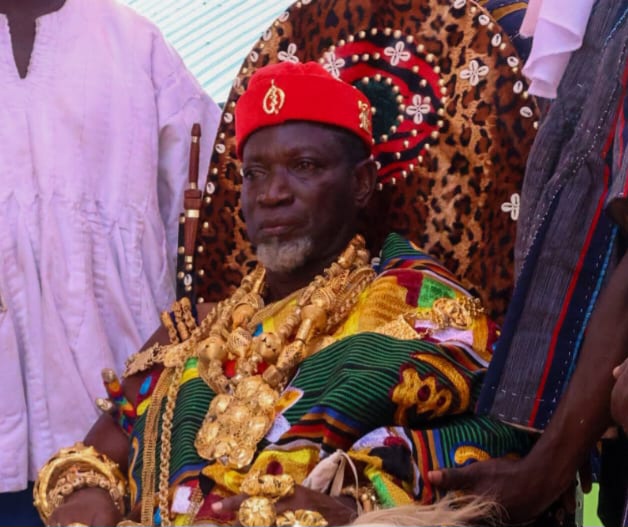
Chiefs and elders of Awukugua in the Okere District of the Eastern Region have marked the 2026 Ohum Festival with renewed calls for cultural preservation, tourism investment, community development and unity, as Awukuguahene Osaberima Opese Konadu II celebrated the 15th anniversary of his enstoolment.
The celebration, held on Saturday, October 24, 2026, brought together traditional authorities, political leaders, community members and other invited guests under the theme, “Harnessing Tourism for Economic Growth and Development.”
The anniversary provided an opportunity to reflect on the Awukuguahene’s 15-year reign, the historical significance of the community and the development priorities facing the traditional area.
However, beyond the colourful celebrations and display of traditional culture, the occasion carried a broader message: the need to translate Awukugua’s historical and cultural heritage into tangible economic opportunities while addressing the community’s development needs.
In his anniversary address, Osaberima Opese Konadu II reflected on the circumstances surrounding his ascension to the stool in 2011, disclosing that Awukugua had experienced a prolonged chieftaincy dispute that affected peace and development in the community.
According to the chief, restoring confidence in traditional leadership required patience, commitment and a deliberate effort to bring the people together.
He explained that his vision upon accepting the stool was to promote unity, peace, development and renewed confidence in the traditional institution.
The Awukuguahene acknowledged that the journey had not been without disagreements, disappointments and difficult decisions. Nevertheless, he maintained that his commitment to the progress of Awukugua had remained constant throughout his 15 years on the stool.
He called on chiefs, elders, families, the youth and residents to put aside personal differences and work towards a common future.
Osaberima Opese Konadu also acknowledged that more work remained to be done, stressing that the anniversary should not be viewed merely as a celebration of his reign but as an opportunity to renew the community’s commitment to development.
He urged residents to focus on practical improvements in education, infrastructure, healthcare, sanitation, water supply and employment rather than allowing differences to undermine their collective aspirations.
Buipewura Jinapor II Highlights Cultural Diplomacy
The Chairman of the occasion, Buipewura Abdulai Jinapor II, Vice President of the National House of Chiefs, used the celebration to emphasise the importance of traditional leadership, cultural preservation and stronger relationships between communities.
He noted that chieftaincy extends beyond occupying a traditional stool, explaining that traditional rulers have responsibilities to preserve heritage, promote peace, resolve disputes, protect vulnerable people and champion the welfare of their communities.
He wished the Awukuguahene wisdom, strength, good health and continued success in leading his people.
The Buipewura also called on chiefs, elders, queen mothers, the youth and residents to renew their commitment to Awukugua’s progress.
Drawing parallels between Awukugua and Buipe, he highlighted the historical and cultural significance of the two communities and the opportunities for cooperation through cultural diplomacy, historical research, tourism and youth development.
He identified Awukugua’s association with the legendary Okomfo Anokye and Buipe’s historical heritage within the Gonja Kingdom as examples of the cultural resources that could strengthen relations between the communities.
According to him, Ghana possesses considerable tourism potential through its historical monuments, traditional festivals, cultural practices, music, dance, natural landscapes and diverse ethnic heritage.
He argued that properly developed cultural resources could attract investment, create employment and stimulate economic activity in local communities.
Minority Leader Alexander Afenyo-Markin Attends Celebration
Minority Leader Alexander Afenyo-Markin was also listed among the prominent political figures associated with the celebration in his address, stressing that the festival should not be reduced to drumming, dancing, traditional regalia and ceremonial displays.
He described it as an opportunity for thanksgiving, cultural expression, family reunions and reflection on the community’s collective responsibilities.
He also encouraged residents living outside Awukugua and in the diaspora to maintain strong connections with their hometown and contribute to its development.
He further encouraged the younger generation to learn the community’s history, appreciate its traditions, and take pride in their roots.