BY ISSAH OLEGOR
A political storm has erupted over an alleged GH¢70,000 payment said to be connected to Parliament’s Appointments Committee vetting, after Deputy Minority Leader and Asokwa MP Patricia Appiagyei categorically denied receiving the money and described a memorandum attributed to her as fake.
The controversy intensified after a document dated September 2, 2026, began circulating in the media, purporting to have been authored by Ms Appiagyei and addressed to the Minority Chief Whip, Frank Annoh-Dompreh, with the Minority Leader, Alexander Afenyo-Markin, copied.
The document reportedly suggested that Ms Appiagyei had rejected and returned GH¢70,000 allegedly allocated to her in connection with the parliamentary vetting of ministerial and Supreme Court nominees.
However, the Asokwa MP has rejected the contents of the document and denied ever authorising, writing or circulating it.
Speaking to the media, after the document began attracting public attention on Friday, September 4, the Deputy Minority Leader described the memorandum as “fake”.
She later issued a formal statement in which she said the document should be disregarded and insisted that she had neither received the alleged GH¢70,000 nor any other payment connected to the vetting exercise.
“My attention has been drawn to a document circulating in the media, purporting to be a memorandum from me to the Minority Chief Whip, Frank Annoh-Dompreh, alleging that I received and returned GH¢70,000 in connection with the vetting of ministerial and Supreme Court nominees. I did not write, authorise, or circulate this document. It is fake and should be disregarded by all,” she stated.
Appiagyei went further to deny that any such transaction had taken place.
“I state expressly and without qualification that I did not receive any payment of GH¢70,000, or any other sum, from any person in connection with the vetting of ministerial or Supreme Court nominees, or in connection with my duties as a member of the Appointments Committee,” she said.
She added that because she received no such payment, there was consequently nothing for her to return, contrary to the claim contained in the disputed memorandum.
The Asokwa MP said she had continued to discharge her responsibilities on the Appointments Committee with integrity, including during the recent vetting exercise.
She explained that she had been attending the funeral of a close friend when the purported document came to her attention and initially believed that a “FAKE” stamp she had authorised to be placed on the document would be sufficient to discredit it.
However, she said the matter subsequently gained significant attention in the media.
Ms Appiagyei said the circulation of a document falsely attributed to her was serious and disclosed that she was taking legal advice on the appropriate steps to take once the source of the document was established.
She also reserved her rights against anyone found to have fabricated or knowingly circulated the document.
She described the development as an apparent attempt by “faceless individuals” to create divisions within the Minority Caucus.
“It is clear to me that some faceless individuals are up to some mischief to sow seeds of discord in our Caucus but this will fail,” she said.

She subsequently assured members and supporters of the New Patriotic Party that the Minority Caucus remained united and would continue to support the party’s flagbearer, Dr Mahamudu Bawumia, ahead of the 2028 elections.
The controversy has since moved beyond political denials, with the Office of the Special Prosecutor (OSP) commencing a preliminary investigation into the disputed memorandum.
The OSP said its decision was influenced by the constitutional importance of Parliament’s Appointments Committee and the need to protect the integrity of the parliamentary vetting process.
The document under investigation allegedly claimed that the GH¢70,000 was an advance from the Majority Chief Whip and was connected to the vetting of two ministerial nominees and three nominees to the Supreme Court.
The OSP is seeking to establish the authenticity of the memorandum, determine its source and establish the purpose of the alleged funds.
It has also invited Ms Appiagyei to appear before the office and assist with the preliminary investigation.
The investigation has consequently introduced a new dimension to the controversy: whether the alleged payment ever existed, whether the disputed document was genuinely authored by the Deputy Minority Leader, and who may have created and circulated it.
Parliament has also welcomed the OSP’s decision to investigate the matter.
The Parliamentary Service said the Speaker supports any lawful investigation aimed at establishing the facts surrounding the memorandum circulating on social media.
However, Parliament said it had not independently verified the authenticity of the document and therefore would not, at this stage, make a definitive determination on the competing claims.
The institution nevertheless acknowledged that allegations involving payments connected to the work of a parliamentary committee, particularly the Appointments Committee, deserved proper scrutiny.
Parliament also expressed concern about the possibility that the memorandum could have been fabricated and falsely attributed to an MP.
According to the Parliamentary Service, such conduct could damage the reputation of Parliament and undermine public confidence in its processes. Visit thedailygistonline.com for full story.
The Speaker has consequently urged the OSP to investigate the matter thoroughly and expeditiously, including determining whether the memorandum is authentic and whether the claims contained in it are truthful.
Parliament has further pledged to cooperate with the OSP and any other competent investigative body.
It has also indicated that if the investigation establishes that the document was fabricated or falsely attributed to Ms Appiagyei, the appropriate authorities should pursue those responsible.
The Parliamentary Service has suggested that the Cyber Security Authority and other relevant law-enforcement agencies could assist in identifying the individuals behind the creation and circulation of the disputed document.
The GH¢70,000 controversy comes against the backdrop of an already tense dispute between the Minority Caucus and the leadership of Parliament’s Appointments Committee over the vetting of Supreme Court nominees.
On August 27, 2026, the Minority boycotted the vetting of three Supreme Court nominees after objecting to what it described as a rushed and compressed timetable.
Minority Leader Alexander Afenyo-Markin argued that the nominations had been brought before the House on Monday and that the process did not provide sufficient time for proper parliamentary scrutiny and public participation.
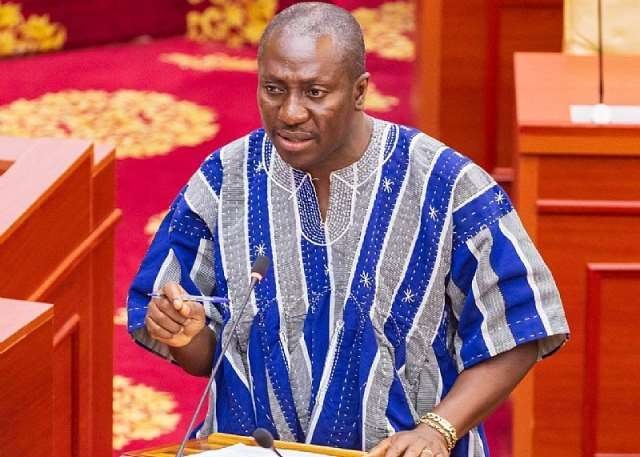
The committee’s chairperson, Bernard Ahiafor, however, rejected the Minority’s preliminary objection, describing the grounds as “flimsy”, “hollow” and “baseless”.
He maintained that any member dissatisfied with a decision of the House must use the procedures provided under Parliament’s Standing Orders to seek a reversal.
The disagreement over the Supreme Court vetting therefore created a politically charged environment inemerged.ohe disputed GH¢70,000 memorandum has now emerged.