BY ISSAH OLEGOR
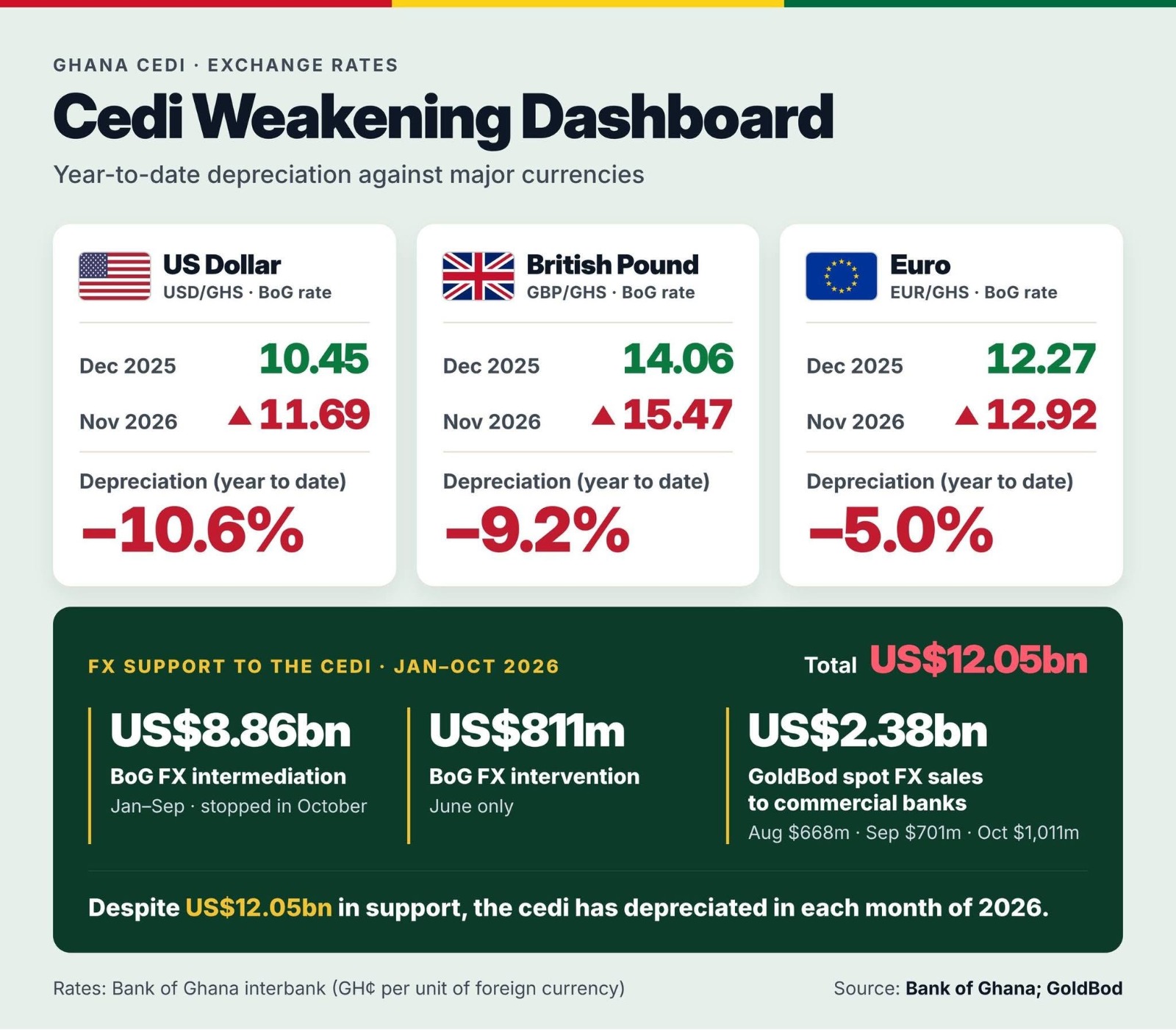
The Bank of Ghana (BoG) and the Ghana Gold Board (GoldBod) have collectively sold approximately US$12.05 billion into the foreign exchange market in 2026 in efforts to improve dollar liquidity and support the stability of the cedi, but the currency has reportedly continued to depreciate despite the massive interventions.
Data compiled by Governance 360 from the Bank of Ghana’s foreign exchange auction calendars and market communications indicate that the central bank sold approximately US$8.86 billion through its Foreign Exchange Intermediation Programme between January and September 2026.
The Bank of Ghana also deployed about US$811 million through its Foreign Exchange Intervention Programme in June, bringing its total foreign exchange market support during the nine-month period to approximately US$9.67 billion.
GoldBod has also contributed significantly to the supply of foreign currency through its spot foreign exchange sales and intermediation framework.
According to the figures, the institution sold approximately US$2.38 billion to authorised commercial banks between August and October 2026 to support liquidity and stability in the foreign exchange market.
When the interventions by both institutions are combined, the total amount of foreign currency supplied to the market in 2026 stands at approximately US$12.05 billion.
However, the figures raise questions about the effectiveness and sustainability of the interventions, particularly against the reported depreciation of the cedi throughout the first 11 months of the year.
Despite the Bank of Ghana supplying an average of approximately US$1.09 billion monthly, the currency reportedly lost value in each of the 11 months under review.
The development has renewed attention on the underlying factors driving demand for foreign currency and the structural challenges confronting Ghana’s foreign exchange market.
While central bank interventions can help ease dollar shortages, improve market liquidity and moderate exchange-rate pressures, sustained currency stability also depends on broader economic conditions.
These include the strength of domestic production, export earnings, import demand, investor confidence and the country’s ability to generate and retain foreign exchange.
The figures therefore raise a broader policy question about whether continued dollar injections into the market can deliver lasting stability without addressing the structural weaknesses responsible for persistent demand for foreign currency.
The central argument is that foreign exchange interventions may provide temporary relief, but durable stability will require measures that tackle the underlying sources of dollar demand and strengthen capacity to earn foreign exchange.